Remember Deketeke recently in Kariba
The morning of August 11 began like any other on Lake Kariba.
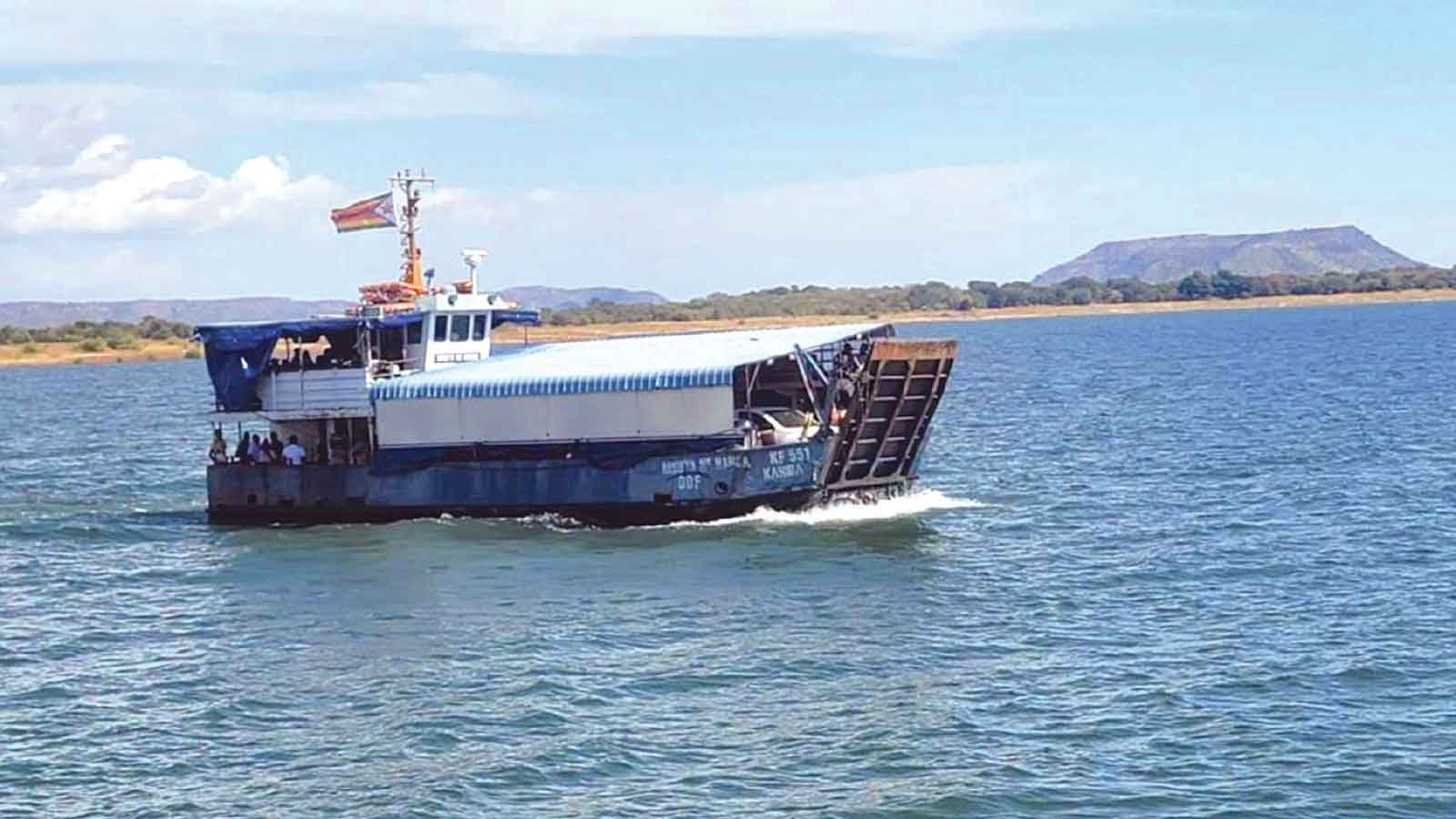
The Mbuya Nehanda vessel set out from Kariba town, carrying its usual cargo — passengers bound for the remote fishing communities of Chalala, their belongings bundled in colourful cloth, their hopes tied to the waters that both sustained and threatened them. For years, this journey had been routine. A lifeline connecting isolated villages to the mainland.
But by nightfall, the lake had claimed 95 souls.
And the counting continues.
Brandwell Murengwa knows Kariba in ways the living cannot comprehend.
Since 1981, he has descended into its darkness, his body cutting through waters that hide entire worlds beneath their surface. Trained by a white man named Brand Hardson at the dry dock near
Army Harbour, Murengwa learned early that this lake demands respect.
“Most incidents that happen in Kariba are mainly of being attacked by a hippo,” he explains, “and that mostly happens when someone is within three or four metres deep.”
But hippos are not the only danger.
The lake has its own seasons, its own moods. August and November are treacherous — the waters unpredictable, the storms sudden and vicious. And then there is the period four days before the moon “falls.”
“Although I cannot give you an explanation,” Murengwa says, “those times are dangerous to enter the lake. The storm that happens during that time is very dangerous.”
It was at a place called Antelope that Murengwa glimpsed Kariba’s deepest secret.
He was installing cages for a company, working alongside a white man named Conrad from Doria. The water was clear enough that day; the work routine. Then his hand brushed against something unnatural — metal, cold, impossibly out of place in this underwater world.
An aeroplane. Entire, intact, resting on the lake floor.
“I told him, let us tie this aeroplane,” Murengwa recalls.
Conrad refused. “No, let us go. We know the place.”
They left. When they returned, the aircraft was gone — swallowed again by the lake’s murky depths, hidden once more from the world above.
To understand how an aeroplane, roads and houses came to rest beneath these waters, you must travel back more than sixty years.
The Zambezi River once carved its path through a living valley — a place where chiefs ruled, where children played, where ancestors were buried with ceremony and song. Then came the dam.
In 1956, the Italian consortium Impresit began construction. French engineer André Coyne designed the massive arch wall. Four years later, the first generator hummed to life, and the waters began to rise.
They rose slowly at first, then inexorably, swallowing everything in their path.
Villages disappeared. Mountains sank beneath the surface. Roads that had connected communities for generations became underwater ghost trails. And graves — the resting places of chiefs, elders, and ancestors — were submerged, their memories carried away by the rising tide.
Chiefs who once ruled along the Zambezi now stand on the shore and see not water, but memory.
“When we see Lake Kariba, most people see water,” says one traditional leader, “but we see our abandoned houses.”
Chief Musambakaruma. Chief Mola. Chief Nyamhunga. Chief Nematombo. These names echo through history — leaders displaced by progress, their people scattered, their ancestral lands submerged beneath one of the world’s largest artificial reservoirs.
“We are the chiefs who lived along the Zambezi River,” he says, “and the dam wall displaced us as we were relocated to other areas.”
Beneath the water lie the remnants of their world — mountains, houses that once held families, graves that once held their ancestors.
But the lake is not merely a graveyard. It is a place of power.
People travel from as far as Harare to perform rituals in its waters. Some come for Manjuzu, the ancient water spirit of tradition. Others seek fortune — hoping the lake will grant them success in business, in love, in life.
“They bring different things as offerings,” explains Tonderai Mbevani, a resident. “Cows, wine, sweets, rice, milk are taken into the water. They believe these are gifts that must be given to the spirits.”
The rituals happen late at night, when the lake is still and the fishermen have not yet begun their work. Around midnight or 1am, figures dressed in silk, satin, and sequins enter the water — their garments shimmering in the darkness, their prayers whispered to the depths.
“They do not just enter the water in ordinary clothes,” Mbevani says. “They believe the way they dress is also part of the ritual.”
Now, in the wake of the Mbuya Nehanda tragedy, the lake has claimed more than just memories.
Government investigations have revealed that the vessel was carrying approximately 180 passengers — far beyond its approved capacity. The Meteorological Services Department had issued early warnings advising against sailing. The vessel sailed anyway.
Minister Monica Mutsvangwa has confirmed the preliminary findings: “Government notes that the Meteorological Services Department had issued an early warning advising all lake users against sailing.”
The investigation will examine everything — the structural integrity of the vessel, operational compliance, safety regulations, and the decisions made before and during that fateful voyage. The tragedy has been declared a state of disaster.
The chief’s voice carries weight when he speaks of what happened.
“As chiefs, we already do our rituals,” he says. “People may give their own analysis to the tragic accident, but our job of performing rituals we have been doing it.”
He is careful to distinguish between the physical remains beneath the lake and the spiritual practices of his people. The Zambezi River had its own mysteries long before the dam was built. The houses and graves beneath the surface are not the source of those mysteries — they are simply victims of progress, resting where they fell when the waters rose.
But the lake keeps its secrets.
Perhaps that is the enduring mystery of Kariba.
To the engineer, it is a triumph of human ingenuity.
To the fisherman, it is a source of livelihood.
To the traveller, it is a route to communities cut off by distance.
To the diver, it is a dark world filled with remnants of another time.
To the traditional leader, it is a lost homeland — a home that never truly disappeared, even after the waters rose.
And somewhere beneath those waters, the roads, houses, graves, and aeroplanes remain, preserving the secrets of a valley that existed long before Kariba became a lake.
As the recovery operations continue and the death toll rises, Zimbabwe confronts an uncomfortable truth.
The lake that powers its homes and industries was once a living river valley. There were roads where there is now water. There were houses where boats now pass. There were graves where divers now search.
And there were communities whose memories were carried away when the waters rose.
Brandwell Murengwa’s discovery of the submerged aeroplane was a reminder that Kariba is far more than what the eye sees from the shore. Beneath the surface lies a world frozen in time — a testament to the lives that were uprooted, the homes that were abandoned, and the stories that were submerged when progress demanded its due.
The Mbuya Nehanda tragedy has forced the nation to look once again at the relationship between people and Lake Kariba.
It has reminded us that the lake gives life — but it also takes it.
And somewhere beneath those dark waters, the secrets of the Zambezi remain, waiting for the next diver brave enough to descend, the next chief wise enough to remember, and the next story strong enough to tell what lies beneath.
The lake holds its secrets. But the water remembers. And so must we.