admin
admin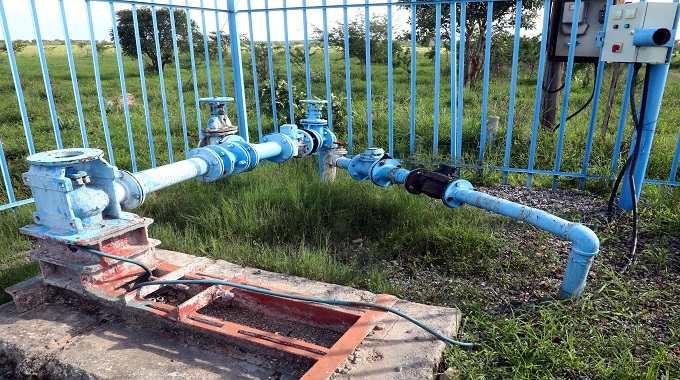
Nqobile Tshili, Chronicle Reporter
SECURITY personnel comprising police and security guards will soon be deployed to Epping Forest and Rochester Aquifer in Nyamandlovu as Government takes a bold step towards curbing vandalism of electricity infrastructure, which is contributing to Bulawayo’s prevailing water crisis.
Vandalism of electricity infrastructure which includes theft of transformers and copper cables at Epping Forest and Rochester Aquifer has affected more than 60 000 residents in Bulawayo.
Bulawayo is supposed to be drawing up to 20 megalitres (ML) per day from the aquifers, but due to rampant theft of power infrastructure, the city is only receiving a paltry 3ML/day.
Bulawayo is battling a serious water crisis which has seen council abandoning its 72-hour water shedding programme and implementing a daily provisional water supply restoration strategy in a bid to balance supplies.
The vandalism of electricity infrastructure at Epping Forest and Rochester prompted Government to set up an inter-ministerial committee to come up with both short and long-term solutions to the city’s water woes.
The committee comprises Ministers of Local Government and Public Works; Power and Energy Development; Home Affairs and Cultural Heritage; Lands, Agriculture, Water, Fisheries and Rural Development; Bulawayo Provincial Affairs and Devolution, the security sector and Bulawayo City Council (BCC)
The ministers recently visited the affected areas to access the situation on the ground.
In an interview, Local Government and Public Works Minister July Moyo said the inter-ministerial committee has resolved that police will be deployed to guard the power infrastructure at Epping Forest and Rochester Aquifer.
“Although Zesa and everyone is suggesting that we replace the copper transformers, which are targeted by thieves, that process is likely to take longer. What we have, therefore, agreed on is that Zinwa and city council must work with the security cluster,” he said.
“Zimbabwe Republic Police must have permanent staff at Epping Forest and Rochester Aquifer to protect the area from acts of vandalism. Instead of getting 20 megalitres from Epping Forest we are only getting 3ML/day, which is an issue of grave concern.”
Minister Moyo said co-ordinated efforts are needed to deploy security personnel to safeguard the electricity infrastructure.
“They are stealing the oil and the copper. The city council working with Zinwa must have permanent security personnel stationed at all those transformers because we are now jeopardising the lives of over 60 000 people in the city’s western suburbs,” he said.
Minister Moyo the inter-ministerial committee came face-to-face with the extent of vandalism during their visit.
He said police in Matabeleland North are also expected to conduct patrols along the power lines.
“That vandalism is unacceptable, especially after the President directed me and my Finance and Economic Development counterpart, Professor Mthuli Ncube to solve that problem. All the pumps were installed including the transformers,” said Minister Moyo.

He said Government was hopeful that the amendment of a law that will ensure electricity vandals get a mandatory 30-year jail term will reduce the copper theft cases.
Minister Moyo said at the moment the biggest challenge for Bulawayo is load shedding which directly affects the city’s water supplies.
“The problem is that the city needs electricity to bring water to Bulawayo and there has been load shedding. It is affecting the system that needs to bring water to Bulawayo,” said Minister Moyo.
The Epping Forest boreholes were rehabilitated in 2020, at a time when Bulawayo was experiencing its worst water crisis in the city’s modern history.
The water crisis resulted in the death of 14 residents in Luveve suburb due to diarrhoea-related illnesses.
Vandalism of the electricity infrastructure has been described as a national security threat with urgent interventions being made.
The completion of the Lake Gwayi-Shangani project will ensure reliable water supply to Bulawayo for the next 80 years, while weaning off some of its supply dams in Matabeleland South to cater for developmental projects in the province.
The massive water project is expected to ignite rural industrialisation across the Matabeleland region where communities will have access to clean water and electricity to power local institutions.
The Gwayi-Shangani water project had been on the pipeline since 1912, but it took the Second Republic to bring it into life. -@nqotshili


 Online Reporter