

 admin
adminUnited States of America and some western countries.
One can equally say that the discourse of sanctions has not obverted its link to the security sector reform.
Whether this has been done intentionally or not, one can not be sure, but given the confusion and prevarication about sanctions by the quarters that imposed them and those that supported their imposition, it is a safe bet that the de-linking of sanctions and security sector reform is deliberate.
Zidera states that for the embargo to be removed there should be some “Presidential certification that certain conditions are satisfied”.
These include the restoration of the rule of law, election or pre-election conditions, commitment to equitable, legal, and transparent land reform, fulfilment of agreement ending war in Democratic Republic of Congo and military and national police subordinate to civilian government.
Now, with the case of security sector reform, or realignment as it is euphonically called in some quarters, gaining currency in the political field especially among the MDCs, there are a number of observations that can be made.
First is the fact that this concept is self-serving with regard to the US, although it seeks to clothe it in Zimbabwean civilian interests.
One cannot dispute this, especially given the fact that the US sought Zimbabwe’s withdrawal from the DRC as some of the preconditions of removing the embargo.
It will be worthwhile to note that the US and other western countries were miffed about Zimbabwe’s involvement in the DRC because it cut the darkness of chaos in which illegal exploitation of the rich mineral resources of the great central African country took place.
So much about our soldiers dying and the economy taking a battering to the detriment of ordinary Zimbabwean folk!
That said, the US is uncomfortable with the vanguard that the security sector, as currently constituted, is.
Just as it wanted Zimbabwe’s military out of DRC for easy passage to looting its wealth, the US wants the current securocrats, who have vowed to preserve the gains of Independence including by way of not accepting western stooges or those who shied from the defining war of liberation, out of the way.
The second to make here is that the MDCs always parrot the positions of the US.
They were opposed to the DRC involvement not much as informed reasonably by economic and moralistic sense but generally as parrots of the US.
Can the same not be said of how the MDC opposed the land reform on the basis that its execution was not equitable and transparent?
There is a new dynamic in the discourse of sanctions.
After the initial denials, prevarications and obfuscations, the MDCs and more importantly that wing led by Prime Minister Morgan Tsvangirai, have now come to acknowledge the sanctions (though not owning up) and they are even calling for their removal.
For Tsvangirai and his party, the removal should be calibrated or the review a suspension based on “rewarding progress on the ground”.
While he can be applauded by some people for this – this reasonability – there is something fundamentally mischievous and dishonest about it.
With his other corner of the mouth talking about security sector reform, as it usually does, all Tsvangirai will be doing will be to derail “(US) Presidential certification that certain conditions are satisfied”.
Does this precondition not amount to certifying the “progress on the ground”, which Tsvangirai casts aspersions on regarding the security sector?
This is the problem with the thrust adopted by the likes of Tsvangirai in seeking the removal of sanctions.
While he may seek to portray himself as now championing the removal of the embargoes, his thrust betrays some dishonesty in that he knows there is a loophole.
This loophole relates to an exclusive power of judgment over what constitutes “progress on the ground” as vested in those who imposed sanctions.
He might then stand clean and say that he does not have the power over those with the capacity of deciding on sanctions. Back to the so-called security sector reform, if there is one thing that shows that those who imposed sanctions and those who support them are bent on maintaining the embargo is the insistence on the subject when it is clear that there just is no room for that at the moment. Or if there is, that would come by way of war which will have to kill or jail the current securocrats.
There are a few stubborn historical facts — and even the anti-securocrats know this and may, despite, or because of it try their agendas.
The fact is that in Zimbabwe’s short history, the guys who people the security sector hail directly from the Independence war.
Given the war they survived, scars they bear, and the feelings about the war and politics they harbour, they feel very obliged to defend the country they liberated.
When the country — its founding ideals, its liberation aspirations and expectations — come under threat from inside and or outside they guys are duty bound to defend the country and say it loud, if need be.
And can one not say that they will be subservient to the civilian demands for the longevity of the gains of Independence, as expressed in the person of their leader?


Online Reporter
- Chronicle , Herald , Manicapost , SundayMail , SundayNews
- September 19, 2026
- 89 views
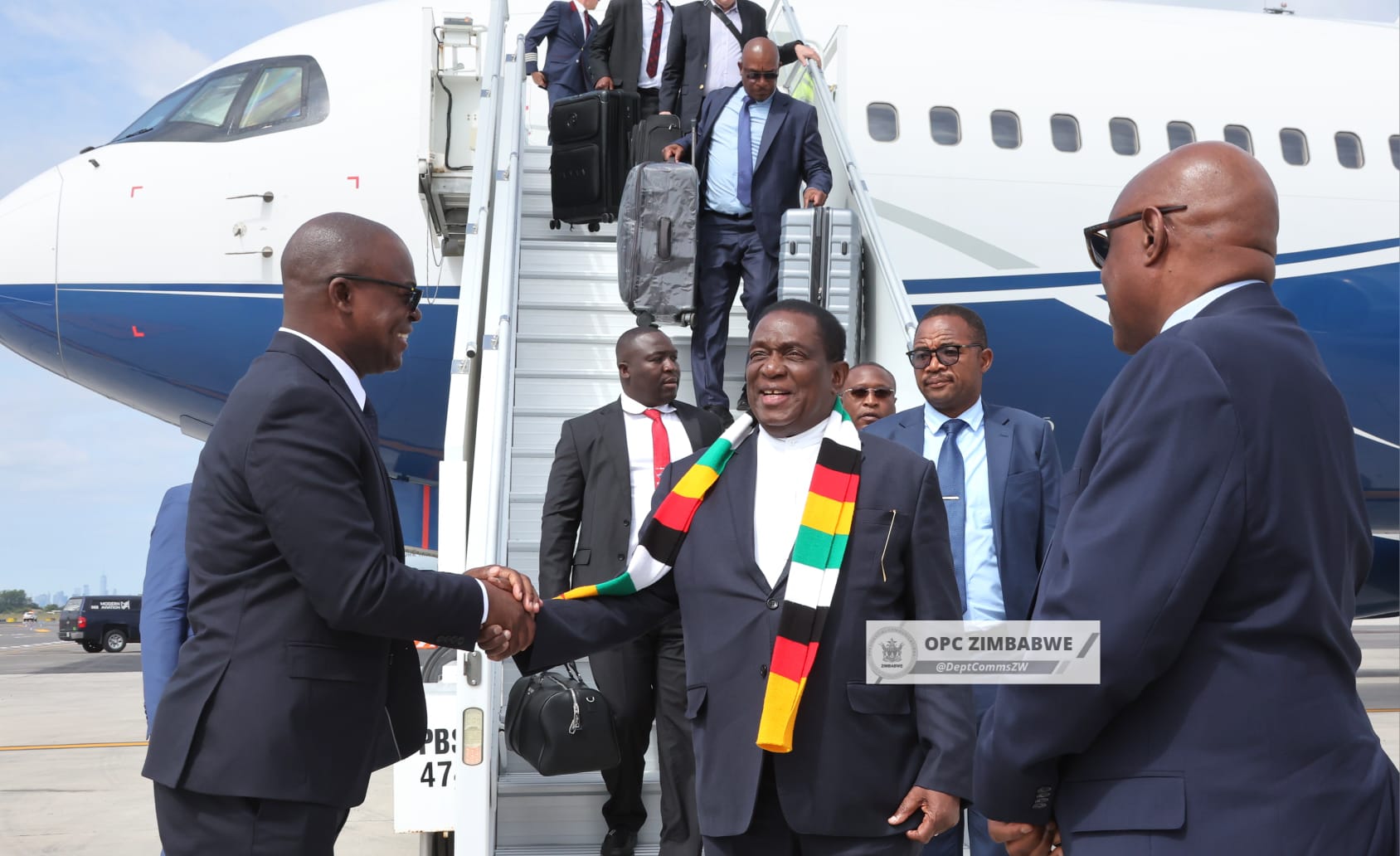
NEW: President Mnangagwa arrives in New York, to attend Zimbabwe Business Forum tomorrow
Wallace Ruzvidzo in NEW YORK, USA PRESIDENT MNANGAGWA has arrived in New York to join fellow Heads of State and Government at the 81st Session of the United Nations General…
