Online Reporter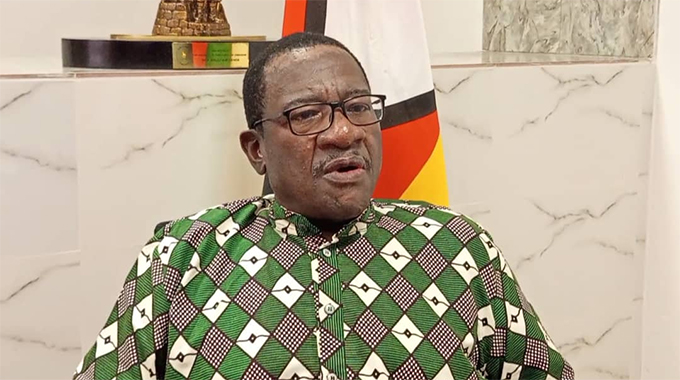
Nyore Madzianike in LUANDA, Angola
ZIMBABWEAN businesses should take advantage of strong bilateral ties between Harare and Luanda to expand exports of agricultural produce and other goods to Angola.
This was said by Zimbabwe’s Ambassador to Angola, Thando Madzvamuse, in an interview here.
Ambassador Madzvamuse said the historic relations and favourable diplomatic environment between the two countries provided fertile ground for increased trade.
“I would like to point out that Zimbabwe and Angola have got very strong bilateral relations,” said Amb Madzvamuse.
“As you would be aware, our relations start back from the days when Zimbabwe was fighting for its liberation, when Angola assisted us in providing us training camps, for example, material and moral support.
He said Zimbabwe had two training camps in Angola – one in Moxico Province, which was bombed by Rhodesian forces in February 1979, and another in Malanje Province where cadres were relocated after the attack.
“So, based on the support we got from the Angolans, the relationships between the two countries have been quite excellent,” he added.
“Being SADC sister republics having experienced the same challenges when we were fighting for our liberation, we have got so much which binds us.”
Amb Madzvamuse noted that Angola, with a population of about 37 million, imports nearly half of its consumables, including agricultural goods, making it a lucrative market for Zimbabwean products.
“Angola is a country with 37 million people. They have got the willingness and capacity to buy, they have got the money,” he said.
“The country imports almost everything and I am talking about feeding 37 million people.
“There is a market for almost anything and everything.
“I can give examples of beef. They would want beef from Zimbabwe.
“Why can’t we take advantage of that?”
He urged Zimbabwean businesses not to view Portuguese as a barrier to trade, pointing out that other countries with no linguistic or colonial ties to Angola, such as China, had already established successful commercial relationships.
“I have always insisted that we should not see language as a barrier,” he added.
“I am trying to urge Zimbabweans not to see Portuguese as a barrier to cooperation, be it in particular economic cooperation, which is the main reason why we are here, making use of our bilateral cooperation.
“We must enhance our bilateral cooperation in the economic sector.”
He said the Second Joint Permanent Commission of Cooperation, held in Luanda last year, resulted in the signing of 11 Memoranda of Understanding across various sectors, including agriculture, culture and other socio-economic areas.
Amb Madzvamuse acknowledged that logistical issues, including the lack of direct flights between Harare and Luanda, remained a challenge, but expressed optimism that growing trade could pave the way for improved connectivity.
“We are working very hard on that. We wish to have a direct flight from Harare and we are working so on that,” he said.
“If there is trade between the two countries, the airliners will certainly find good reasons to resume flights.”
He said discussions on the matter had taken place with the Ministries of Transport and Infrastructural Development and Tourism and Hospitality Industry during their visit to Luanda earlier this year.