

 Chronicle Editor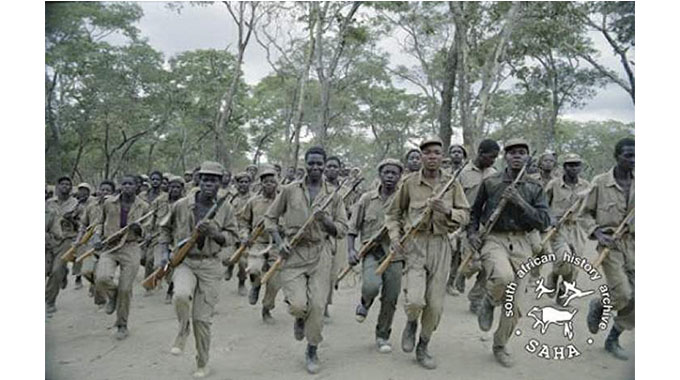
Pathisa Nyathi
A LOOK at who assisted the liberation movements during the struggle for independence makes interesting reading and observations. There was, in the first instance, combative efforts targeted at dislodging the Rhodesian regime from power through a protracted armed struggle. That alone translated to its own needs that had to be attended to. Military trainees required shelter, medical services, training equipment and weapons of war. Military fatigues were needed, so was food during the initial stages of entry into Rhodesia. Tinned foods had to last till guerrillas got in touch with the peasants who took over the role of providing food to the guerrillas, after the latter had carried out politicisation and mobilisation campaigns.
For that initial entry, it was critically important that the guerrillas carried on them not only weapons, but also the ammunition which they were going to cache in strategic places. Sometimes food plates and even blankets were provided. This is just an example of what a trained cadre’s needs were. The Party, the Zimbabwe African People’s Union (Zapu) was not able, without assistance, to provide the various needs associated with the nature of the tasks that lay ahead of them.
At the time when military training was taking place outside of Zambia and Africa there was a need for transportation of both personnel and related equipment and hardware. After training, the cadres then landed in Dar-es-Salaam from where personnel carriers took them through Tanzania to Tunduma on the border with Zambia, en route to Lusaka. Later, military training camps were established in Tanzania at Kongwa, Mbagala and Morogoro. Again, it was important to transport trained personnel to Zambia for onward travel to the Zambezi River gorges from whence they crossed the same river to get to the various operational areas.
Quite clearly, someone had to foot the bill. Countries in the socialist/communist bloc provided everything to do with the war effort, from footwear to medicine and military uniforms. The key assault rifle for the liberation movements was the AK-47 and other rifles such as the Semenov. All these and other weapons were manufactured and supplied by countries such as the Soviet Union, the German Democratic Republic (GDR), Poland, and Romania, among other countries. The shoes that led to the identification of guerrillas during the Pyramid Campaign (Sipolilo) in 1968, were distinctive shoes supplied by the Czech Republic.
The liberation of Zimbabwe was left to the Eastern Bloc countries who exclusively shouldered the burden of bankrolling the campaign to liberate Zimbabwe. When PF-Zapu lost in the 1980 general elections the countries that had supported that Party felt betrayed. In particular, the Soviet Union was not allowed to open their embassy in Harare, despite her tremendous contribution towards arming ZPRA to the teeth.
Ironically, it was those countries that never supplied a single assault rifle that quickly positioned themselves around the eating tables.
The issue of refugees was handled from different quarters. Their needs mostly required no weapons but, where defences were mounted around refugee camps, the requisite arsenal was provided by the Eastern Bloc countries. The humanitarian needs of refugees were provided by Western Bloc counties such as the United Kingdom, Canada, Australia, Sweden, Finland, West Germany, France and a lot more. Through the various embassies, non-governmental organisations (NGOs), church bodies and human rights organisations attended to non-combative needs such as educational facilities, medical facilities, shelter, clothing, equipment for food production, footwear, sanitary ware, and infrastructural needs.
The United Nations-affiliated agencies similarly attended to humanitarian needs, but not to needs premised on the liberation of the country. There were several organisations that assisted ZAPU in terms of needs on the humanitarian front. The Finnish Peace Committee came to assist with education projects, where they provided educational equipment, classrooms infrastructure and related infrastructure and text books.
The International Committee for the Red Cross extended a helping hand with regard to provision of clothing material which tailors at the Victory Camp (VC) sewed up into items of clothes for the thousands of refugees in the various camps.
The one country that stood head and shoulders above the rest was Canada where many organizations heeded the call to alleviate the hardships being faced in the refugee camps. Refugee needs were compounded by the bombings carried out by the Rhodesian fighter planes in collaboration with paratroopers and the Special Air Services personnel. Within refugee camps there were high rates of teenage pregnancies. Food requirements were heightened alongside pediatric requirements.
Infant mortality rates were high. There was a burgeoning incidence of malnutrition, overcrowding and unhygienic conditions. From Canada came assistance from numerous organizations such as the United Church of Canada, the Canadian Catholic Organisation for Peace who assisted with the provision and replacement of destroyed farm implements, CUSO and the Canadian Save the Children Fund. K R Marshall was the organisation’s Director and had been approached for assistance. Mary Ndlovu, Edward’s wife, came from Canada and may have exerted some influence on the Canadian agencies that came to the rescue of the refugees in ZAPU camps.
In addition to the agencies enumerated above, there were others that were ZAPU’s all-weather friends who provided humanitarian assistance of one kind or another. Among these were the following: Global Community Centre, German Volunteer Service, Bread for the World, Mennonite International, Protestant Central Agency for Development and the Direct Aid Committee.
Following the successful conclusion of the Lancaster House Talks, there came the daunting task of repatriating thousands of refugees from both Zambia and Botswana. No sooner had the Rhodesian constitutional impasse been resolved than Edward Ndlovu, the Secretary for Projects went back to London to confer with the British government and the United Nations High Commission for Refugees to work out modalities for the repatriation of refugees. The latter, in collaboration with the United Nations Development Program (UNDP) assisted with the funding of the repatriation program for the refugees.
Many of these refugees arrived by train and dropped off in Luveve where a receiving tented camp was established. Others arrived aboard buses. It was an emotional reunion, happy for some who were reunited with their long-separated relatives and extremely sad for others who got to learn that their relatives had perished during the Rhodesian air raids in October 1978.
A high degree of anxiety and uncertainty awaited the returnees. Would they have homes to return to and pick up the pieces? For many their homes had been destroyed and their relatives killed by the rogue regime.
It was time to start all over again. It was a short respite for many when just over two years later guns were blazing once again in their homes, when Gukurahundi abruptly shattered their newly found peace and tranquility.


 Online Reporter