admin
admin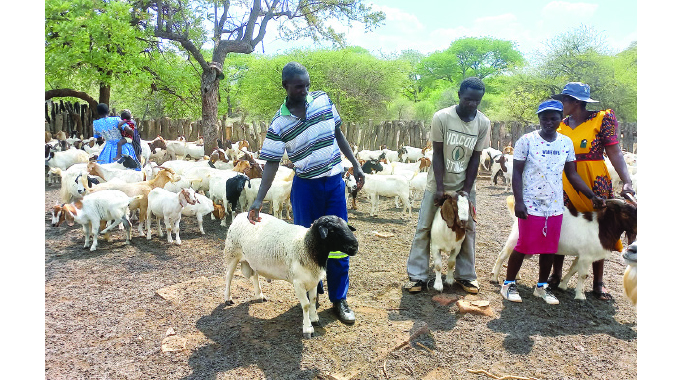
Sukulwenkosi Dube-Matutu, Matabeleland South Bureau Chief
IN 2015 a family in Selonga Village in Gwanda came together and started the Amohelang Goat Breeding Project which had nine animals but today they have over 200.
The group started off with nine members from the Dube family with each member contributing a goat. This initiative was part of efforts by the family to improve their livelihoods and create a legacy for their children.
They are rearing Boer-Matabele cross-breed and they hope to introduce the Kalahari breed as it has good traits suitable for the Matabeleland South climate.
The group has sold a large number of goats since the project started. They sell each goat for US$80 or R1 500 due to the good quality of the breed.
They follow a systematic breeding pattern that has helped preserve and protect their flock. They rear shepherd dogs, which accompany the goats to protect them from wild animals. The project has 14 members who take turns to watch over the goats as they graze to ensure that they are protected.
When the group started the project in 2015 they were operating at a small scale but the Edward Ndlovu Memorial Trust came in with training which helped them to maximise production.
The Trust also helped the members to start a garden project where they grow fodder for their goats.
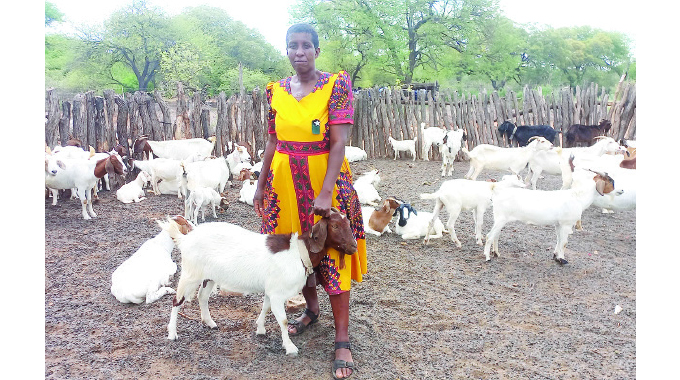
Amohelang project group leader, Mrs Sibongile Dube said the training they received helped them to realise that goats needed extra care.
“We started off the project with nine members in 2015 and we contributed one goat each. We started off at a slow pace as we didn’t have much knowledge of goat breeding. Edward Ndlovu Memorial Trust then came in with training. They also assisted us with a solar-powered borehole for our garden project on a loan basis,” she said.
“We have received valuable training that has helped to sustain our project and to grow our flock. We learnt about the importance of dipping and dosing our goats regularly to protect them from diseases. It’s also important to treat an ill goat and to give it proper medication. This project is a family project and it has greatly helped to sustain and empower us.”
She said during the rainy season they ensure that their goats are kept in an enclosed area to protect them from diseases. Mrs Dube said they feed their goats lucerne, chaff and sorghum to supplement browse. She said they give the goats water from the borehole to ensure that they are in good health.
Ms Tupeho Dube who is also a project member said a female goat (doe) can give birth twice a year usually to two kids per birth. She said they take extra care of the expecting goats and the kids as they are at high risk of being attacked by predators.
Ms Dube said they have a kraal that doubles as a maternity ward to house expecting goats. She said when a doe is nearing its delivery date it is moved to the maternity ward where it is closely monitored.
“When a kid is born we keep it in the kraal for three months. From four to six months we allow it to roam around close to the kraal but it doesn’t go out to the wild in order to protect it from predators. The kids only go out to the wild when they are six months old. Within those six months, we will be feeding the kids chaff and dried lucerne. Chaff strengthens their bones,” she said.
Tupeho said they dry the lucerne before feeding it to kids as it causes diarrhoea. She said dosing the kids was also crucial. She said when it’s raining they keep the kids in a kitchen hut.
Project member, Mr Petros Dube said the project had nine members and one of their main tasks was to herd the goats. He said they have two shepherd dogs that have been trained to watch over the goats.
Mr Dube said the dogs were trained to cohabit with the goats while they were still puppies. He said this has helped to protect their flock from predators.
Mr Dube said every goat and kid in their flock mattered. He said at the end of each day the shepherd dogs drive the goats home. Mr Dube said they take stock of the flock at the end of each day to ensure that they are all accounted for.
Ms Matron Moyo who is also a project member said they sell their goats to other breeders, butcheries and organisations. She said some people come from as far as Harare to buy their goats. Ms Moyo said the goat project was a viable enterprise that has helped them to realise significant income. She said it was their desire to find bigger markets.
Edward Ndlovu Memorial Trust director, Mrs Vivienne Moyo said through the community outreach programme their target is to contribute to development through the provision of adequate, relevant and up-to-date information. She said under the programme, study circle groups have been created where villagers come together and identify problems affecting them and formulate solutions with the assistance of experts.
Mrs Moyo said the farmers take a leading role.
“When communities are empowered through access to education and information they can apply their knowledge and skills to improve their situation and circumstances,” she said.
The Trust has empowered the communities through projects that include goat keeping, poultry, nutrition gardens and crafts. It also facilitates training of communities on markets, market access, value addition, horticulture, goat production, climate change, climate-smart agriculture, disaster risk reduction and environmental management among other issues. – @DubeMatutu


 Online Reporter