

 Online Reporter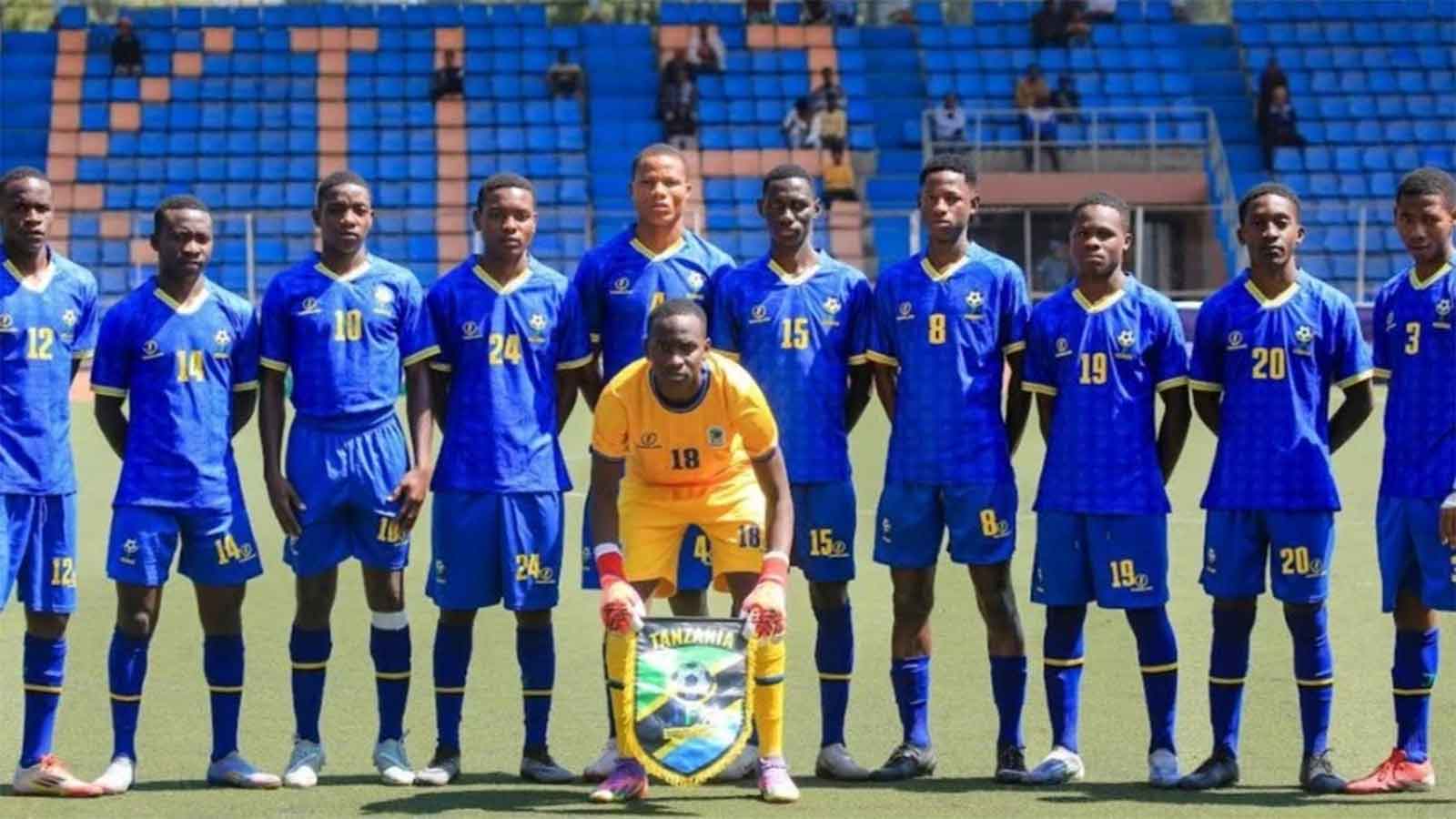
Langton Nyakwenda-Zimpapers Sports Hub
THE emergence of Tanzania as a youth football giant is one of the most topical football stories on the African continent.
Tanzania’s Under-17 national team, commonly known as Serengeti Boys, reached the final for the first time in their history, at the just ended CAF Africa Cup of Nations held in Morocco.
As a result, Tanzania have also qualified for the World Cup Under-17 finals to be staged in Qatar in November.
Although they lost on penalties against Senegal on Tuesday, Tanzania’s historic achievement captured the imagination of football fans not only in East Africa but Africa as a whole.
“Their impressive campaign has captured the imagination of football fans across Tanzania and highlighted the growing strength of the nation’s youth development structures,” wrote The Citizen of Tanzania.
“For Tanzania, however, tonight’s final represents more than just a football match. It is the culmination of years of investment in youth development and a chance for a talented generation to cement its place in the country’s sporting history.”
According to the Confederation of African Football (CAF), Tanzania’s historic achievement represents one of the most remarkable youth football stories on the continent and underlines the growing impact of CAF’s investment in grassroots development through the CAF African Football Championship.
The CAF African Schools Football Championship was launched in April 2022 in Maputo, Mozambique by CAF president Patrice Motsepe.
It was created as a continental platform to identify talent, strengthen schools football ecosystems and connect sport with education and social impact.
Hosts Tanzania won the boys edition in 2024 after defeating defending champions Guinea 1-0.
Tanzania defended their title in Accra, Ghana in 2025, beating Senegal 3-2 after a penalty shootout.
Senegal won the fourth edition which was held in Harare, Zimbabwe from April 2-10, 2026.
Tanzania’s transformation has also caught the attention of local football development actors, who believe Zimbabwe can draw some inspiration from the Serengeti Boys.
Dynamos legend and Real Oviedo academy coach Murape Murape, agrees Tanzania’s success was not accidental but designed.
Murape also believes Tanzania benefited from integrating players into football structures.
Tanzanian former footballer and coach Oscar Rabson Mirambo is the Technical Director of the Football Association.
“In Tanzania, they have matched political will and football brains.
“They didn’t just give former players symbolic roles, or ambassadorial roles, but real power to influence in terms of football development,” Murape said.
“These former players were empowered to design a synchronized system, where schools, local academies and national youth teams speak the same language,” added Murape.
That system has now produced starlets like midfielder Issa Mussa Chole who was named Player of the Tournament at the AFCON Under-17 finals in Morocco
Striker Dismas Shida Athanasi won the Golden Boot after scoring three times.
“I think former players is the most underutiliszed weapon in our bid to turn around the fortunes.
“What has dragged us back is not lack of funding but a massive structural gap in technical leadership.
“For too long, structures have been managed by administrators who look at football through spreadsheets rather than football minds,” said Murape.
The Dynamos legend however feels it is not all doom and gloom.
“Luckily the current ZIFA administration led by Nqobile Magwizi has publicly acknowledged these gaps and they are actively to address the shortcomings.”
ZIFA have introduced a massive grassroots football programme thanks to a partnership with BancABC.
The BancABC Roots Impact program aims at building Zimbabwe’s next generation of football stars through a national year-round Under-14 and Under-16 system for boys and girls.
The programme targets over 7 000 young players creating a proper pathway from school football to the national teams.
“I think we should applaud Magwizi and his executive at ZIFA.
“We need to move away from chaotic and reactive administrative habits of the past,” added Murape.
Binga Academy coach, Pride Ngwenya, believes football has no short cuts.
“No need for short cuts in football development,” said Ngwenya.
“Zimbabwe has got a lot of untapped talent, we should not mainly focus on big cities when scouting for talent. We should take a leaf from Tanzania, we should be inspired.”
Zimbabwe’s major achievement at youth level was winning the COSAFA Under-17 title in 2007.
In 1999, Zimbabwe qualified for the CAF Under-17 finals in Guinea but they did not perform well.
Dreamers Football Academy coach, Tichaona Chinyanga, feels Tanzania’s rise should be a wakeup call for Zimbabwe.
“Signs have been there for Tanzania. Their top teams like Simba have been performing commendably in the CAF Champions League and their local league has improved,” said Chinyanga.
“The mother body has been engaging junior football practitioners which was never the case before.
“I respect Magwizi for that, he is a true professional,” said Chinyanga.
South African based Zimbabwean coach and renowned international scout, Eric Bafana, reckons Zimbabwe should go back to original settings.
“I think Zimbabwe can do what Tanzania have done, only if we give ourselves time.
“It means we take a look back at what used to happen in the past decades,” said Bafana.



