admin
admin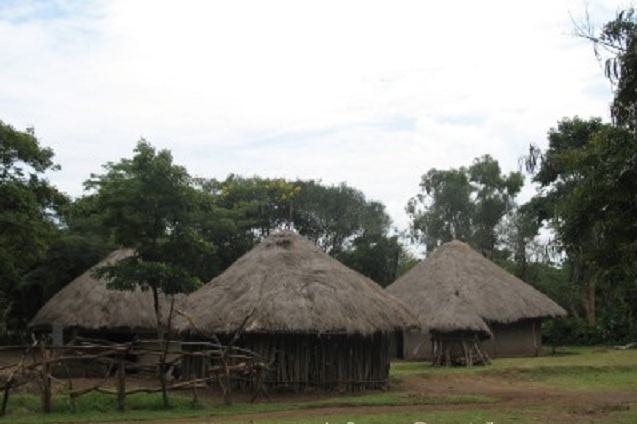

Pathisa Nyathi
DEATH begets life. Death flows out of life. Death and life are two sides of the same coin. Africans never perceived death as the end of life. Instead, it was a necessary stage that was followed by eternal life. When a chief dies that leads to the continuation or transmission of the life of his reign to his son and successor. The new reign is equivalent to a new life, a new dawn which stems from the death of a preceding reign epitomised by the late chief. Transformation or elevation to higher and eternal life was always accompanied by elaborate rituals all calculated to assist the departed spirit in its long journey to link up with some stellar constellation.
In ancient Egypt the colossal pyramids, tombs for the Pharaohs, were festooned with hieroglyphical symbols that served as both guide to and protection of the spirit that was about to venture on the journey to stellar depths. I still remember very well when my grandmother dissuaded mourners from crying uncontrollably as that was going to block the way/path of the departing spirit — lizamvalela indlela. The corpse was taken to be of interest to the departing spirit which from time to time revisited it to which it was inextricably linked. It is thought that mummification of corpses in Egypt and elsewhere on the African continent was done with this belief in mind.
Chiefs in the erstwhile Ndebele State were not of the same rank. The king was advised by senior chiefs, izinduna zamaxhiba and izinduna zenkosi. Such senior chiefs, in conjunction with the king’s brothers, constituted the powerful uMphakathi. The term ixhiba refers to a proto or spawning village. Ixhiba will also refer to the hut where grown up boys or girls slept. Amaxhiba as sleeping huts were located in the front part of a homestead, just behind the armoury, impalane.
It should be appreciated that most of the villages within the Ndebele State were established at different times during and after the migration of the state. When the population was small, as was indeed the case when the Ndebele left KwaZulu-Natal, there was probably one ixhiba, most likely uMzinyathi under Majijili Gwebu. Alternatively referred to as isibaya esikhulu, uMzinyathi incorporated many people, both voluntarily and involuntarily. Another possibility is that uMhlahlandlela was the first proto-village, ixhiba under Gwabalanda Mathe. What is clear though is that the chiefs of these two amaxhiba were part of King Mzilikazi’s uMphakathi.
From other sources we may arrive at the position that Amakhanda was the proto-village. The term amakhanda refers to the male section of a village, living out in the camps where they underwent military training (ugalo lwesizwe). There is reference to aMakhanda amnyama or simply aMnyama, amnyama angankomo which we may surmise is a reference to uMzinyathi. There was aMhlophe, the section that comprised older men with white hair. The two amaxhiba were certainly in existence by between 1822 and 1827 when the Ndebele were resident on the Vaal River, uLikhwa. The king lived at eZinyosini prior to his relocation in 1827 to koMhlahlandlela near present day Hamanskraal, outside Pretoria.
A proto-village or ixhiba later begot imizi, smaller villages presided over by minor chiefs who reported to the senior induna of ixhiba. Rarely would such minor chiefs report to the king directly. Instead, they reported to the senior izinduna of amaxhiba who then went to the royal capital to report to the king. As more imizi were spawned, the original spawning village assumed another name. For example, aMnyama became uMzinyathi. Amhlophe became uMhlahlandlela. Later we see the establishment of Igabha which, once it had spawned more villages, assumed a new identity as aMagogo under Maqekeni Sithole. The term aMakhanda remained with the new villages established at eZinyosini where the Dlodlos voluntarily joined the Ndebele king Mzilikazi Khumalo and his Ndebele people.
Amakhanda came to be dominated by the Dlodlo chiefs, with the Dlodlos being the in-laws of King Mzilikazi Khumalo who married a Dlodlo woman prior to his becoming king. The son of MaDlodlo was Mangwana apparently the king’s oldest son. The favoured position of the Dlodlo at eMakhandeni did not come as a surprise. The oldest village in the eMakhandeni section may have been Inxa.
A man growing up during the heyday of the Ndebele State knew his ixhiba, the proto-village and his umuzi. For example, uMzinyathi spawned or gave rise to aMatshetshe, uDukada, iNtunta, iNtshamathe, uYengo and uGodlwayo.
What that meant in essence was that the chiefs of these villages were junior to the chief of uMzinyathi.
We need to point out that in the older and bigger villages there lived the senior queens, umdlunkulu. Queen Loziba Thebe, okaPhahlana lived at eNyathini (or uMzinyathi). Whoever was chief was not senior to umdlunkulu.
Umdlunkulu was a female king and dressed like a man during national ceremonies such as iNxwala. Queen Lozikeyi Dlodlo performed that role during the reign of King Lobengula Khumalo. Previously, his sister Mncengence (unina womuzi) played that role. In fact, bigger imizi and amaxhiba had queens and their children living there. For example, princes Mahlahleni (father of Mahlenhle), Makhwelambila (his grave is at Empandeni Mission and his descendants include Boniface, Otto and Ngulukudela) and Nyanda(the father of Mthimbili) lived at Mhlahlandlela near uMhlonyane River. The village was the last for King Mzilikazi Khumalo who died in 1868 at eNqameni village on the headwaters of the Tuli River, where it crosses the Old Gwanda Road. Wherever the queens lived they superseded the chiefs of those villages.
It is important to say a word or two regarding the geographical extent of villages. The confusion has resulted from the organisation of royal towns. Visitors to the Ndebele State inevitably reported to the king at his royal town which was not the normal or average village. Rather, it was a peculiar settlement designed to meet the needs necessitated by its role and function within the state. Such a royal town was massive in size in comparison to other villages. It comprised the Royal Enclosure and the Commoners Enclosure.
The other villages were more dispersed covering a wider geographical area with one relatively big settlement occupied by the chief and royal queen and her household. The geographical area in question was referred to as isigaba which was presided over by a chief. When the village grew bigger it became necessary to hive off some section and place it under a different chief. This is what happened to the village of iNtemba under Xukuthwayo Mlotshwa umfokaNjotsho. The hived off section was called iZinkondo and was placed under the charge of Sikhombo Mguni who fought gallantly in the eastern front of the 1896 Imfazo I. The terminologies applied to the hiving off are inspired by what is done to the skins. The big skin has its trappings cut off, ukuncela using isancele, the adze. The off cuts are what are known as izinkondo.
Some princes had villages of their own within isigaba under a particular chief. The royal princes enjoyed a position of privilege. Each year the king picked a maiden among the several paraded before him. Once he had picked his choice the princes came after him to also get themselves wives of their choice.



 Online Reporter