admin
admin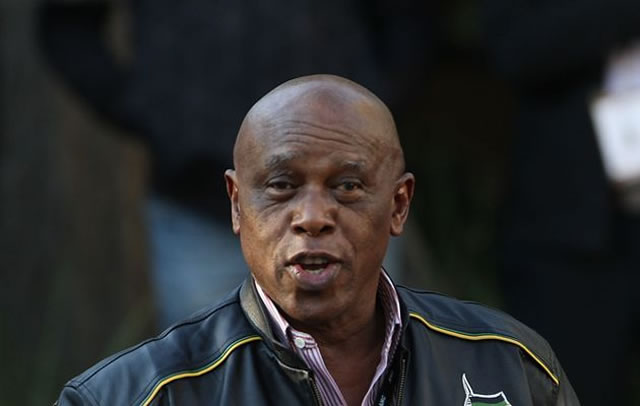

Harare Bureau
The recent arrest of South Africa’s former Human Settlements Minister, Mr Tokyo Sexwale at JFK International Airport in America because his name remains on terror watchlist, should be a wake-up call to African leaders who shun the continent, to unite and conduct business with fellow Africans to avoid such humiliation.
Analysts say the US government’s stereotypes on Africa and its leaders would not change unless the agenda was driven by its economic and political interests.
Mr Sexwale’s humiliation comes barely a month after former South African President Nelson Mandela was honoured with a towering statue of him that was erected in Washington, DC.
There were protests in Washington in the early 1980s, with activists calling for an end to apartheid and for Mr Nelson Mandela to be freed – but today a freedom fighter who contributed towards a free South Africa was detained in America 30 years later.
Although South Africa’s African National Congress demanded an apology after Mr Sexwale’s detention, Zimbabwean analysts feel it was time that Africans shun the West and conduct business among themselves for the benefit of the continent and its people.
Former ANC and President Mandela was taken off the list by former President George W Bush in 2008, and the ruling ANC was shocked that Mr Sexwale, who was imprisoned along with the Nobel Peace Prize winner on Robben Island, remained on the terror watch list.
Speaking to our Harare Bureau yesterday, human rights activist Mr Raymond Majongwe, said it was unfortunate that such liberation war icons as Mr Sexwale were being ridiculed and embarrassed while trying to pursue business interests in the US.
“Instead of going to America, they must visit Harare, Addis Ababa, Lusaka and Lilongwe and invest their money for the upliftment of the lives of Africans. This is high time that Africans should unite and reciprocate this kind of treatment. Our liberation icons continue to be viewed with telescopic eyes and suspicion. This should come to an end,” said Mr Majongwe.
He said Mr Sexwale’s experience meant that the US and other like-minded Western governments never pursued pro poor policies without some strings attached.
He said America stilled viewed Africans as terrorists for fighting for political and economic freedom for its people, adding that “event the so-called puppets” would one day be viewed the same.
“This is a clarion call for Africa to start engaging the West in an aggressive manner. Today if Renamo leader Alfonso Dhlakama goes to America, he will not be treated like that…he will not be arrested because he is receiving funding from them to destabilise his country (Mozambique). He will walk in and out of America freely,” he said.
Another political observer Dr Charity Manyeruke, said America would not change and was likely to remain “abusive” to African states, adding it was shocking that some people who fought apartheid continued to be called terrorists.
“We would like to assume that nobody wanted apartheid atrocities, but if you are reminded of that scenario like what happened to Sexwale, then it means they are mocking your democracy.
“In a way it’s good for South Africa especially coming after what (SA president Jacob) Zuma said that South Africans must not think like Africans. This was a reminder that South Africans are Africans and they are still not wanted by the former colonisers. South Africans must work closely with fellow Africans. Africans should work together since they have a lot in common,” she said.
Midlands State University lecturer Dr Nhamo Mhiripiri, on Sunday said the US systematically used those tactics to embarrass African leaders, but ended up embarrassing itself in the process.
“Imagine that even Mandela as president of South Africa had to be cleared in order to travel to the US. This is why we have said that in the case of Zimbabwe, the sanctions would remain in place for more years than we ever expect.
“For us as Africans it should be very worrisome as it is disrespectful to our leaders. If you look back at how Tokyo was placed on that list, it was not only him as an individual, but as a member of the African National Congress, the group he belonged to. There is group identity in place here.”
Mr Sexwale is back home, but his lawyer, Mr Leslie Makhabela, told South Africa media that US immigration officials had “alleged he posed a threat to international security”.


 Online Reporter