admin
admin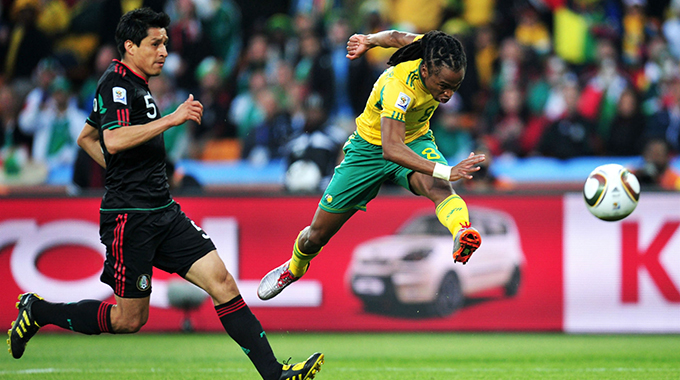
Sharuko On Saturday
FITTINGLY, it had to happen at Soccer City, the huge stadium on the outskirts of Soweto where, today, the Hector Pieterson memorial lies.
A chilling reminder of a dark past when this country was divided, on the basis of race, leading to the killing of the schoolboy, whose lifeless face, remains the symbol of that massacre.
His name was Hector Pietersen.
He was just 13 when he was gunned down, the image of his lifeless body being carried away by activist Mbuyisa Makhubu, while his sister wailed uncontrollably, provided one of the enduring images of the struggle against apartheid.
A face of innocence, in life as in death, Pieterson’s brutal slaying, at the hands of the apartheid security machinery that had come to crush a student protest in Soweto, shocked the world.
It jerked the globe from its slumber, dragging it to have a closer look at its conscience, and the evil structures of the apartheid regime, and galvanised its opposition to what this wicked vampire state represented.
Born in the year Dynamos were formed, in 1963, Hector Pieterson would have been 57 this year.
He would probably have been a doctor, a lawyer, a judge, a teacher, a journalist, a retired football star, or even the President of the Rainbow Nation that emerged from the demise of apartheid.
He would probably even have joined the estimated 90 000 fans who converged at Soccer City on that unforgettable day, 10 years ago, when Bafana Bafana got the 2010 World Cup underway.
However, his life was brutally cut short on a day of horror when the flowing blood of slain students turned into Soweto’s sobbing red streams which will, forever, provide a reminder of the tragedy which unfolded there that day.
Hector Pieterson didn’t die alone, many others – more than 100 – also lost their lives that day, which is now celebrated as the Youth Day holiday in South Africa.
From where the Hector Pieterson Memorial lies today, in Orlando West, to Soccer City, it’s a distance of about 10km, depending on the route one chooses to take.
Just six days separate the day Siphiwe Tshabalala fired Bafana Bafana into the lead, with a goal whose beauty resonated across the globe, and the day South Africa remembers those patriots slain in that Soweto Uprising massacre.
Both events, somehow, had to happen in June — the good and the bad, the beauty and the ugly, the joy and the sorrow, at locations separated by just about 10kms, the number that represents football’s most iconic shirt — Pele, Maradona, Messi, Zidane.
As if an invisible, and very powerful hand, was giving South Africa its moment to ease the burden of pain this country has carried for years since its beautiful children were slaughtered by the by the forces of evil that day in Soweto.
In a country, which always flirts on the edges of either tragedy or triumph, it’s difficult to explain the irony related to how the tragic deaths of 13-year-olds, 34 years apart, would cast a huge shadow over the beauty which unfolded at Soccer City on June 11, 2010.
Just a day before Tshabalala rocked the giant stadium, and his vintage piece of marksmanship resonated across the world, another 13-year-old, Zenani, the great granddaughter of South Africa’s former iconic leader, Nelson Mandela, was killed in a car crash.
She died after a suspected drunk driver slammed his vehicle into the car that was taking her home from the 2010 World Cup Concert, held on the eve of the tournament, which featured the likes of Alicia Keys, Black Eyed Peas, John Legend, Shakira, K’naan and Hugh Masekela.
Zenani had turned 13, just six days earlier.
Mandela, overcome with grief, pulled out of his eagerly-anticipated appearance at the opening ceremony of a World Cup, which his Madiba power had helped to bring to Africa for the first time in history.
Jacob Zuma, the then South African President, passed on the simple yet powerful message from Madiba which simply said, “the game must start, you must enjoy the game.”
And, start it did, providing me with one of my finest moments in this job, sitting in that media tribune at Soccer City and being a privileged witness to what unfolded during that opening ceremony and the first match between Bafana Bafana and Mexico.
A GOAL WORTH ITS WEIGHT IN GOLD IN THE CITY OF GOLD
Two days ago, Thursday, June 11, 2020, marked the 10th anniversary of that day, that moment, that goal when, just like that Castle Lager advert, it all came together for a team, a nation, a continent and a people.
The vuvuzelas had been providing a fitting soundtrack to the occasion, the mood inside the stadium was electric, an entire country was watching, an entire continent was watching and the entire world was watching.
And, in the 58th minute, it happened.
The hosts forced a turnover of possession in midfield and the ball was moved through a number of channels before it was eventually threaded beyond the Mexican defence, into the path of a charging, and raging, Tshabalala.
Let’s just leave the rest to legendary commentator, Peter Drury, to provide the perfect narration.
“Letsholonyane, Mphela, Modise, it’s a really good ball, it’s Tshabalalaaaaaaaaaaaaaaaaaaa!”
Time appears to stand still, about 180 000 pairs of eyes watch it from their ringside seats inside the giant stadium, about 90 000 hearts pound even faster, temperatures rise, emotions explode, the connection is sweet, the ball begins its flight, on its journey to glory and, like a guided laser missile, it finds its target.
There are goals, worth their weight in gold, and this was one of them, the one which, 20, 30 years from now, people will still be saying, “where was you when Shabba scored that goal?” or “what were you doing when Shabba slammed home that beauty?”
It’s not the greatest goal I have seen, by a distance.
Peter Ndlovu’s slalom through the bamboozled Bafana Bafana defence in that 4-1 win for the Warriors at the National Sports Stadium was a better strike, in terms of everything, from the confidence to take on the entire rearguard, the skill to beat it and then the composure to provide the finishing touch.
But, in terms of the occasion, watched by more than 500 million people around the world, the execution, the dream goal, Shabba’s goal carried a lot of weight.
Seventy four years earlier, Egyptian winger Abdulraham Fawzi became the first African to score a World Cup finals goal in the Pharaohs’ controversial 2-4 defeat to Hungary in Naples.
He actually scored a brace in that match, and would have been full value for a hattrick but, after dribbling his way from the centre circle, his effort was, somehow, ruled out for offside.
Since then, there have been some wonderful goals by African players at the World Cup finals, including Francois Omam-Biyik’s incredible leap to floor Maradona and Argentina at Italia’90.
There have also been some beautiful goals scored at the World Cup finals, since this tournament began in 1930, including Maradona’s absolute dream goal against England in Mexico in 1986.
But, none of those goals had ever been scored on African soil and, that evening at Soccer City, 10 years ago, Shabba became the first footballer to do that.
In that one moment, amid the explosion of boundless joy inside Soccer City, South Africa provided another picture to the world which, in the form of a beautiful goal, showed the transformation this country had undergone — from the darkness of apartheid into the light of a Rainbow Nation.
GOAL FOR BAFANA BAFANA, GOAL FOR ALL OF AFRICA, JABULILE, REJOICE
The ’95 Rugby World Cup final triumph at Ellis Park by the Springboks, with Mandela wearing that Boks jersey, was huge and crucial in uniting a deeply fractured nation but it hardly resonated across the continent where this game wasn’t as huge, in spectator appeal, as football.
Reports the All Blacks suffered from a mysterious stomach ailment, on the day, limiting them from parading their full range of explosive power, didn’t help either in a world which loves conspiracy theories.
The AFCON ’96 Bafana Bafana success story, at the same stadium, gave South Africans a lot to smile about but, with defending champions Nigeria having boycotted the tournament after that diplomatic fallout between Pretoria and Abuja, it didn’t have the seal of continental or global approval.
But, Shabba’s dream goal did, if not for its purity then for what it represented, a beautiful story written by a South African amid the gloom created by the negativity of the headlines which had preceded the countdown to the start of the tournament.
The British tabloid, The Daily Star, telling the globe the World Cup was being staged in a “land of murder.”
And, the Daily Mail talking of a “string of grisly scenes… involving rituals of extreme brutality: of victims boiled alive, forced to kneel and shot execution-style and tortured in ways so unimaginable they are too horrendous to print.”
Then, with one swing of his left foot, and a goal of the highest order, Shabba changed that narrative in a way no other single event, at that World Cup, did.
“There were the reflections afterwards of the football being colourless: it is the World Cup with the lowest tally of goals since the competition switched to a 64-game format,” wrote Mellisa Reddy in The Independent newspaper of Britain this week.
“And, the only edition where the host nation was eliminated in the first round.
“It was, ultimately, a platform of hope and possibilities, inspiration and aspiration — the opportunity for millions to enjoy a once-in-a-lifetime experience, while joyously crushing misconceptions about the country and the continent.”
The passage of time has failed to dilute its special qualities and, repeatedly watching it again, this week, kept bringing the same sensation which many of us, felt as the ball flew home 10 years ago.
That Bafana Bafana represent one of our two biggest rivals in football and, given a choice, I would rather feast on their struggles than find any joy in their moments of glory, was swept away by the sheer power of that magical moment.
Sometimes, in this game, you simply have to rise and salute the genius of the opponent — like Old Trafford giving Ronaldo, a standing ovation in April 1993, after the Brazilian scored a superb Champions League hattrick and the Bernabeu rising to salute Ronaldinho after his demolition act for Barcelona in El Classico.
Or the National Sports Stadium being taken on an unforgettable adventure by Jay Jay Okocha, who had come here on a mission to entertain, in that World Cup qualifier that ended up creating a lot of problems for Charles Mabika.
That’s what Shabba gave us that day, 10 years ago, at Soccer City and, a decade later, it still feels like we are watching it again.
Of course, it’s impossible to even imagine such a beautiful moment, in the history of football, would have been possible, without martyrs like Hector Pieterson sacrificing their lives for South Africa to be a better place where the world could come and have a dance like we did in 2010.
A place where we shared toilets, with the whites at Soccer City, without any problems, a place where someone like Siphiwe Tshabalala could be allowed to express his talent, and score a goal for the ages, without anyone worrying about the dark colour of his skin.
A place where white didn’t signify right and black didn’t signify crap.
Sometime, all it needs is a goal, a special goal, for a country to breathe again, for a continent to walk with a spring in its step and for a people to find so much pride in the colour of their skin, no matter what others say.
And, that evening at Soccer City, Tshabalala delivered the perfect product and, let’s go back to Peter Drury again, to provide us with the perfect happy ending.
“Goal Bafana Bafana, goal for South Africa, goal for all of Africa, Jabulile, Rejoice, Bafana Bafana have popped the first cork on their day of days.”
That was as good as it will ever get.
To God Be The Glory!
Peace to the GEPA Chief, the Big Fish, George Norton and all the Chakariboys in the struggle.
Come on United!!!!!!!!!!!!!!!!!!!!!!!!!
Bruno, Bruno, Bruno, Bruno, Bruno, Bruno!
Text Feedback — 0772545199
WhatsApp — 0772545199
Email — [email protected], [email protected]
You can also interact with me on Twitter — @Chakariboy, Facebook, Instagram — sharukor and every Wednesday night, at 9.45pm, when I join the legendary Charles “CNN” Mabika and producer Craig “Master Craig” Katsande on the ZBC television magazine programme, “Game Plan”


 Online Reporter