

 admin
admin
Introducing growth points in 1981, the Government sought to make these centres nerve-knots of rural development. Also, they were set up to curb rural-to-urban migration, stimulate economic development in rural areas and facilitate the decentralisation of economic activities as well as reducing the effects of urbanisation.
To some degree, the centres managed to stimulate socio-economic development of various previously economically marginal-ised rural areas. However, the setting up of growth points as a rural development model has not always succeeded, chiefly because the rural economy in Zimbabwe is essentially agro-based. During years of poor harvests, the rural economy becomes distressed and vice versa.
Some of the areas that were awarded growth point status include Mataga, Gokwe, Maphisa, Esigodini and Mupandawana among others around the country.
Growth points were meant to bring cheaper goods and services closer to the rural communities and reduce the need to travel to major cities and towns for basic necessities such as banking services, shopping and other social amenities. In an effort to ensure that the initiative was a success the Government implemented developmental projects such as the Rural Electrification Programme, building of hospitals, clinics, development of tarred roads and installation of telecommunications facilities.
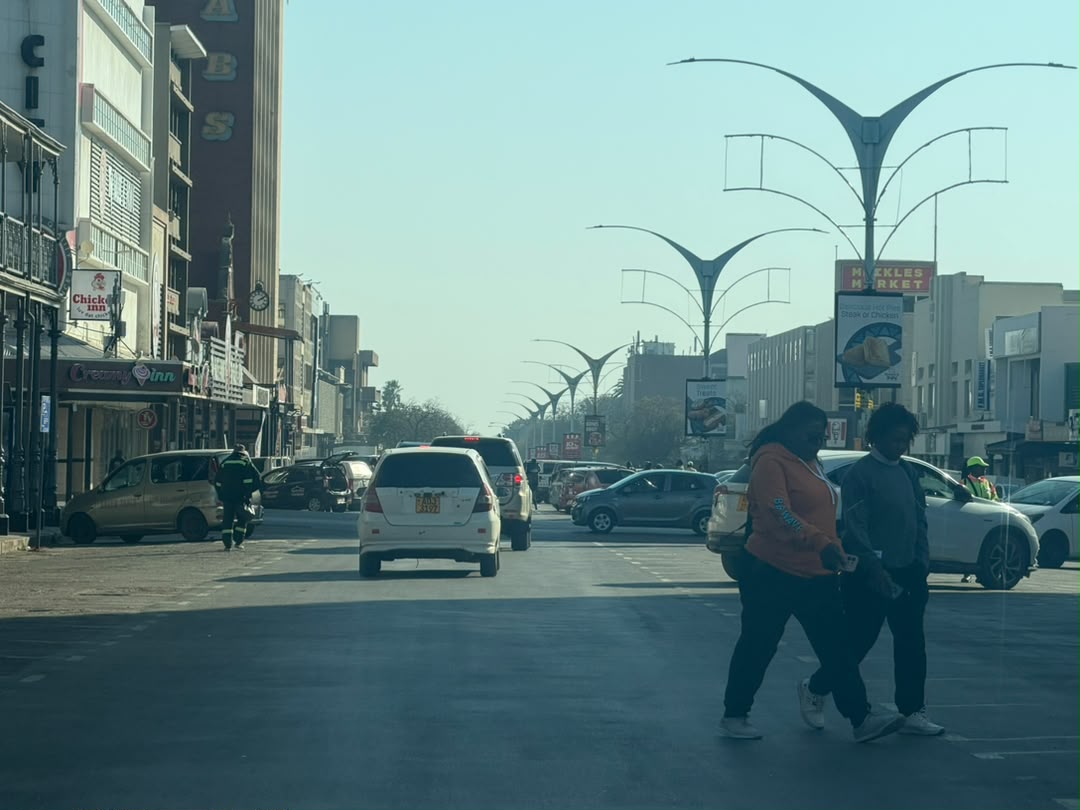
While a few of the growth points have developed to the point of becoming towns, many are ghost settlements with archaic infrastructure, and little hope for growth and investment due to inadequate funding, recurrent droughts and the prevailing economic challenges.
However, the CSOS/Ts being rolled out in many rural community areas endowed with mineral resources, with 10 percent shares ploughed back to benefit the community to fund several developments, growth points and the rural economy is set for a boom. The schemes will see large amounts of money being invested locally in community income generating projects, infrastructure development, thus providing jobs and improving household incomes to thousands of people. Five CSOTs are up and running, with more expected elsewhere. The first one was launched in October last year. They are the Zvishavane CSOT financed by Mimosa Mine, Chegutu-Mhondoro-Ngezi-Zvimba CSOT at Zimplats and the Tongogara CSOT at Unki Mine in Shurugwi. Two others are in Gwanda and Marange.
The Marange-Zimunya CSOT would inject a staggering $50 million in the previously poor, arid Chiadzwa area. The Tongogara CSOT would see at least $10 million being pumped into the Shurugwi community. These are large amounts of money which most communities had never directly received from any source before.
As the CSOS/Ts initiative is spreading countrywide businesspeople in rural areas are also expecting to re-establish their business as they are set to benefit from the schemes. “Now that the share scheme was launched, we hope to see the revival of some of the abandoned projects at our growth point. We are expecting to witness some potential investors in most areas that are benefiting from the scheme,” said a Gwanda resident recently.
Gwanda has a CSOT that was launched at Colleen Bawn by President Mugabe a few months ago. Yesterday, he launched the Hwange District Share Ownership Trust. Five coal mining and processing companies operating in Hwange, among them Hwange Colliery Company have put together a $10 million fund. Hwange area is one of the country’s driest so crop husbandry is difficult. Resultantly, the community was generally poor, but with $10 million to be invested in the previously impoverished area, the economy and the people are certainly expected to be boosted.
A farmer from Bulilima, Matabeleland South, Mr Goodwill Mpofu said: “My son, we travel most of the time to withdraw money from banks and buy farming inputs here in Bulawayo. Most of the banks and shops we used to withdraw our pension money from and buy most of our farming inputs have been closed shops and some relocated to Bulawayo a decade ago. We are also hoping that the recently launched community share ownership scheme launched in Gwanda will ease our problem of coming to Bulawayo and will revive some of our nearest closed businesses,” said Mr Mpofu.
Another old man who was busy loading his seed maize into a Nkayi-bound bus on Friday said if a CSOT is launched in Nkayi, this could attract funding into the area, and potentially enhance the economy there. When this happens, he said there would be no need for him to be constantly on the move.
“I used to buy all my farming inputs at Nkayi business centre, without travelling to Bulawayo, but since the turn of the millennium when our economy started crumbling due to illegal sanctions, many businesses closed shop at the centre,” he said.
President Mugabe has said the CSOT/S is likely to contribute towards broader government efforts to curb rural poverty and stimulate the economy in the countryside.
“Community and Employees Share Ownership Trusts are vehicles for broad-based participation in shareholding in various businesses by our communities and the employees of the businesses,” he said launching the Zvishavane scheme in February.
“The proceeds from such participation by Community Share Ownership Trusts shall be used for the provision of social and economic infrastructure in line with the priorities of the communities concerned such as roads, water works, sanitation, soil conservation and the conservation and prevention of environmental degradation. Today’s programme is therefore a giant step towards the consolidation of my Government’s efforts to rid rural population of poverty.”


 derick.khumalo
 Online Reporter