

 admin
admin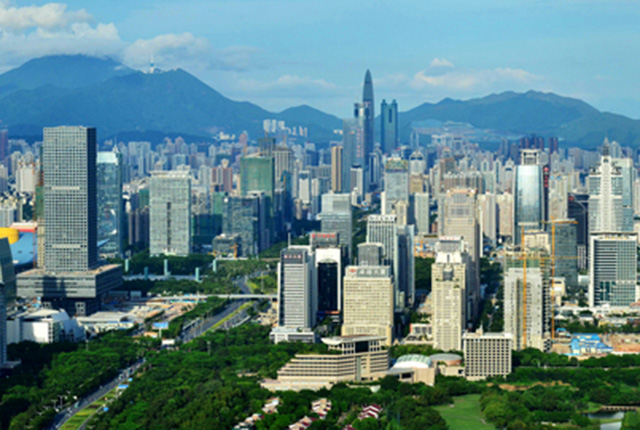
Tichaona Zindoga : Political Editor
So much ink has been expended on what Zimbabwe can learn from China. The “lessons-from-China” line is almost becoming a cliché because of the vast number of times that we have been schooled on how China has made enormous progress in the last 40 or so years to become the second biggest economy.Of course, there are a lot of lessons: from diligence and focus to technological advances and political reform.
There are also lessons to be derived from how the Chinese deal with such cancers as corruption and graft where they have the same laws for flies and tigers.
The Chinese are our friends — and, as is always remarked, our friendship dates back to the days of the liberation struggle.
It should not take Zimbabwe much to take a leaf from these friends and brothers — especially now because of the Look East Policy that Zimbabwe adopted in the last decade.
Therein lies the irony, though.
In fact, the irony is two pronged.
First, China has grown at a phenomenal rate from a backward Third World country it was when we won our independence in 1980, to the mega rich country that it is challenging the status quo of the globe in both political and economic terms.
We have not enjoyed that progress — even when the conditions are different: consider China’s huge population, for example, which is critical to any industrialisation process.
The second ironic thing is that at a time we rather would be learning, and learning fast, from our friends and brothers, a number of critical lessons are being lost to us even when there are several delegations from Government that make the great trek to that Asian giant.
Perhaps that’s too pessimistic — but we need to be sooner rather than later, seeing the results of these travels and exchanges beyond suits from Guangzhou. Expectedly, China had a profound impression on me when I recently went there to take part in the Asia-Africa Youth Summit and the China-Africa Youth Gala.
So happened to the other African colleagues from nearly 38 African countries.
The beauty, the architecture, the industry of the people, the technology, the roads, the rail and other amenities of that country are impressive and in some instances you could be short of adjectives to describe it all.
But there is something outstanding about one particular city — Shenzhen in Guangdong Province in the south.
Its growth from a fishing village in 1980, into a mega city is a truly remarkable and inspirational story.
During a tour we were shown how it was in 1980 — a small nondescript town with one excuse of a multi-storey building.
Today it is the skyscraper capital of China. The skyscrapers and other construction works are built at breathtaking speed.
We were told that it only takes three days to complete a floor and the city’s first skyscraper of 50 floors was built in record time.
It is how the concepts of “Shenzhen time” and “Shenzhen speed” came into being. In fact, there is a saying in Shenzhen that “Time is money, efficiency is life”.
It is something that Africa and Zimbabwe could learn and practice.
Think of the buildings and projects that have taken a lifetime to complete.
Think of the huge amounts of money that have been spent on small piece of road tarring — added to the money.
This is how we do it in Zimbabwe — and somehow this “African time” is forgiven, glorified even.
Can a place like Mvurwi or Dotito transform overnight like the city of Shenzhen? It will take a lot of faith and hard work — and spirit.
It will require a lot of political will and direction. But it is time Zimbabwe thought seriously about changing the way it does things.
This business-as-usual, lackadaisical approach will not take us anywhere.
One has an uncomfortable feeling that what Shenzhen has achieved in the last 36 years will take us a century to complete.
I am very willing to be proved wrong.
Academically, there has been a lot of interest on how Shenzhen has grown so exponentially. In 1979, it had only 30 000 people on the route of the Kowloon–Canton Railway and in 1980 it was made China’s first Special Economic Zone.
It has now transformed and enjoys a population of over 18 million.
Between 1990 and 2000, according to information available, it was one of the fastest-growing cities in the world and its modern cityscape is said to be the result of its vibrant economy made possible by rapid foreign investment since the institution of the policy of “reform and opening”.
More than US$30 billion in foreign investment is said to have gone into both foreign-owned and joint ventures, at first mainly in manufacturing, but more recently in the service industries as well.
According to an article in the Beijing Review, “Shenzhen’s success, under the guidance of the Deng Xiaoping Theory, has provided enlightenment for China’s modernisation drive.”
It’s reform was based on marketisation, State-owned enterprise reform, cultivation of the market and improving the social security system, and was focused on cultivating market entities and SOE reform.
Shenzhen has been driven by systematic and technological innovation has focused on new and hi-tech industries to accelerate its industrialisation and modernisation.
According to Beijing Review: “Technological innovation has also accelerated the development of an export-oriented economy. To date, 17 of the top 500 transnational corporations in the world have invested in the city. The establishment of foreign-funded hi-tech enterprises has trained personnel and brought knowledge to Shenzhen, helping quicken the city’s pace of entering the world market and becoming an international city.”
There is a nice ring to the term “international city”. Zimbabwe could have its own international cities.
The hope is it won’t take us forever to reach there when we have friends to learn from and most probably get a helping hand from.


 Online Reporter