dyton mupawaenda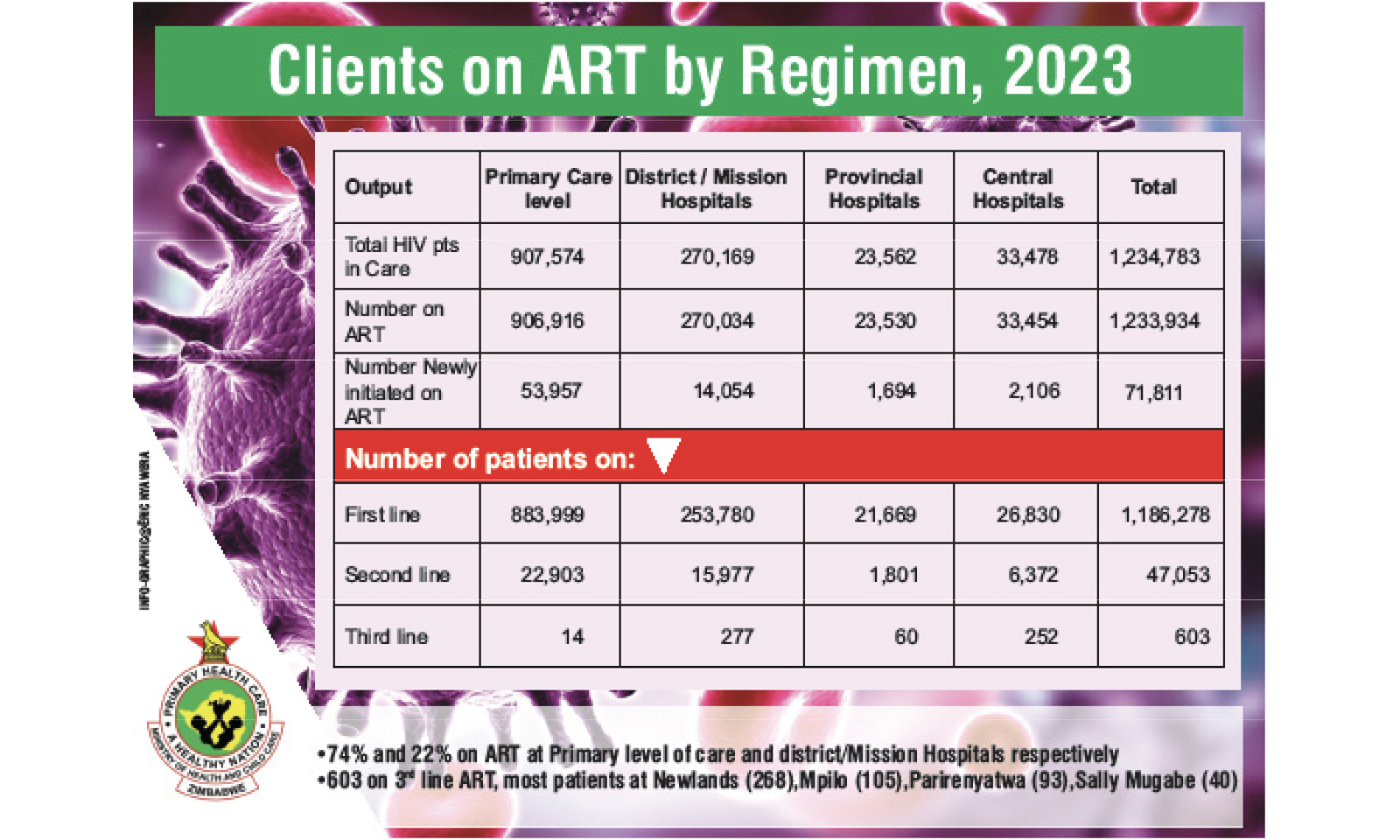
Rumbidzayi Zinyuke-Senior Reporter
A crisis is emerging in the country as nearly 50 000 individuals on HIV treatment are developing resistance to first-line antiretroviral drugs.
This has sparked urgent calls from health experts for improved antimicrobial resistance (AMR) surveillance to protect the gains made in HIV care over the years.
Currently, 1.3 million people live with HIV in Zimbabwe, with approximately 1.2 million on first-line antiretroviral therapy.
However, the statistics reveal a troubling reality: 47 000 individuals are now on second-line treatments, while 603 rely on third-line options.
The prevalence of HIV drug resistance (HIVDR) has risen to a staggering 44.9 percent, posing a threat to the effectiveness of antiretroviral therapy.
Dr Tinashe Hodobo, a leading figure from the One Health Secretariat for AMR, has been vocal about the challenges posed by drug resistance.
He explains that individuals with HIV are particularly vulnerable to drug-resistant infections due to their compromised immune systems.
“HIV brings its own challenges, but when you add resistance, it becomes an even greater threat,” he said. “We’re now seeing individuals who are starting HIV treatment already showing signs of drug resistance.”
This alarming trend is not just a personal health issue; it has broader implications for public health in Zimbabwe.
Despite the progress made in HIV care, Dr Hodobo warns that gaps in AMR surveillance and data collection could undermine these achievements.
He emphasises the need for a robust system to monitor drug resistance trends among those living with HIV.
“We need to be checking regularly to see if there is any evidence that the current drug regimens are not working,” he said. “If so, interventions can be implemented at the earliest possible time.”
The rise in pre-treatment drug resistance poses a serious risk of treatment failure, potentially forcing patients to switch to more expensive second- and third-line treatments.
Dr Hodobo elaborates on the financial burden this shift could impose, “there are also associated costs… more has to be paid if you are going to be moved to second line.”
This reality highlights the urgent need for interventions that not only address health outcomes but also consider the economic impact on patients and the healthcare system.
To tackle the growing threat of AMR effectively, Zimbabwe requires US$45 million to implement its AMR response strategy.
Of this, nearly US$21 million is earmarked for surveillance efforts, crucial for monitoring and addressing drug resistance.
Dr Hodobo emphasises the importance of raising awareness about treatment adherence and integrating AMR discussions into HIV education.
“We need to contextualise the AMR issues so that it becomes part of the discussion,” he urges, calling for a unified approach to tackle the dual challenges of HIV and AMR.
As Zimbabwe confronts the rising tide of HIV drug resistance, the call to action has never been more urgent. With coordinated efforts in surveillance, funding, and education, the country can work to protect the health of its citizens living with HIV and ensure the continued success of its HIV care programs. The stakes are high, but with collective action, there is hope for a healthier future.



 Online Reporter