Chronicle Editor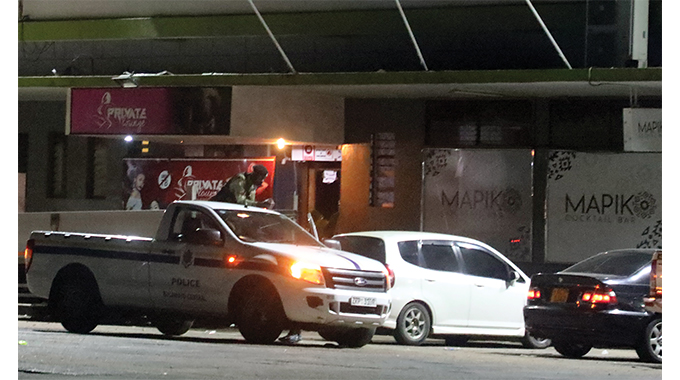
Raymond Jaravaza, [email protected]
THE corner of Robert Mugabe Way and 13th Avenue, a once bustling intersection, transforms into an abyss of darkness as the night descends upon the city of Bulawayo. Passersby are left squinting, their vision impaired by the absence of streetlights that once illuminated the path ahead. In fleeting moments, the passing headlights of vehicles offer a glimpse of clarity, only to be swiftly swallowed by the shroud of darkness once again. The ominous atmosphere is heightened by the hushed conversations of sex workers who roam the area, their whispers hinting at a hidden world of intrigue and danger.
According to reports, the streetlights at this particular intersection fell victim to a calculated act of sabotage, orchestrated by the very sex workers who now thrive under the cover of night. In interviews with Chronicle, two local boys, whose homes lie a stone’s throw away from the haven of sex workers, shed light on the clandestine activities that unfold in the darkness.
With a careful gaze, one of the boys points to the damaged streetlights, explaining: “If you look closely at the top of the street light, you will see that the position where the light bulbs are supposed to be placed is damaged. Those sisters,” he gestures towards the group of sex workers, “paid my friends to damage the street lights with stones. They want this whole area to be dark.”
He shares this revelation, exposing the collaboration between the sex workers and the street children who serve as their lookout.
The other boy, a mere 17 years old, reveals the extent of their alliance.
“They sometimes buy us food or cigarettes, so we like working with them. Sometimes a client might refuse to pay, and we confront him to pay our sister, otherwise we will damage his car or beat him up.”
A chilling testament to the precarious dynamics at play in the shadows.
The dimly lit streets of Bulawayo have become a treacherous landscape, fraught with risk for anyone who ventures out after nightfall. Navigating these dark thoroughfares demands an acute awareness of one’s surroundings, as muggings have become all too common. The corner of Jason Moyo and 11th Avenue stands as a chilling example, where an alarming number of incidents have been recorded. The author of this piece is personally acquainted with two individuals who fell victim to a mugging while leaving a popular nightspot in that vicinity.
Alarmed by the escalating number of crimes near his nightclub, the establishment’s proprietor took matters into his own hands, hiring additional security personnel to patrol the immediate vicinity. The irony is not lost when one considers that the street lights in the area are in a state of disrepair, failing to serve their intended purpose.
The dire state of street lighting extends beyond a single intersection. At the bustling Sixth Avenue commuter omnibus terminus, darkness reigns supreme. The once-luminous beacons that should guide weary commuters through the night are either non-functional or absent altogether. To compensate for this deficiency, kombi drivers diligently keep their vehicle headlights on, not only to navigate the vicinity but also to illuminate the area and deter potential muggers. Sabelo Mpofu, a rank marshal, declares with an air of defiance: “We don’t tolerate thieves here.” Though the absence of light may shroud Sixth Avenue in mystery, those who dare to disturb the peace will encounter a formidable resistance.
The implications of the street lighting crisis weigh heavily on the minds of residents’ associations, with the Bulawayo Progressive Residents’ Association (BPRA) expressing deep concern. Ambrose Sibindi, the chairperson of BPRA, describes the city’s dark streets as a threat to the well-being of its residents. He emphasises the inherent dangers pedestrians face, highlighting that while cars have their own lights to guide them, pedestrians are left vulnerable and exposed in the absence of adequate street lighting. Previously designated safe routes have now become equally hazardous due to the lack of illumination.
Sibindi remarks: “It’s hard to see someone from afar, nothing can now alert a person of danger on his or her way. Criminals are now free to operate wherever they want. If a vehicle breaks down along the way, the motorist is in danger, as it becomes difficult to attend to their car in darkness.”
Efforts to address the street lighting crisis have yielded no response from the Bulawayo City Council (BCC) thus far, leaving residents disheartened and concerned for their safety. The silence of the local authority leaves the burden of protection upon the shoulders of the community itself. Many individuals have resorted to adopting precautionary measures such as walking in pairs or groups when venturing out at night. Students and professionals alike, such as nurses from the United Bulawayo Hospitals, have recognised the necessity of solidarity in the face of uncertainty.
“It’s become worse now that we are in the winter season because it gets dark before 6pm, so we walk in groups when coming from work. A colleague lost a phone and handbag last month near Unity Village when two guys grabbed her belongings as she was walking to Sixth Avenue terminus,” reveals a local nurse, stressing the importance of collective vigilance.
While Bulawayo police spokesman Inspector Abednico Ncube, acknowledged their regular patrols of crime hotspots, he implored the public to remain vigilant when traversing poorly or unlit streets. The responsibility for personal safety cannot be solely placed on the shoulders of law enforcement, especially when the absence of street lighting creates an environment ripe for criminal activity.
As the nights grow darker in Bulawayo, its residents continue to navigate the shadowy streets with a mix of caution and determination.
The urgent need for functional and adequate street lighting remains a pressing issue, demanding attention from the local authorities to ensure the safety and well-being of the community. Until then, the people of Bulawayo persist, facing the darkness head-on, their resilience a testament to their unwavering spirit in the face of adversity.


 Online Reporter