admin
admin
From Itayi Musengeyi in GABORONE, Botswana
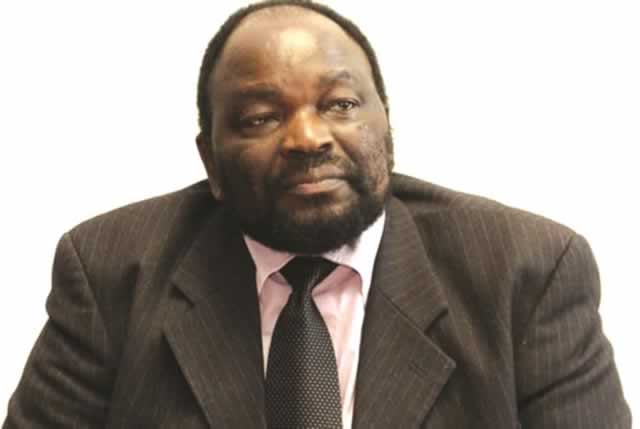
SADC must urgently address its funding requirements to guarantee the future of its programmes and move away from burdening itself with activities it cannot bankroll, Zimbabwe’s Foreign Affairs Minister Simbarashe Mumbengegwi has said.
Minister Mumbengegwi said assistance from donors was appreciated, but the region must not continue to rely on aid.
He said it was high time the Sadc Regional Development Fund was established to finance the region’s development needs.
Speaking at the official opening of the Sadc Council of Ministers meeting here yesterday, Minister Mumbengegwi said recent developments have shown that donors are having their own challenges and their ability to continue funding the developing world was hamstrung.
Minister Mumbengegwi, who handed over the chairpersonship of the Sadc Council of Ministers to Botswana’s Finance and Development Planning Minister Kenneth Matambo, said Sadc has come a long way and was extremely proud of its achievements in the past 35 years, but there was now need to re-strategise.
“We are happy to note that the values of freedom, unity, independence and solidarity engendered by our founding fathers remain at the core of our organisation and continue to guide our programmes and activities.
“While we celebrate these achievements, we remain deeply conscious of the fact that for as long as we are unable to fund our own organisation, the future of our programmes and activities will remain uncertain and Sadc will not be wholly ours.
“While we deeply appreciate the support that Sadc receives from its co-operating partners, our continued dependence on their generosity and benevolence constitutes one of the most profound weaknesses of our organisation,” Minister Mumbengegwi said.
This state of affairs, he said, compromised ownership and control as well as sustainability of the region’s programmes particularly those in the strategic areas that are at the core of the Regional Indicative Strategic Development Plan (RISDP) as well as the Indicative Strategic Plan for the Organ.
The RISDP is the region’s socio-economic blueprint which places regional integration as key to the development of the 15-member bloc.
Minister Mumbengegwi said Sadc should concentrate on programmes that have a direct bearing on regional integration, peace and security.
“Every year, our organisation is confronted with the twin realities of an ever expanding list of responsibilities against a background of dwindling resources. We should, Honourable Ministers, ask ourselves why we should continue to crowd our organisation with institutions and programmes that member states have no capacity to fund. We should not heap on Sadc those programmes that member states can implement on their own,” he said.
Minister Mumbengegwi said there was no longer any excuse not to look for alternative sources of funding for the regional grouping given the declining support from donors.
“We therefore cannot continue to postpone indefinitely the debate on alternative sources of funding for our organisation, neither can we afford to continue procrastinating on the operationalisation of sustainable financing mechanisms such as the SADC Regional Development Fund. I look forward to a frank, open and constructive discussion on the report submitted by the Secretariat to this Council on this important matter.”
The Sadc Development Fund is aimed at creating a conducive environment for investment through financing the preparation of infrastructure projects based in at least one Sadc member-state or those with a direct and positive impact on other member states.
His successor Botswana’s Matambo said member states need to assume greater responsibility in financing the regional bloc.
“The need for adequate budgetary provisions for financing Sadc activities and ensuring assumption of greater financial responsibility by member states, while prioritising the region’s activities in order to focus on those issues that would deepen regional integration within a short time-frame, cannot be overemphasised. Let us therefore ensure implementation of high impact activities, policies and strategies,” Matambo said.
Minister Mumbengegwi cited the Revised RISDP 2015-2020, the approval of the Industrialisation Strategy in Harare in April this year and the launch of the Tripartite Free Trade Area by the three regional economic communities — Sadc, Common Market for Eastern and Southern Africa and the East African Community — in June as the important highlights of the past 12 months.
The launch of negotiations for the Continental Free Trade Area in June at the African Union summit in South Africa was also a milestone, he said.
“We trust that working together with the support of the Secretariat, we will be able to expedite the outstanding and critical processes in line with the timelines set by our principals.
“As we move forward with these new arrangements, it is imperative that Sadc remains united in advancing its interests so as to ensure an inclusive, prosperous and integrated continent as envisaged in the African Union blueprint Agenda 2063,” Minister Mumbengegwi said.
Minister Mumbengegwi said the region looked forward to the restructuring of the Sadc Secretariat so that it can better deliver on its mandate.
The two-day Council of Ministers meeting ends on Saturday and is a forerunner to the Heads of State and Government summit which begins on August 17.



 Online Reporter