Chronicle Editor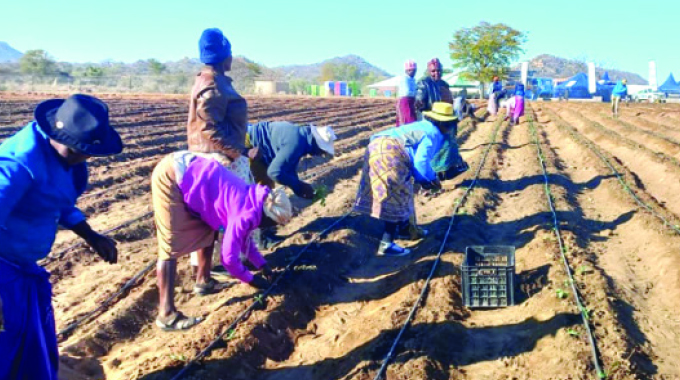
Patrick Chitumba, [email protected]
FARMERS in Shurugwi have embraced the growing calls to mainstream production of traditional grains as part of measures to mitigate against climate change impacts and boosting food security in the country.
Government is providing essential inputs to support this initiative, recognising the nutritional benefits and climate resilience of traditional grains.
This programme is particularly timely, as the climate-resilient Pfumvudza/Intwasa model has already shown remarkable success in promoting food security nationwide.
By focusing on traditional grains like sorghum and millet, Zimbabwe is taking a significant step towards achieving sustainable agriculture and food security.
Government’s support for traditional grains is a strategic move towards achieving sustainable development goals (SDGs), particularly SDGs 2, 13, and 17.
Over 2 000 farmers in the district were handed over the traditional or small grains ahead of the summer cropping season.
The legislator for Shurugwi North, Cde Joseph Mupasi said he was a firm believer that traditional grain production is the answer to eradicating hunger and ensuring Zimbabwe’s long-term food security.
“It is not a secret that all over the world, value-added agriculture generates several billions of dollars for some of the globe’s huge economies, which now invest money in value process chains of a product, right up to the shelf,” he said during the recent distribution of the small grain in Shurugwi.
Cde Mupasi said the Government had provided the inputs to all farmers in his constituency before the onset of the rainy season.
One of the recipients Mrs Immaculate Nashley said with the traditional grains, they were expecting to produce more food from the household to the district level.
“Our communities are growing, meaning we must be prepared to produce more food for the people, despite the changing climatic conditions. This season, the distribution of agricultural inputs to us the farmers commenced early, marking a significant shift towards the strategy that prioritises agro-ecological matching and resilience-building,” she said.
Meanwhile, the Government also distributed inputs under the Pfumvudza/Intwasa programme in Zvishavane where over 1 000 small-holder farmers benefited from the initiative.

Zvishavane-Runde Constituency legislator Cde Freddy Moyo urged farmers to take advantage of the early disbursement of inputs to prepare for the summer cropping season.
“Farmers must adequately prepare so that they produce good results to realise good harvest so that Zimbabwe becomes food self-sufficient,” he said. “Inputs should be secured on time. I want to urge our farmers to maximise this initiative and counter drought in our area.”
Cde Moyo said the early distribution of inputs to farmers signifies the Government’s commitment to leaving no one and no place behind in its developmental programmes.
“We are happy with the introduction of the Pfumvudza/Intwasa programme, which we are confident that this coming season will increase our productivity,” he said.
“Pfumvudza/ Intwasa has transformed the face of agriculture in our area. Farmers can maximise on limited space of land. As such, we thank the Government for the initiative,” he said.



 Online Reporter