

 Chronicle Editor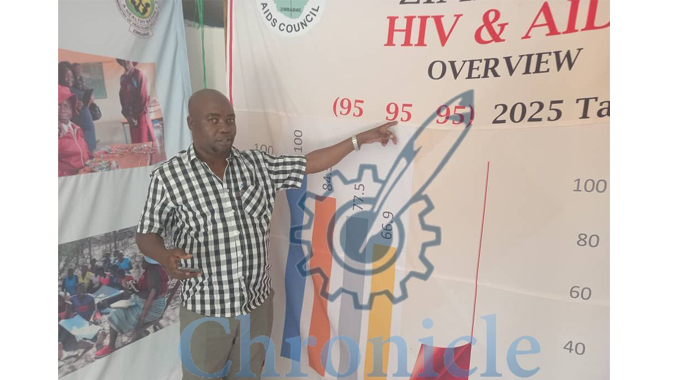
Patrick Chitumba, Midlands Bureau Chief
THE mining town of Shurugwi is leading in terms of new HIV infections and incidence rate in the Midlands province.
Key populations such as commercial sex workers are accused of causing most infections, according to the latest statistics from the National Aids Council (Nac)
The Midlands province has about 7 000 registered commercial sex workers with about 2 500 based in Shurugwi. Gweru and Kwekwe are some of the areas with high numbers of the key population.
In an interview on Sunday at the just ended Midlands Show at Gweru Showground, Mr Petros Mazengwa Gweru District HIV and Aids coordinator at Nac, said the province’s HIV incidence rate is at 0,25 percent.
“Now for districts it’s like this, Chirumhanzu 0,24 percent, Gokwe North 0,18 percent, Gokwe South 0,16 percent, Kwekwe 0,28 percent, Gweru 0,32 percent, Shurugwi 0,40 percent, Mberengwa 0,29 percent, Zvishavane 0,26 percent,” he said.
Mr Mazengwa said the highest is Shurugwi because there is a high key population who includes commercial sex workers and artisanal, small to medium scale miners.
“It’s a mining area and people flock there in search of gold. Because of gold we tend to see a number of sex workers visiting that area. It’s really a hot spot in the Midlands province as evidenced by the statistics on the ground,” he said.
“But a lot is happening in terms of interventions to reach those key populations. We are doing a lot to reach the key populations teaching them about use of condoms, abstinence and HIV testing as well because it is good that they know their HIV status.”
Gweru, Mr Mazengwa said, is number two after Shurugwi adding that Gweru is the capital city of the province with highways that link the city to mining towns with a lot of gold opportunities. He said Gweru offers big business for those towns such as Kwekwe and Shurugwi adding that key populations converge there. He said they don’t expect the prevalence rate to go down drastically over years.
Prevalence rate, he said, is the total number of people living with HIV in a given geographical space within a given population.
Mr Mazengwa said the province recorded 2 823 Aids-related deaths in 2018, 2 620 in 2019, 2 707 in 2020 and 2 531 in 2021.
“There was a decline in 2019 and then an increase in 2020. We had Covid-19 pandemic which could have contributed towards this increase in Aids-related deaths because the pandemic interrupted our programmes and some people failed to access their ART,” said Mr Mazengwa.



 Online Reporter