Online Reporter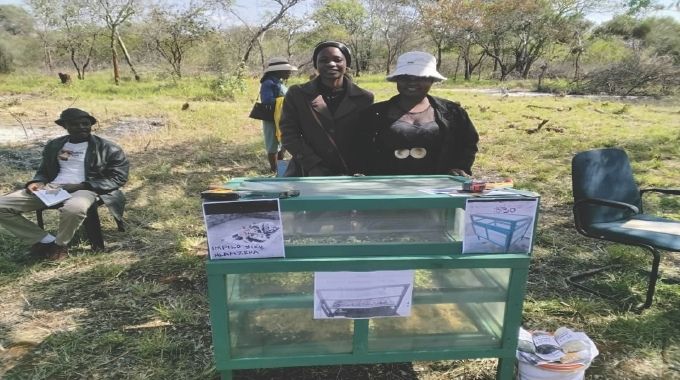
Nothando Zondo, [email protected]
THE vast green fields of maize and sugar beans at Silalabuhwa Irrigation Scheme tell a story of renewal, hard work and hope. What was once underused land is now one of the driving forces behind Insiza District’s growing confidence in achieving year-round food security.
Spanning 442 hectares, Silalabuhwa is the largest irrigation scheme in Matabeleland South. Located in Ward 3 under Chief Sibasa, it has become a lifeline for hundreds of farmers and a key pillar in efforts to strengthen food production in the district.
Last Friday, the scheme became a hive of activity as farmers, Government officials and agribusiness players gathered for the Silalabuhwa Agriculture Field Show. The event was more than just a showcase. It brought together learning, celebration and business opportunities, creating a space where farmers could share knowledge, display their produce and connect with partners who can help them grow further.
For the 746 farmers who rely on the scheme, the field day carried deep meaning. It was a moment of recognition — proof that small-scale irrigation farming, when supported with the right resources and advice, can produce real results, not just for households but for the wider district economy.
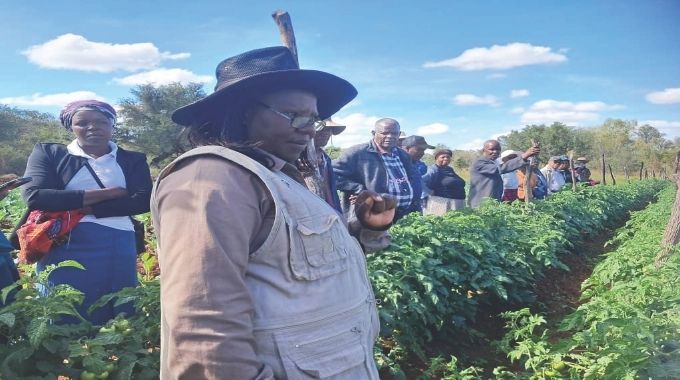
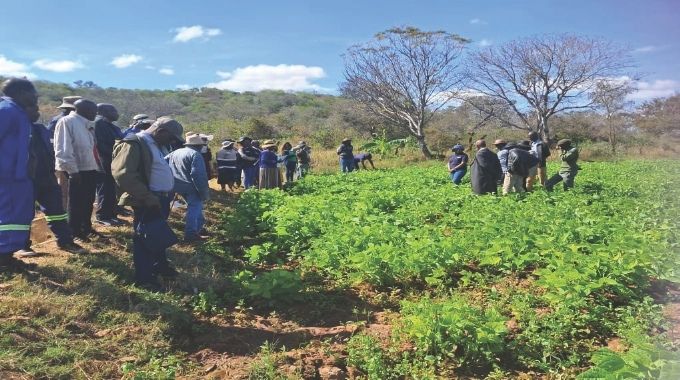
The day’s activities began with guided tours of some of the most productive plots. Farmers who had achieved high yields in crops such as maize, sugar beans and horticulture took visitors through their fields, explaining how they had achieved their results. They spoke openly about their planting schedules, irrigation methods and pest control techniques.
The focus was practical. It was about showing what works and how it can be replicated. Farmers shared lessons learned, challenges faced and solutions found, creating an environment where knowledge flowed freely among peers.
“Seeing is believing,” said one farmer as she showed off a plot of high-yielding maize. “When you see your neighbour’s crop and hear how they did it, you want to try the same.”
That simple exchange captured the spirit of the day — one of shared learning and collective progress.
Beyond the fields, the exhibition area was filled with displays that reflected the diversity of farming activities at Silalabuhwa. Farmers showcased different maize varieties, as well as processed products such as peanut butter and dried vegetables. There were also livestock displays, including rabbits, turkeys and chickens.
This range of products highlighted an important shift taking place within the scheme. Farmers are moving beyond basic crop production towards mixed farming and value addition. Instead of selling raw produce only, many are exploring ways to process and package their goods, increasing their income and reducing waste.
Seed companies were also present, using the platform to engage directly with farmers. Representatives such as Ms Buhlebenkosi Ayanda Mavolwani from Zadzamatura and Mr Ngonidzashe Mativenga from K2 took time to explain the benefits of different seed varieties.
They highlighted the importance of choosing seeds that match local soil conditions and climate patterns, ensuring better yields and more reliable harvests.
“Our role is to make sure farmers know what they are planting and what yield potential to expect. When farmers use the right seed and follow agronomic advice, the results follow,” said Mr Mativenga.
Their presence underlined the importance of linking farmers with the private sector, ensuring access to quality inputs and up-to-date farming knowledge.
Leading the proceedings was Insiza district Agricultural Business Advisory Officer Mr Augustine Mhike, who commended the farmers for their commitment and progress. He said their efforts were helping move the district closer to achieving food self-sufficiency.
He pointed out that this progress aligns with findings from the CLAFA Report, produced by Zimstat and the Ministry of Agriculture, Mechanisation and Water Resources Development. The Crops, Livestock, and Fisheries Assessment is a national report used to measure agricultural performance and food availability across the country.
“We note this achievement, it is in line with the CLAFA Report produced by Zimstat and the Ministry of Agriculture, Mechanisation and Water Resources Development,” said Mr Mhike.
“It shows that when farmers, extension services and partners work together, we can meet our targets. Wheat must be harvested before the onset of rains to preserve its baking quality. Farmers should therefore work together in blocks to improve efficiency and maximise production.”
Mr Mhike encouraged farmers to embrace block farming, where those in the same area plant the same crops at the same time under coordinated management. He explained that this approach makes it easier to manage weeds and diseases, improves water use in irrigation, and makes harvesting more efficient.
He also challenged the district to expand wheat production to meet its target of 1,190 hectares.
“The Silalabuhwa Irrigation Scheme alone is expected to contribute more than 150 hectares this season. Considering its size of 442 hectares, Silalabuhwa Irrigation Scheme should significantly contribute towards the district’s Gross Domestic Product through increased production of raw materials for agro-industries.
“We want to see this scheme become a value-addition centre producing maize meal and other agro-products. I want to encourage the farmers to aim for the full yield potential indicated by seed houses. It is critical that this project moves up the value chain,” said Mr Mhike.
His message was clear: the scheme has already achieved a lot, but there is still room to grow, especially in processing and adding value to produce.
A key factor behind Silalabuhwa’s success has been Government support. The scheme has been climate-proofed through reliable water supply, allowing farmers to grow crops throughout the year instead of depending only on seasonal rains.
This reliability has made a major difference. Farmers can now plan their production with confidence, leading to more stable incomes and reduced risk during dry spells. It has also attracted interest from input suppliers and buyers, who prefer working with farmers who can produce consistently.
Mr Mhike said the field day was also about building these connections.
By bringing together farmers, seed companies, Government departments and community leaders, the aim was to create opportunities for better access to inputs, fair pricing and improved market links.
The event was attended by Chief Sibasa and other senior community leaders, highlighting the importance of agriculture to the district’s development. Outstanding farmers were recognised and rewarded, not just for their high yields but also for following good farming practices and sharing knowledge with others.
These recognitions were important. They showed that success is not only about production levels, but also about discipline, innovation and a willingness to help others improve.
The transformation seen at Silalabuhwa did not happen overnight. For years, the land had been lying idle despite its potential to improve livelihoods. That changed in 2023 when the Government invested US$400 000 to rehabilitate the project under the Agricultural and Rural Development Authority (Arda).
Further support came through a partnership with the International Fund for Agricultural Development (IFAD) under the Smallholder Irrigation Revitalisation Programme. This intervention helped save the scheme from collapse and restore it to full operation.
As part of the rehabilitation, canals supplying water from Silalabuhwa Dam were repaired and key infrastructure such as valves was replaced. These improvements made it possible to deliver water efficiently across the entire scheme.
Today, the results of that investment are clear. The scheme is not only producing food but also creating opportunities for employment, business growth and skills development.
For many families in Insiza, farming at Silalabuhwa has moved from being a struggle for survival to becoming a source of dignity and stability.
As the green fields continue to stretch across the landscape, they stand as a sign of what is possible when communities are supported, organised and given the tools they need to succeed.