admin
admin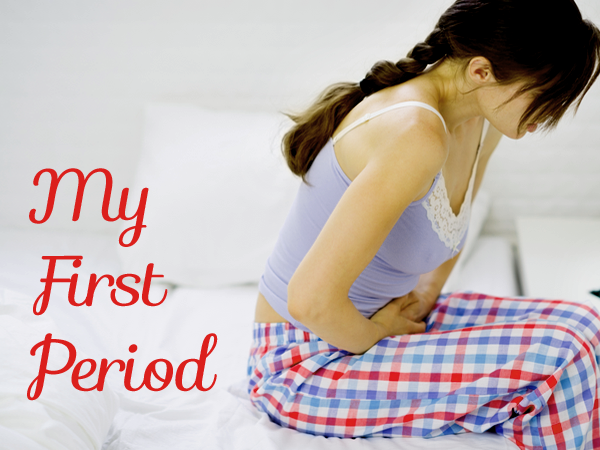

Nomalanga Sibanda
Menstruation is a natural biological process, which unfortunately, is shrouded in a lot of secrecy. In many communities, it is considered a taboo to even mention the words ‘menstruation’, ‘pads’, ‘tampons’ or ‘sanitary towels’. Sadly, the culture of silence around this subject has been detrimental to the health and well being of the girl child.
This has to change for the benefit not only of the girl child but for the development of communities as well.
Over the years, girls have been exposed to a lot of ridicule and taunting from boys especially when they stain their uniforms at school to the extent that most girls who cannot access appropriate sanitary wear opt to keep away from school during the duration of their menstrual cycle.
This has led to them losing out on a lot of valuable learning time.
According to research, 67 percent of girls begin their first menstruation cycle at school meaning a significant number of girls have to bear the brunt of womanhood for the first time unprepared and away from the confines of their homes.
Also, due to the secrecy surrounding menstruation and the failure by communities to accept it as a natural biological process, many disadvantaged women and girls end up using cloths which result in thrush and other vaginal infections.
It has been established many girls are forced to miss school because they do not have adequate sanitary wear.
Statistics show that 72 percent of rural girls use soft bark tissue during menstruation because they cannot afford appropriate sanitary wear and do not attend school as a result.
SNV Netherlands, a non-governmental organisation in partnership with the government of Zimbabwe began a pilot project in Masvingo to empower the girl child and communities at large.
The organisation established that cultural and religious beliefs have a direct bearing on menstrual health management (MHM).
Pupils were encouraged to form health clubs that teach about health matters affecting children.
Chief Boniface Musara, the ambassador for MHM in Masvingo, said there was a real challenge in dealing with issues concerning menstrual health.
“In the beginning, it wasn’t easy to accept this subject which traditionally is considered a taboo to speak about in public spheres,” said Chief Musara.
However, the chief said traditional leaders could not solve problems affecting men while ignoring the plight of women in their jurisdiction.
“There’s an absolute need to give the girl child the privacy she needs. Girls have the right to be treated with dignity. Not doing so would be a violation of their basic human rights,” said Chief Musara. “There’s a need to keep up with modern trends on MHM to improve the life of the girl child.”
The construction of girl friendly toilets has since been completed in some rural areas in Masvingo province as Blair toilets did not have enough room to allow girls to change their pads.
According to a recent study, a significant number of girls did not wash their hands after using the toilet but would instead wipe off blood from their hands using the hems of their uniforms.
There is an urgent need for education on menstrual hygiene and the erection of adequate facilities that less privileged girls can access during their menstrual cycles.
Statistics show that Coghlan Primary School in Bulawayo is one of the few schools that keep sanitary wear in case girls begin their menstrual cycle while at school.
Twenty percent of primary school girls have no information about menstrual hygiene before they begin their periods while 54 percent are mocked and stigmatised by boys at school during their menstrual cycle.
Very few parents discuss menstrual hygiene with their children.
Ellen Gampo, of Siyaphambili Secondary School in Plumtree, said their school reserved sanitary wear for emergencies and sporting competitions as many pupils were reluctant to participate in sporting activities because they did not have adequate sanitary wear and were worried that whatever they were using would fall off.
Gampo said some pupils could not afford sanitary wear and used old rags which are unhygienic and often led to infections and rash.
She said most pupils did not attend lessons during their monthly cycle as a result missing out on important concepts.
“It’s saddening that so many girls have to miss school because of something so natural, something as old as humankind,” said Gampo.
Although it will take a long time to undo the harm made by the culture and tradition which has treated menstruation as a secret, the advent of reusable menstrual pads will go a long way in ensuring menstrual hygiene for a significant number of women.
Reusable menstrual pads are made out of three strips of fleece material, java print and waterproof material.
The pad can be washed, dried and reused.
A special packet was designed to carry the used pad so that any unpleasant smell from the pad is not emitted. The reusable pads come with a waterproof bag which girls can take to school.
An individual needs five reusable pads per annum.
Women in the communities have taken up this project and sell reusable pads to those who cannot make some for themselves. Reusable pads have been found to be very popular with cross border traders.
Reusable pads have given the girl child the confidence to participate in sporting activities.
Going further the challenge of correct disposing of menstrual pads was addressed by custom made incinerators built next to the girl-friendly latrine.
It is environmentally friendly because the emissions are controlled. It has been noted that any fluid from the human body should be handled with care and disposed of safely, this includes menstrual blood thus the need to dispose of it carefully through incineration.
Children from well-to-do families can afford pads and cotton wool.
Ways of disposal in rural areas were found to be down the pit latrine, or burning the pads for those afraid of witchcraft.
MHM was ignored by men with some not even including it in their budgets and so where would their wives and daughters get sanitary protection if the head of the home chose not to include it in the budget?
In such households women have no decision making power and MHM is silent, privatised and stigmatised.
It was found out that men prioritise other matters except MHM.
In some conservative communities it was said that some women are not allowed to get water from the borehole during menstruation, they were excluded from religious rituals and from cooking at community gatherings because it “makes men weak.” Women who experience period pains are stigmatised as barren.
In most rural areas, school children walk long distances to school and this has an effect on the girl child during menstruation as there is a lot of bruising, chaffing and discomfort.
With this in mind, it is time that communities take up the initiative by the government and SNV partnership to change attitudes towards MHM by talking about it so that it is accepted as a biological process rather than a curse.
Communities should stop stigmatising women and verbally abusing them by labelling them moody because of periods. Gender-based violence against women because they are menstruating should be stopped. Women are forced to be intimate during menstruation which is against their basic freedoms. For a progressive nation attitudes towards women and menstruation should change for the better.


 Sidumisile Mabena