admin
adminwith a retailer who professed her chain’s total commitment to the Buy Zimbabwe initiative.
She spoke of the numerous efforts they were making towards promoting emerging local businesses.
For instance, stationery items that they sell such as office folders are bought from community groups that use recycled paper.
In view of the upcoming Easter holidays the retailer approached a leading confectioner to source Easter eggs and other Easter treats in an effort to strike a balance between the foreign and local varieties.
She mentioned that a lot of their traditional customers are requesting that the local varieties be available for the holiday.
Unfortunately, the confectioner could not supply the products citing input shortages leaving the retailer with no choice but to stock Easter eggs from South Africa.
Perhaps in future the retailer can consider assisting the confectioner to access the required inputs.
I have observed a worrying factor that although stocking levels have improved significantly, prices of basic food and non-food commodities have been rising.
There are also huge price disparities on similar products.
For example, the price of a bottle of cooking oil can be pegged at US$3,56 in one shop while selling at US$4,80 in another shop, which is more than a dollar difference in price for the same product.
This could suggest that there is an element of profiteering in some retailers who tend to charge exorbitantly for commodities.
Recent media reports have shown that there is, however, another dimension to this price divergence.
What actually appears to be a similar product is an inferior product that has been packaged to replicate the original.
The consumer has fallen prey to unscrupulous businesspeople who upon realising that there is a huge demand for local products replicate them and sell them at cheaper prices.
In February last year, news made the rounds that a leading local brand of orange crush had been counterfeited and found its way onto the market.
Other local products that have suffered a similar fate include a leading maize variety and cooking oil brand.
While counterfeit products have often been found on the informal market it is even more disturbing when they eventually find their way into the formal market where they fly off the shelf to the benefit of copycats.
Local products not only have to fight off fierce competition from foreign goods but have to compete with cheaper fake versions of themselves.
Consumers are duped into buying a fake product thinking it’s a bargain. Apart from loopholes that exist in the system, counterfeiting is also made easy because local products have lost familiarity, which makes it difficult for consumers to tell the difference between a counterfeit and the genuine article.
This leads me to the aspect of brand promotion. Producers need to keep their clients in the loop on developments regarding their product or products and some of the key features such as packaging. Roadshows and in-store promotions are now rare and the few that have been held in recent times tend to push foreign brands.
Sometime in February this year I attended a Coca-Cola-organised musical event where the company took the opportunity to demonstrate their beverage to audiences.
They really did a good job and it is not surprising that they are the biggest brand in the carbonated drinks industry.
The importance of creative engagement of consumers thus cannot be over-emphasised.
I spoke to a detergent manufacturer who has been struggling to get an in-store promotion from a leading retail outlet for months now only to find out that the same retailer undertook a promotion for their foreign competitor.
Definitely a little creativity in engaging the retailers will help to spread the message on local brands.
Awareness is a critical element in helping the consumer make informed purchasing decisions.
It is not only a question of knowing the price, availability and quality of a particular commodity but it is critical to have a background of the product as well.
This week I had an interesting encounter whilst I was shopping. I met a lady who had in her shopping basket a range of detergents from a South African brand.
Out of interest I directed her attention to a competing local brand of detergents and her immediate response was that the local products were inferior.
Armed with some background on the local brand of detergents I informed the lady that the formula for the two brands was actually the same as the local company was also the manufacturer of the South African brand.
She then highlighted to me that it was a question of branding that had shaped her perception of the two products.
True, the local product does need some improvement as the branding is not eye- catching.
It is time we work to change the misconception that local products are inferior.
l For comments, contributions and membership contact Buy Zimbabwe on:
[email protected]
Tel: 04-333045
Cell: 0772 714 233
Or visit
22 Broadlands Road
Mount Pleasant
Harare
Alternate address: 8 Howard Close, Mount Pleasant, Harare.


Online Reporter
- Herald
- July 31, 2026
- 3 views
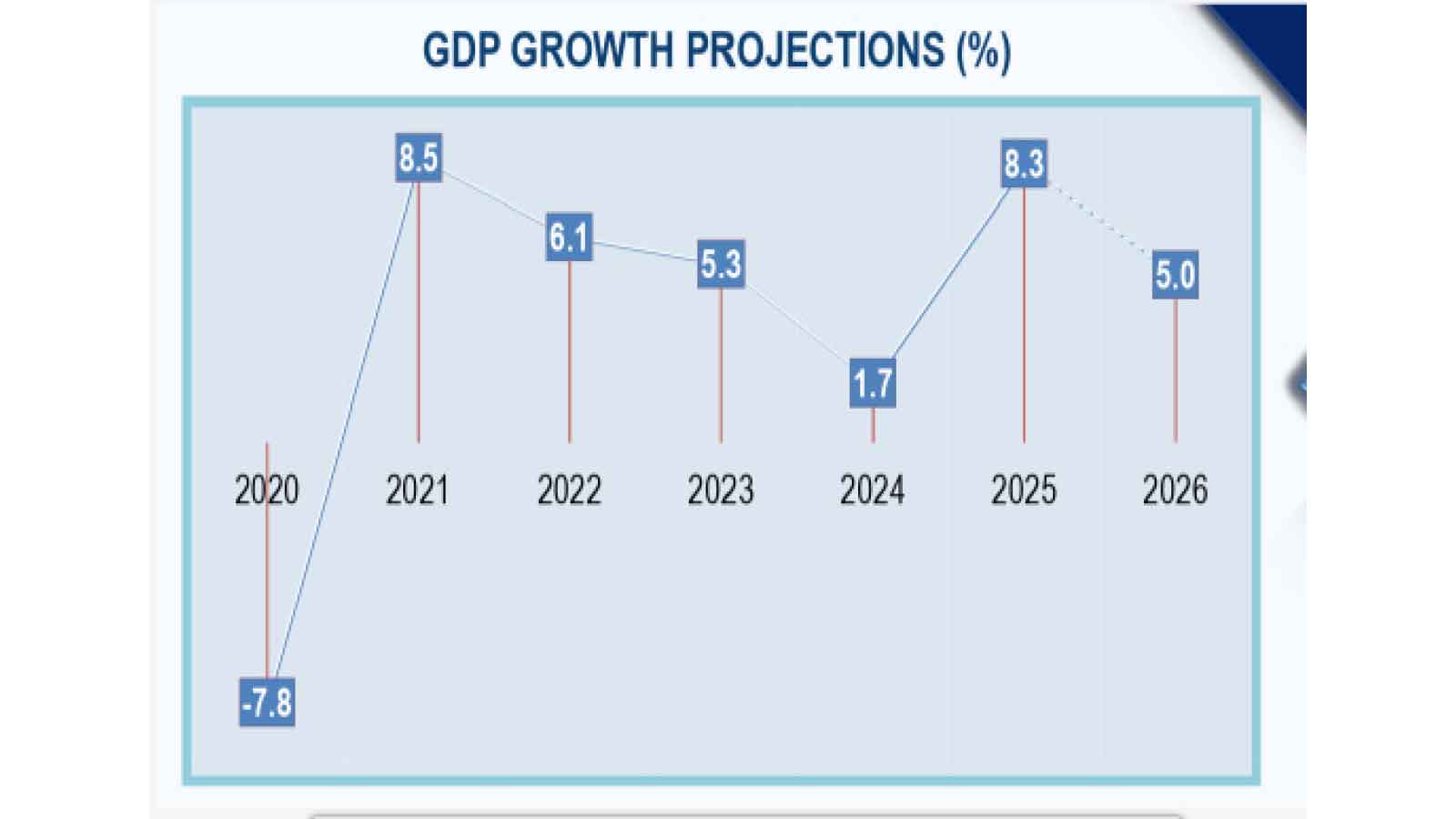
Stable inflation fuels 6.8pc Q1 growth as Zim outruns projection
Nelson Gahadza Senior Business Reporter Zimbabwe’s stable inflation environment has created the conditions for stronger-than-expected growth, with the economy expanding by 6,8 percent in the first quarter of 2026, putting…