Bongani Ndlovu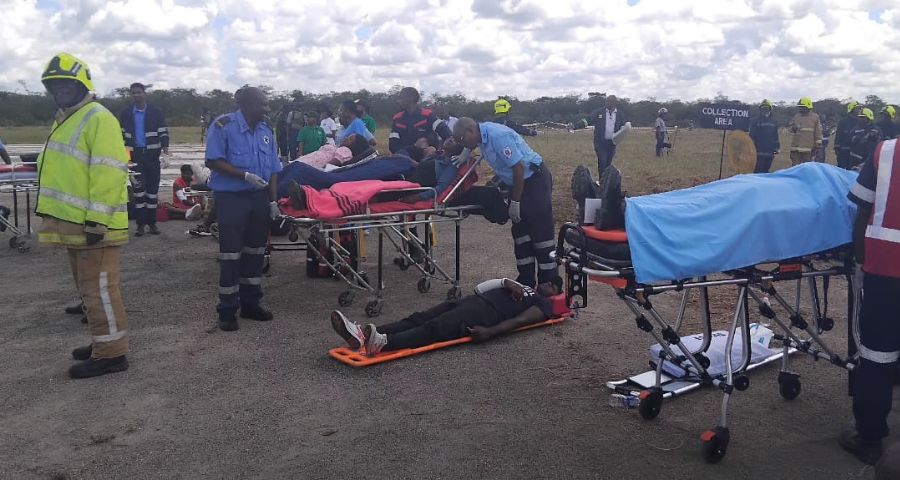
Nqobile Bhebhe, [email protected]
SIRENS from more than 30 emergency units pierced the Friday morning air just after 11am at Joshua Mqabuko Nkomo International Airport, sharp enough to break the airport’s routine rhythm.
Smoke rose steadily into the sky as fire trucks sped toward the far end of the runway.
For a moment, it felt real — like an emergency unfolding in real time.
From inside the terminal, the situation built rapidly as the airport transformed into a scene of controlled urgency — a simulated plane hijack.
Security forces moved in with purpose.
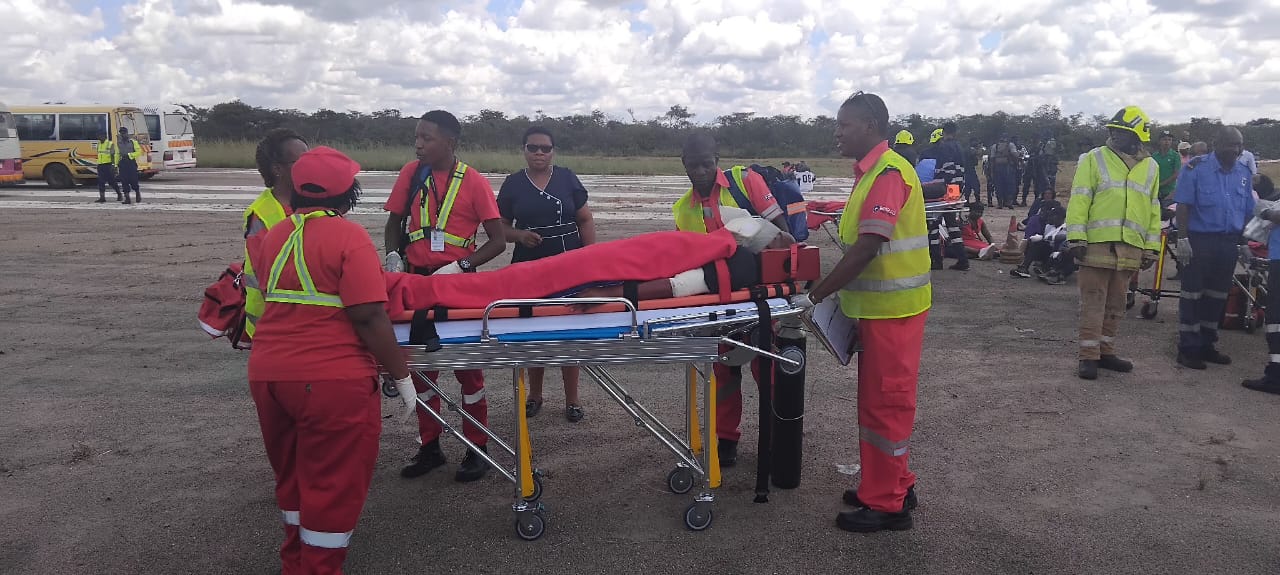
Soldiers and police officers sealed off the area, working in clear coordination, while paramedics attended to “injured” passengers on stretchers, moving between casualties with focus and care.
Temporary treatment tents were erected as firefighters followed, calm and methodical, directing steady streams of water onto staged flames, their hoses cutting through thick smoke.
The scene was intense, yet controlled — every action deliberate.
Inside the terminal, the mood was markedly different.
Travellers took out their phones, capturing the unfolding spectacle, but there was no panic — only quiet attention.
Even among journalists, there was a sense of eagerness as the drill progressed, each moment unfolding with precision.
Emergency teams moved with seamless coordination.
Units from the Zimbabwe Republic Police, Zimbabwe National Army, fire brigade and ambulance services worked in unison, responding and adapting as the simulated situation evolved.
What stood out was the discipline — urgency without confusion.
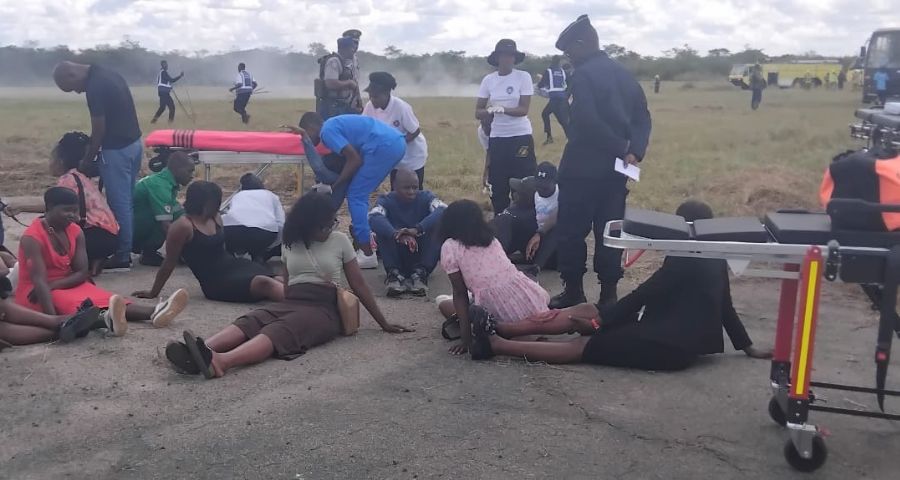
Each step fitted into the next.
It later emerged that many responders had not been alerted beforehand, allowing for a more realistic assessment of response times and decision-making.
The results reflected a high level of preparedness.
As the sirens faded and the smoke cleared, the airport gradually returned to normal.
Conversations resumed and the steady flow of travellers continued, but the moment lingered.
The urgency. The coordination. The quiet confidence.
It was a reminder that behind the routine of travel lies a system prepared to respond when it matters most.
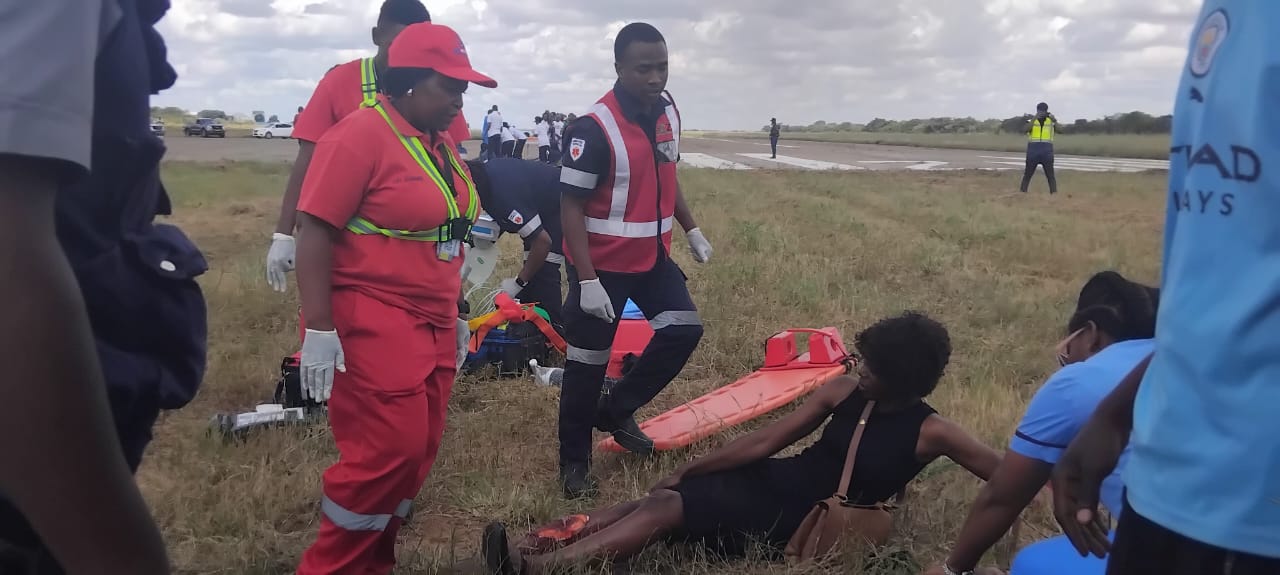
Director of Operations at the Airports Company of Zimbabwe, Charles Nyoni, said the drills are an international requirement and commended the timely response of all stakeholders.
“Today we conducted a hijack drill to test the response and readiness of all stakeholders. We are happy with the response times. The drill is an international requirement and will be conducted at all airports,” he said.
The exercise not only tested emergency systems but also reaffirmed Zimbabwe’s preparedness to respond decisively to potential aviation incidents, ensuring the safety and confidence of the travelling public.



 Online Reporter