admin
admin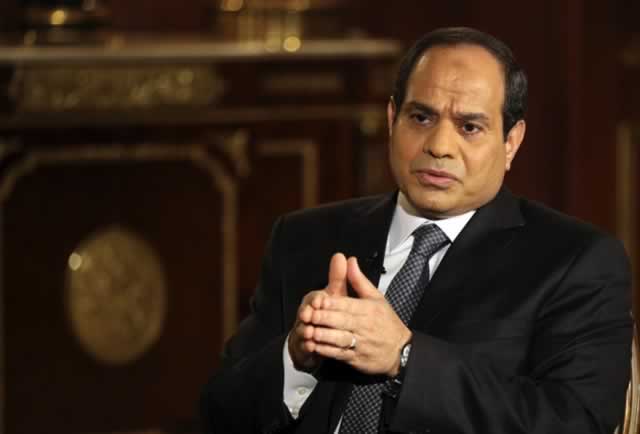

CAIRO — Newly inaugurated President Abdel Fattah al-Sisi reappointed Egypt’s prime minister yesterday, signalling continuity as he sets out to fix the economy and overcome political divisions after a long period of turmoil and bloodshed.
In comments carried by the state news agency, Prime Minister Ibrahim Mehleb said the current government would stay on in a caretaker role until he forms a new cabinet. Consultations had not yet begun, he said, although officials have said many of the leading ministers such as finance are likely to be unchanged.
Sisi, who as armed forces chief toppled Islamist President Mohamed Morsi last July following mass protests, was sworn in on Sunday in a ceremony with low-key attendance by Western allies concerned by a crackdown on dissent.
While Sisi quit the military in March, a lower-than-expected turnout in last month’s presidential elections fell short of giving him a strong mandate to take tough measures to repair an economy wounded by three years of instability and regular violence which has scared away foreign investors and tourists.
Keeping the main ministers in place could allow Sisi to implement quickly the kind of reforms that the United Arab Emirates — one of the Gulf Arab states that gave Egypt billions of dollars in aid after Morsi’s fall — has been encouraging.
One of the most important figures in Egypt’s drive to resuscitate the economy is Finance Minister Hany Kadry Dimian, who is expected to stay on in the new administration.
Educated at Columbia University in the United States, he was described by a senior European diplomat as the only ministry expert able to deal professionally with the International Monetary Fund during a failed attempt under Morsi to secure a $4,8 billion loan.
Reuters reported on Friday that Western consultants were advising Egypt’s government —apparently with Sisi’s blessing — on an economic reform plan which could serve as a basis for restarting talks on a IMF loan deal.
The driving force behind the consulting project is the UAE, which along with Saudi Arabia and Kuwait has showered Egypt with aid totalling more than $12 billion in cash and petroleum products since Morsi’s removal. As de facto ruler since last summer, Sisi has driven Morsi’s Muslim Brotherhood underground with a crackdown in which hundreds of its supporters have been killed and thousands jailed, polarising the most populous Arab nation.
However, Egypt’s oldest and best organised Islamist movement has survived official repression for decades. Sisi also faces a violent threat from militants based in the Sinai peninsula who are believed to have access to weapons smuggled from Libya. These have stepped up attacks on police and soldiers since Sisi ousted Morsi.
The Egyptian pound strengthened slightly at a central bank sale yesterday to 7,1402 pounds to the dollar from 7,1403 at its last sale on Thursday, and it remained steady on the parallel market. The gap between the pound’s rates on the official and black markets has narrowed markedly since Sisi’s election, with the currency appreciating markedly against the dollar at unofficial rates. Egypt’s benchmark stock index closed up 1.1 percent. — Reuters.



 Online Reporter