

 admin
admin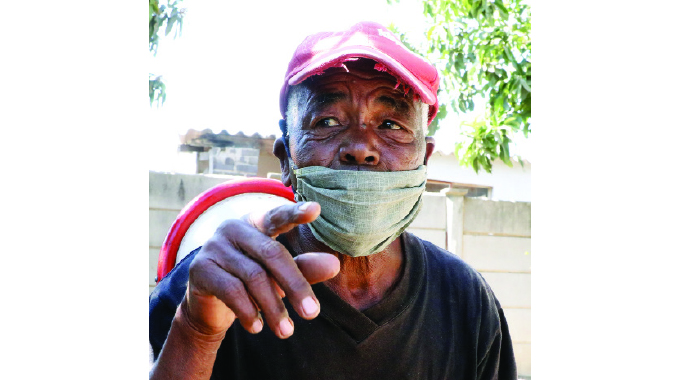
Mashudu Netsianda-Bulawayo Bureau
WATCHING a fellow compatriot dying in his arms in the battlefield was a traumatic and emotionally disturbing experience for Cde Ectwell Siwela (78), which will continue to haunt him for the rest of his life.
This was during the historic Wankie battles when the Zimbabwe People’s Revolutionary Army (ZIPRA) cadres combined with South Africa’s Africa National Congress (ANC) military wing, Umkhonto we Sizwe (MK), soldiers to wage a heroic battle against the Rhodesian forces in August 1967.
They started crossing the Zambezi River at around 6pm, climbing down the 90-metre distance by rope to the river before getting into canoes which were designed to carry only two passengers at a given time.
Upon arriving on the shores at around 6am the following morning, they climbed up another 90-metre distance by rope onto the Rhodesian side.
They were a group of 79 combatants led by MK and ZIPRA commanders Cdes Chris Hani and Nikita Mangena.
“After crossing the river at around 6am, there was a spirit of elation and joy among the cadres due to the fact that we had already crossed the first obstacle, which was the Zambezi River. They were now all looking forward to participating in the long march deep into Zimbabwe.
“We spent the whole day along the banks of the Zambezi River while our commanders were still strategising. They deployed a reconnaissance team to access the area of operation. At around 7pm, we started moving until we reached a point where we had to separate,” said Cde Siwela.
The operation strategy entailed that after crossing, two ZIPRA sections comprising six and eight men would separate from the detachment with one to deploy permanently in Wankie District and the other in Lupane District.
These would remain springboards to provide support for future campaigns. There was the unit that had to move towards Lupane, and there was also the main unit which had to march towards the South.
Within the unit moving towards the South was quite a substantial number of those comrades whose mission was to eventually reach South Africa and establish MK units within the country.
The unit marching towards the east was to base in Zimbabwe, the aim being to establish an MK presence in Zimbabwe which could be used in future to service MK combatants passing through the country. In other words, the whole concept of the Wankie campaign was to build bridges.
Cde Siwela said he was part of group of 22 MK and ZIPRA freedom fighters, which was led by Cde Jonathan Moyo.
Being a medic, Cde Siwela’s duties entailed rendering first aid, nursing injured combatants and administering medication.
Evoking memories of the first day of the battle, Cde Siwela said he painfully witnessed his comrades dying like flies in the line of duty.
“It was not an easy thing to helplessly watch your comrades dying in your arms knowing that you can’t do anything to save their lives. I vividly recall that on the first day of the battle, seven combatants died after Rhodesian security forces sprayed live bullets from their helicopter,” he said in a low tone filled with emotions.
Cde Siwela, whose nom de guerre was Peter Banda, said the attack was their first encounter with the Rhodesian forces at Inyantuwe where they had a number of other major battles with the enemy forces.
“We were in a horse shoe formation and I was with a comrade by the name Gombagomba from Plumtree when we first spotted an enemy at around 1pm. I advised my colleague to crawl and inform our commander. The next thing we heard gunshots and it eventually turned into a full-fledged battle, which lasted until 7pm without any retreat,” he said.
“Helicopters were hovering above us as the enemy conducted aerial reconnaissance. I heard the enemy shouting ‘surrender’ and one of our MK comrades shouted back, saying ‘kuya surrender unyoko’.”
Cde Siwela said they did not surrender until the Rhodesian soldiers left the battlefield.
“We had a light machine gun (LMG) and it really helped in pinning down the enemy forces. They failed to silence us because the comrade who was firing using the LMG was relentless,” he said.
“They killed seven comrades from our unit on the first day. As a medic, I wasn’t much on the frontline because my duty was to attend to those injured in a bush as there was no shelter to keep them.”
Cde Siwela said the following morning, they decided to shift to another area.
“We were now very hungry and along the way, we raided a certain farm and got food before we proceeded with our mission,” he said.
Cde Siwela said upon reaching a certain point, everyone was exhausted and felt weak after stepping on soil which had been sprinkled with some form of substance that was usually used by the San community in their hunting expeditions.
“We discovered that the enemy approached the San people and took some substance and sprinkled on our footpath resulting us getting weak and tired. On the third day, we were at an area in Lupane where the Rhodesian forces had used bombs containing napalm which had been banned in warfare,” he said.
Napalm is a highly flammable sticky jelly used in incendiary bombs and flame-throwers, consisting of petrol thickened with special soaps.
“The terrain was very bad and the area was empty with no cover except for shrubs. During the day we took cover, dug foxholes and trenches in preparation for any possible engagement with the enemy and used the cover of darkness to cover as much ground as possible,” said Cde Siwela.
He said they were forced to surrender on the third day.
“The ground was open and there was no cover because the vegetation had been extensively damaged by napalm making it difficult for us to operate. As the battle intensified with nowhere to hide, our commanders advised us to surrender,” said Cde Siwela.
Upon surrendering they were captured and detained in police cells in Hwange before taken to Ross Camp in Bulawayo for interrogation.
Cde Siwela said they were further taken to Harare where they were tried, convicted and sentenced to death.
“We were not deterred by the death sentence and immediately after the judge had handed down the sentence, we broke into revolutionary songs and danced before they took us to the cells,” he said.
They were kept in prison awaiting the gallows up to 1969 when their death sentence was commuted to life imprisonment.
“We were then transferred to Khami Prison and released in 1980 when the country attained independence,” said Cde Siwela.
Cde Siwela left the country in 1963 and crossed to Zambia from where he proceeded to Algeria where he did his military training. The Wankie Battle was his first deployment in the country.
The detachment proceeded and encamped in the Inyantuwe area on 12 August. On the following day on the 13th, they had their first encounter with the Rhodesian forces, comprising a platoon made up of BSAP and RAR.
After Inyantuwe, they had a number of other major battles at Sinamathela, Tsholotsho and along the Natha and Tekwane River areas before they retreated into Botswana. The Botswana police arrested and had them imprisoned, before deporting them back to Zambia.
For ZIPRA the battle of Wankie was understandably the watershed in the history of Zimbabwe and South Africa’s armed liberation struggles. The Luthuli Detachment’s indomitable fighters proved the lie of the invincibility of the Rhodesian and South African racist and apartheid regimes.
Cde Hani, as commissar of the combined forces in the Luthuli Detachment, commented on the battle of Inyantuwe thus: “It was one of the battles they were engaged in that will probably go down in the history of MK military operations as one of the most heroic. Displaying outstanding heroism and sacrifice, they fought like lions and actually kept Smith’s forces pinned down for the better part of the day.”
A Rhodesian account of the same battle read: “Contact was made between the terrorists and a patrol led by senior officer Barry Tiffin at first light on the 13th August near Inyantuwe railway siding. The BSAP was pinned down and reinforcements were called for. After reinforcements had arrived and during the encounter, five ZPRA terrorists were killed and Tiffin was seriously injured. Two RAR were killed and three European and one African security force members were wounded.”
The Tegwane (Thekwane) River Battle, one of the most memorable of the battles of Wankie which perhaps places the commanders and fighters of the Luthuli Detachment in a class of the greatest fighters of all time anywhere, was fought on August 23, 1967 in the Tegwane River area.
Cde Hani’s account of the battle is also corroborated by a member of the Rhodesian forces: “After a fleeting 12 minutes of strafing by the hunters and before a scheduled bombing run by Canberra’s from No 5 Squadron at 1800hrs, Wintall moved the two platoons into thick cover to prepare a safe night position.
“All their movements were watched, however and as the Rhodesians relaxed with no apparent sentries, terrorist leader Dube and one of his men put on captured Rhodesians’ combat jackets sauntered over to unsuspecting RAR platoons. Shortly afterwards, heavy fire was brought down onto the platoons by hidden terrorists wounding eight including PO Horn Wintall himself.
“PO Spencer Thomas died of gunshot wounds to the chest. Two terrorists were killed. Taken totally by surprise and under immediate threat of his position being overrun, Wintall organised a withdrawal as fast as he could, leaving behind weapons and kit.”



 Online Reporter