Online Reporter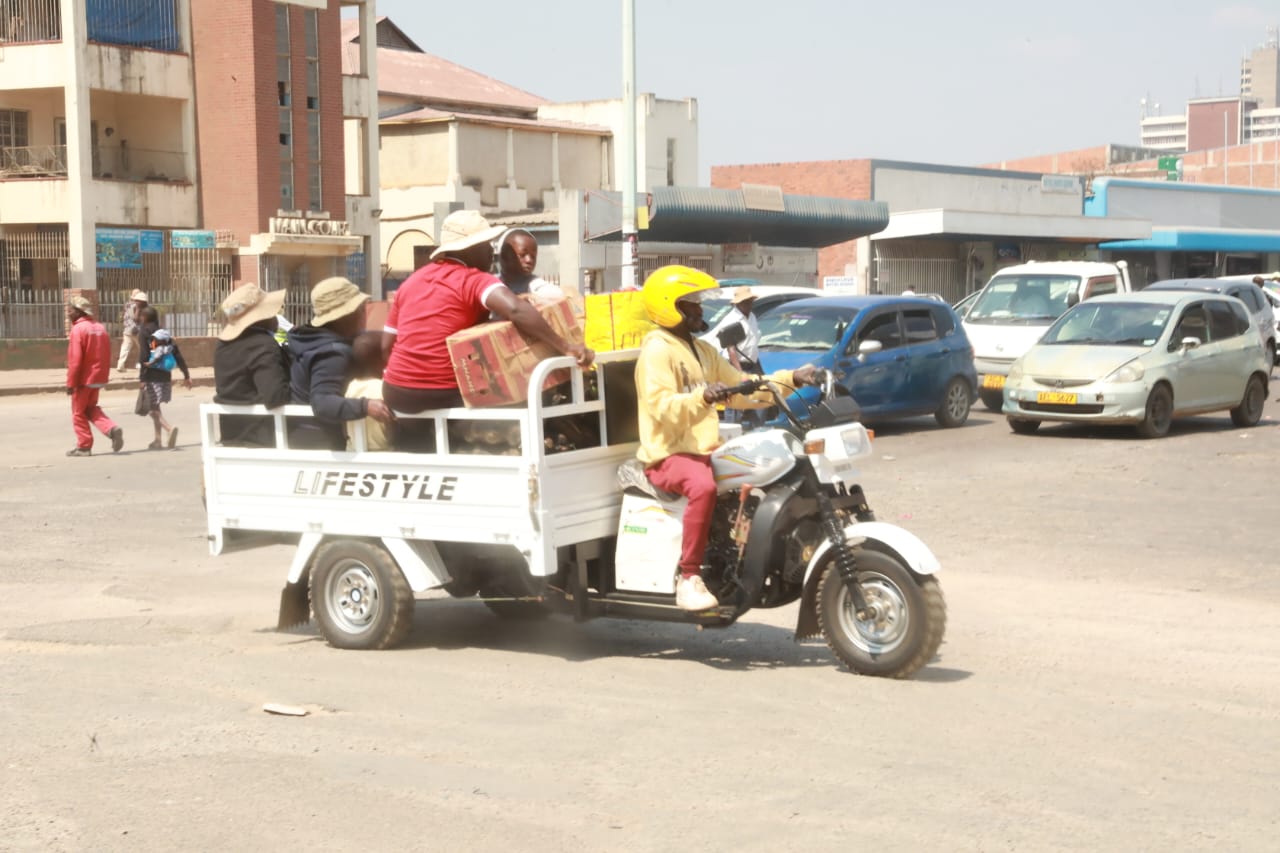
Raymond Jaravaza [email protected]
THE race begins every morning at Bulawayo’s bustling marketplace. Vendors arrange piles of tomatoes, cabbages, bananas and green mealies while shoppers weave their way through the crowded aisles in search of bargains. Amid the familiar sounds of trade, a new noise is becoming impossible to ignore: the buzz of three-wheeled motorcycles darting through the city streets.
Known locally as skutaz, the vehicles are fast becoming the transport of choice for many traders, quietly changing the way business is done in Bulawayo.
For years, vendors relied on push-carts to move goods around the city. It was not always easy. Traders often found themselves trailing behind heavily loaded carts under the hot sun, hoping not to lose sight of their goods in the busy streets.
Today, many of them are choosing a different option.
Standing beside her produce at the marketplace, Similo Mpofu keeps glancing towards the road. She is waiting for a skuta.
“I’m waiting for that motorcycle with three wheels that can load all my goods and allows me also to sit in and get to Sixth Avenue. Most vendors now prefer using the motorcycles because they can get us to any part of Bulawayo city centre in a few minutes. You can pay anything from US$3 for a trip to Sixth Avenue or US$4 to Renkini Bus Terminus,” she said.
For Mpofu, the biggest attraction is convenience. There was a time when getting goods from the market to a bus stop felt like a marathon.
“I would literally have to run after the push-cart operator from the marketplace to Sixth Avenue, where I get transport to Luveve,” she said.
That experience is familiar to many traders.
Push carts have long been part of Bulawayo’s street scene. Their operators transported everything from vegetables and groceries to furniture and building materials. They formed an important part of the city’s informal economy and helped countless traders get their goods from one point to another.
But business is changing.
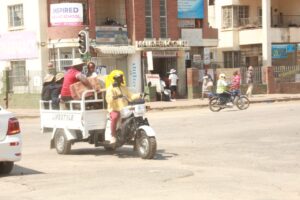
Today, vendors can load their goods onto a three-wheeler, climb aboard themselves and be at their destination within minutes.
Nozipho Mlilo is among the growing number of traders who have embraced the new service.
“Getting to Egodini now costs just US$3 from the market. It’s easier to move around in these skutaz,” she said.
The popularity of the vehicles is easy to understand. Unlike push carts, the three-wheelers are quick, can carry heavier loads and save traders valuable time. In a city where every minute spent walking is time that could be spent selling, the difference matters.
The rise of skutaz comes at a time when push cart operators have already been facing challenges.
Bulawayo City Council restrictions introduced in parts of the city centre forced some operators to adapt their businesses. Some switched to wheelbarrows while others used supermarket trolleys to continue earning a living.
Now they are confronting a different challenge: competition.
Many customers are naturally drawn to a transport option that is faster and allows them to travel with their goods.
Yet while some livelihoods face uncertainty, others are being created. For entrepreneur Bruce Nxumalo, investing in a three-wheeler has proved worthwhile.
“My three-wheeler driver gives me at least US$20 a day after making around 10 trips, charging about US$3 per trip. Around US$10 goes towards fuel for the whole day because the motorcycle does not consume much fuel,” he said.
Stories like his are encouraging more people to look at the business potential of the vehicles. The motorcycles are creating small opportunities in a city where many people continue searching for reliable sources of income.
Interestingly, three-wheelers were originally promoted in some areas as a way of helping small-scale farmers transport produce from rural areas to markets. In Bulawayo, however, they have found a different role.
They have become part of everyday city life.
Across the marketplace, it is now common to see traders loading vegetables, sacks and cardboard boxes onto the compact vehicles before heading off to bus termini, shopping areas and residential suburbs.
Their growing presence reflects the ability of ordinary people to adapt and find practical solutions to everyday challenges.
For vendors, the benefits are simple: less walking, less carrying and quicker journeys. For investors, the vehicles offer a business opportunity. For passengers, they provide another transport option in a busy city. And for Bulawayo’s veteran push-cart operators, they serve as a reminder that even the most familiar trades can change.