Online Reporter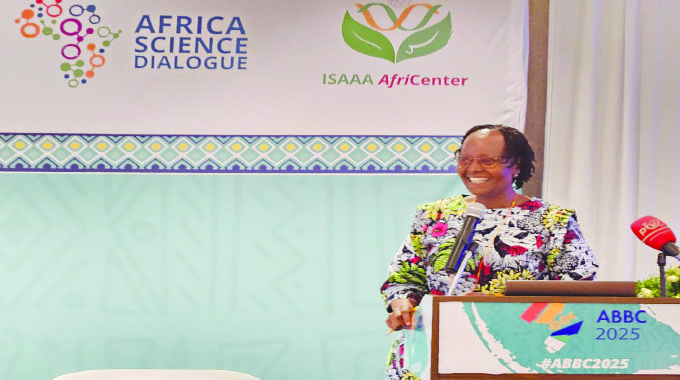
Sifelani Tsiko, Fact Check Editor
RECENTLY, several science communicators, academics, government officials, legislators, agricultural and health experts, including farmers, gathered in Lusaka, Zambia, for the sixth edition of the Africa Biennial Biosciences Communication Symposium to tackle the growing threat of misinformation and disinformation that has delayed the adoption of innovative technologies in Africa.
This symposium was held under the theme: “The war on science: How can we overcome the burden of misinformation and disinformation?”
The International Service for the Acquisition of Agri-Biotech Applications (ISAAA) AfriCenter, in collaboration with the National Biosafety Authority (NBA-Zambia) and with support from 2BLADES, ACTESA, ASEACA, BAYER, CIRAD, COHESA, CropLife International, ILRI and other global research institutions, organised the symposium.
Participants were drawn from 21 countries that included Botswana, Cameroon, Canada, Ethiopia, France, Ghana, Italy, Kenya, Malawi, Mozambique, Namibia, Nigeria, Rwanda, Somalia, South Africa, Tanzania, Uganda, the United Kingdom, the United States of America, Zimbabwe and Zambia, among others.
“This theme speaks to the greatest barriers of our time. Misinformation and disinformation is eroding trust and delaying access to new bio-innovations that can help improve resilience to climate change and improve livelihoods in Africa,” said Dr Margaret Karembu, director of the (ISAAA) AfriCenter.
“It is important to note that the World Economic Forum has ranked misinformation and disinformation among the top global risks. For Africa, the challenge threatens the ability to strengthen food systems, improve health, and build climate resilience.”

New and emerging technologies have been met with scepticism, with some critics labelling some of the bioscience products as foreign poison and with an alleged lack of safety.
This technophobia confusion has largely undermined trust, delayed the uptake of new innovation products and in some cases, it has led to the loss of lives and livestock.
At the height of the Covid-19 pandemic, declared by the on March 11 2020, many countries in Africa reported high levels of vaccine hesitancy with misleading information about vaccine side-effects on social media compounding the problem of uptake.
Negative perceptions and general distrust of government and public health campaigns cultivated vaccine hesitancy across the entire African continent.
Experts at the symposium said unscientific campaigns on various social media platforms relied on poor sources and poor scholarship to build fears based on illogical conclusions alleging a vaccine link to cancer and other diseases.
At the time, there was a lot of fear of injections, uncertainty about side effects, distrust in healthcare systems and disinformation peddled by anti-Covid vaccine campaigners.
A lot of people died out of fear of the vaccines. Vaccines were later rolled out in most African countries with better outcomes, after massive campaigns to promote the vaccines. The campaigns led to better trust and understanding by the public.
Media coverage of public figures, including politicians, celebrities and influencers who publicly endorsed the vaccines, led to better outcomes, increased vaccine uptake and acceptability.
The use of more engaging videos, interactive interviews and testimonials from vaccinated individuals shared across social media platforms also improved the uptake of the vaccines.
“Science is at war with misinformation and disinformation emerging as one of the greatest threats,” said Zambia Agriculture Minister Reuben Phiri Mtolo.
“Misinformation alongside disinformation has undermined trust, delayed progress and in some cases cost lives.”
He said misinformation is striking at the nerve centre of most economies and agricultural livelihoods in Africa, despite efforts by the countries to invest in research and innovation to strengthen food security and resilience.
One major area of controversy and misunderstanding between science and the public has been agricultural biotechnology.
Fears regarding agricultural biotechnology in Africa often stem from the spread of myths and misinformation, including concerns about potential environmental risks and the long-term safety of genetically modified (GM) crops, despite scientific evidence supporting their benefits for food security.
Experts at the symposium said activists and misconceptions have hindered adoption, though there is a growing recognition among African leaders and countries of the technology’s role in enhancing crop resilience and nutritional value, leading to shifts towards more scientific evidence-based approaches and stricter regulatory frameworks.
“Ever since Genetically Modified Organisms (GMOs) were introduced in Africa, they have faced misconceptions and myths surrounding their safety, environmental impact, and benefits. There has been a lot of misinformation and disinformation around biotech crops,” said Dr Karembu.
“The debate has been led by environmental activists who have based their understanding on hearsay, not scientific facts.”
Misinformation and disinformation, Dr Karembu said, have stalled the continent’s progress in leveraging innovative biosciences to strengthen health, food systems and improve socio-economic outcomes.
“The urgency of this issue has been globally recognised, with the World Economic Forum naming disinformation as the second most severe global risk after extreme weather,” she said.
Experts at the symposium highlighted the need for further information and engagement to help the public and governments better understand some of the benefits of agricultural biotechnology.
Countries such as Kenya, Malawi, Eswatini, Ethiopia, and Sudan have commercialised biotech crops and are reaping significant economic, environmental, and food security benefits.
Full article on www.chronicle.co.zw
The media was urged to report more on numerous studies conducted by reputable institutions that have consistently confirmed the safety of approved GM crops for human consumption.
Experts said most genetically modified crops developed and released in Africa were engineered to be pest-resistant or drought-tolerant, which can increase yields and reduce input costs for farmers.
“By partnering with local agricultural institutions, African countries have developed GM crop varieties tailored to their specific needs, empowering small-scale farmers and encouraging widespread adoption,” said one participant.
“We need to tackle misinformation and disinformation to build trust among our farmers and governments. Scientists and the media need to work together to combat misinformation and disinformation in science.”
Said Dr Canisius Kanangire, executive director of African Agricultural Technology Foundation (AATF): “Media is key to transforming the way science is used by our farmers. We need to change the jargon and simplify the information into a palatable format.
“We need to convert science into a language that can be understood by all.”
Dr Moses Alobo, head of Science for Africa Foundation, concurred, saying: “We need to move science from being a queen to being a princess. We need to move science to being a Cinderella (figuratively, anything that experiences sudden success or recognition after a period of being underestimated). We have to communicate in a way that communities understand.”
Dr Shirley Tarawali, assistant director of the International Livestock Research Institute (ILRI), said scientists must place emphasis on biosafety to allay fears and help fight misinformation and disinformation.
Prof Richard Odour of the Kenyatta University said scientists must communicate in a way that can help the public filter facts from falsehoods.
“Labelling and packaging information appropriately is critical in the fight against misinformation and disinformation,” he said.
“We have to help the public filter facts from falsehoods.”