

 admin
admin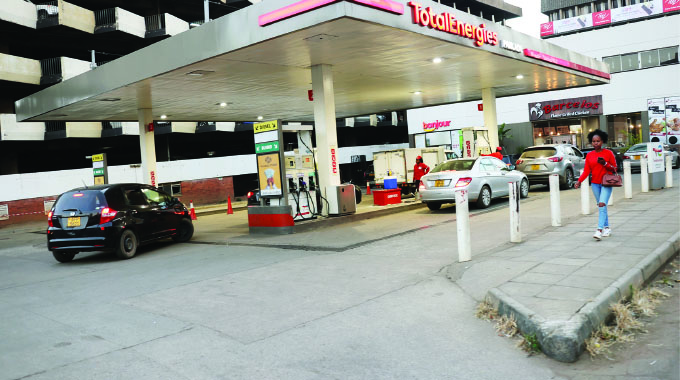
Herald Reporters
Zimbabwe has enjoyed an extended period of adequate fuel supply and stability owing to the effective policy measures instituted by the Government, particularly the masterstroke decision to liberalise the fuel subsector.
Prior to this, the Southern African country faced a seemingly unending fuel crisis as the sub-sector struggled to secure adequate foreign currency to import enough quantities to meet demand.
Now, queuing for fuel hours on end has become a thing of the past, as the Second Republic, under the leadership of President Mnangagwa, introduced a combination of measures to deliver on the mandate to power the nation to collective prosperity.
Historical background
It has to be recalled that in colonial Rhodesia only four companies had the opportunity to participate in the oil industry. Through ownership of fuel storage reservoirs throughout the country, multinational companies enjoyed monopoly over the sector.
The four companies operated the Government-owned Beitbridge Fuel Storage Point, importing fuel through the southern border from National Petroleum Refineries of South Africa Limited (NATREF).
Fuel supply was the preserve for these major oil traders with the Government having little influence over them. The Government-owned Feruka Storage Point, however, received its fuel supply by road and rail through Beitbridge as the Mozambique route was inactive due to the security situation then.
In the 1960s, a pipeline was constructed for the purpose of transporting crude oil from Mozambique into Rhodesia. The Rhodesian government granted Central African Petroleum Refineries (Private) Limited (CAPREF), jointly owned by Total, BP and Shell, permission to construct a refinery at Feruka for the purification of oil products. The refinery only operated for a year, from 1965 to 1966.
Since Independence in 1980, milestones have been achieved in the petroleum sector.
The Government and Companhia do Pipeline Mocambique-Zimbabwe Limitada (CPMZ) signed an agreement in 1982, which resulted in the CPMZ converting the Beira-Feruka pipeline from conveying crude oil to refined fuel. Today, the Beira-Feruka pipeline is the primary mode of fuel transportation into the country, accounting for 95 percent of imports, with road and rail accounting for the remainder. Having been converted, the pipeline has been ferrying refined oil products since 1983.
The Government established the National Oil Company of Zimbabwe (NOCZIM) in 1983 as the sole importer of fuel into the country.
In 1994, a joint venture company, Petrozim Line (Private) Limited was formed by NOCZIM and LONMIN (then LONRHO), to construct and operate a petroleum products pipeline from Feruka (Mutare) to Msasa (Harare), and storage facilities at Msasa Depot, which enabled the country to load fuel out of Msasa. Fuel supply no longer terminates at Feruka as was the case in the past.
In 2019, the National Oil Infrastructure Company of Zimbabwe (NOIC) acquired all LONMIN shares in the pipeline, thus becoming the sole shareholder, giving the Government total control over this strategic asset.
Situational analysis in the petroleum sector
As alluded to earlier on, most of the petroleum products consumed in the country are imported, with the bulk of the fuel being transported through pipeline. According to the Zimbabwe Energy Regulatory Authority (ZERA), Zimbabwe consumed an average of four million litres daily in 2020 with petrol figures standing at 1,5 million litres and diesel at 2,5 million litres.
Latest figures from the Ministry of Energy and Power Development, indicate that Zimbabwe, on average, requires two million litres of petrol and three million litres of diesel per day, which translates to 730 million litres of petrol and 1,1 billion litres of diesel per year.
About 95 percent of the fuel is transported via the Beira pipeline route, while five percent is transported mainly by road, and rail from South Africa.
For over two decades the economy of Zimbabwe has been buckling under the weight of sanctions, which at some point hampered fuel supply. Sanctions, notwithstanding, the economy has remained resilient, registering solid growth, even. During that period, particularly in the last decade, the vehicle population continued to grow, maintaining strong demand for fuel, as did most sectors of the economy.
As an import substitution mechanism, Zimbabwe adopted ethanol blending to cut on the fuel import bill, and also reduce carbon emissions. Blending is up to 20 percent depending on availability of ethanol. The bulk of the ethanol comes from Chisumbanje and Triangle Sugar Estates.
The Government introduced the Direct Fuel Import arrangement in 2019 to allow companies with free funds to procure their own fuel and trade in foreign currency. Under this scheme, the fuel supply situation has stabilised and this has become the major source of fuel for the country.
Also, the decision to liberalise the fuel subsector saw the country witnessing a tremendous growth in the number of retail markets, with a number of filling stations being constructed. This improved convenience to motorists, and increased competitiveness in price and services by the various players.
Another intervention in the petroleum sector by the Government is the Mabvuku ethanol storage facility in Harare. This project involves the construction of 2×3 000m3 ethanol storage facilities. The project is being undertaken by NOIC, and was envisaged to be complete by September 2022.
Its main objective is to ensure maintenance of consistent blending ratio through the provision of adequate ethanol in the country in all seasons. It will also reduce the import bill of petroleum products through import substitution.
Furthermore, the Government, through NOIC’s subsidiary, PetroZim Line (Pvt) Ltd (PZL), has also embarked on a pipeline capacity upgrade. Currently, the pipeline has a capacity of 2,19 billion litres per annum. The project is being implemented in phases with the first phase targeting to achieve a capacity of three billion litres per annum, and subsequently five billion litres per year. Through this project, Zimbabwe will have excess pumping capacity to be the hub of fuel transportation and distribution in the Southern African region.
The delivery
Despite all the setbacks culminating from the illegal economic sanctions imposed on the country, the Second Republic delivered on its promise to the people of Zimbabwe through enabling policy frameworks in the petroleum sector.
Economist and member of the Reserve Bank of Zimbabwe Monetary Policy Committee (MPC), Mr Persistence Gwanyanya, told The Herald that the Government, as always, came up with a panacea to chronic fuel shortages.
“We managed to come up with a permanent solution in the fuel subsector. It will be premature for the Government to abandon the solution of dollarising the subsector,” he said.
Mr Gwanyanya said, so far, the decision is to allow direct importation of fuel using free funds and allowing traders to sell in both foreign and domestic currency.
“What we then expect is that those who want to sell in Zimbabwean dollars can do so as the local currency continues to strengthen against the United States dollar. We will see most businesses shifting their business models to favour the Zimbabwean dollar as it becomes the most sought-after currency,” he said.
The Zimbabwean dollar has appreciated in recent weeks against the US dollar owing to a raft of measures instituted by the Government.
The recent strategic interventions introduced by authorities include a directive for all import duties to be paid in local currency, except for luxury items; the transfer of external payment obligations from the Reserve Bank of Zimbabwe (RBZ) to the Treasury; and the introduction of the wholesale foreign currency auction for banks.
Further, the Treasury has also directed that all Government institutions collect fees and charges in the local currency and that 50 percent of corporate tax payments be made in Zimbabwean dollars, while the central bank raised its bank policy rate from 140 percent to 150 percent to discourage speculative borrowing.
Mr Gwanyanya said the Government also partially dollarised the fuel subsector, because of behavioural issues surrounding its stability as a major consumer of foreign currency in the economy.
“There are experiences from the past where foreign currency allocations given to the fuel subsector were of relative preference, but the benefits did not cascade to the final consumer,” he said.
Mr Gwanyanya noted that the Government has always reduced excise duty on fuel to lessen the burden of high fuel cost on businesses and individuals. As part of efforts to improve the fuel sector, mining companies and other businesses were allowed to import their own fuel using free funds.
Dr Prosper Chitambara, an economist, said the sector’s liberalisation has helped fuel suppliers gain confidence, which has improved the stability of supply.
He, however, pointed out that the pricing is still on the high side owing to the tariff regime, saying it is an area that needs some relief, not only to motorists, but also to “businesses as a way of enhancing competitiveness”.
Dr Chitambara noted that the sub-sector is key to optimal performance of key economic sectors, such as mining, agriculture, and manufacturing.
In 2020, the Government moved to tighten surveillance mechanisms to ensure fuel procured using free funds under the Direct Fuel Import (DFI) facility was not abused by dealers in the sector.
Meanwhile, the Zimbabwe Energy Regulatory Authority (ZERA) is now issuing monthly fuel price updates, instead of weekly updates, so as to ensure stability over a longer period of time.
Since May last year, the regulator has been giving weekly fuel price updates to assist the market following unstable fuel supply globally due to the Russia-Ukraine conflict.
Mr Tafadzwa Katsande, a Harare motorist, said the shortage of fuel in the past had become a nightmare, highlighting that the liberalisation of the sector turned around the situation.
“We used to spend productive hours or even days queuing for fuel, but it is now a thing of the past. We want to thank the Government for fixing the issue of fuel, because now we can enjoy driving without worrying about running out of fuel,” he said.
“What we also ask from the Government is to ensure availability of fuel in Zimbabwean dollars, since not everyone earns US dollars. The Government should continue to ensure that fuel is readily available, so that, as motorists, we continue to get fuel wherever we go around the country,” Mr Katsande added.
Another Harare motorist, Ms Ethel Mapfumo, lauded the Government’s efforts to resolve the fuel crisis, saying queues at filling stations were now a bygone issue.
However, she said fuel prices in the country were still on the high side as compared to other countries in the region.
“But, it is better to have higher prices than having no fuel at all. Whatever the Government has done to ensure fuel is readily available should continue. We do not want to return to a situation where we would spend days queuing for fuel,” said Ms Mapfumo.
Mr Chamunorwa Nyamukomba, a commuter omnibus driver, said he appreciated the availability of fuel.
“We would spend two days without fuel, or looking for it, which affected my family’s livelihood. These days I go to work every day. Fuel is available everywhere, and my life has changed for the better. I would like to thank President Mnangagwa for solving the fuel issue, which had caused headaches for motorists,” he said.
Mr Nyamukomba said prices for diesel have largely remained unchanged, which would also benefit the travelling populace as well.
“We implore the Government to continue maintaining the price of diesel or even reduce it. In return, we will also consider reducing our fares,” he added.


 Online Reporter