Chronicle Editor
Nqobile Bhebhe, Senior Business Reporter
SMALL-SCALE miners’ gold output and deliveries to Fidelity Printers and Refiners continue to outshine that of established mines, a development partly attributed to the Government’s supportive policy towards capitalising and decentralising gold buying centres.
According to latest figures from Fidelity Printers and Refiners, the country’s sole gold buying unit, which were seen by Business Chronicle, small-scale miners delivered 1 939,09 kilogrammes of the yellow metal in May alone, way above large-scale miners who delivered 1 055,68 kilogrammes.
Cumulatively, 13 171 58kgs have been delivered since January compared to 7 068,85kgs in the same period under review last year.
Contacted for comment, Mines and Mining Development Portfolio Committee chairperson, Edmond Mkaratigwa, said support from the Government and other partners has helped boost small-scale miners’ productive capacity.
The small-scale miners success story has also generated a lot of interest in the mining sector by indigenous citizens, including women, who are increasingly finding their ground and are in the process of graduating into medium scale to large scale miners.
Mr Mkaratigwa said the major reasons why some of the large-scale miners were lagging in production were to do mainly with high operational costs and market shocks that weigh down output.
“Large scale miners largely have high wage bills and other obligations as well in some instances.
So, it’s a lot of things but generally, it also signifies the promotive nature of Government policy towards raising more miners in the country,” said Mkaratigwa.
“The mines committee is advocating for more support to these groups and continuous improvement of their operational environment.
“We have identified blockages and we are helping in line with our constitutional mandate, according to our dashboard and national vision, to unblock their potential,” he said.
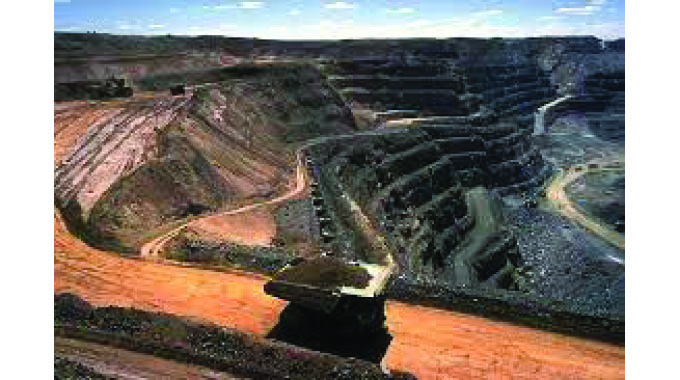
The mining industry is one of the major economic mainstays to anchor the country towards an upper-middle-income economy by 2030.
The country is targeting export revenue from minerals to reach US$12 billion by 2023, which represents a 344 percent increase from the US$2,7 billion registered in 2017.
The growth of a multi-billion dollar industry will be driven by gold, platinum, diamond, chrome, iron ore, lithium, coal, and other strategic minerals.
Mr Mkaratigwa said it was disheartening that other miners have been affected by international politics and were strained by market shocks leading to failure to properly re-tool.
He said the risk is part of the business matrix, which large-scale miners have to prepare for.



 Online Reporter