admin
admin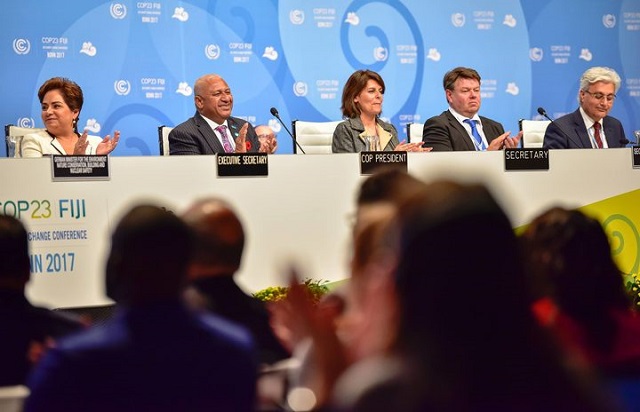
UN climate talks in Bonn, Germany have concluded with progress on technical issues, but with bigger questions about cutting carbon unresolved.
Delegates say they are pleased that the rulebook for the Paris climate agreement is finally coming together.
But these technical discussions took place against the backdrop of a larger battle about coal, oil and gas.
It means that next year’s conference in Poland is set for a major showdown on the future of fossil fuels.
This meeting, known as COP23, was tasked with clarifying complex operational issues around the workings of the Paris climate agreement.
One of the most important elements was the development of a process that would help countries to review and ratchet up their commitments to cut carbon.
Fiji, holding the presidency of this meeting, proposed what’s being called the Talanoa Dialogue.
Over the next year, a series of discussions will take place to help countries look at the promises they have made under the Paris pact.
“A key element in Poland is this Talanoa dialogue, to make sure it doesn’t result in just a talk show,” said Yamide Dagnet with the World Resources Institute.
“In Poland, ministers will have to look each other in the eye and say they will go home and enhance their actions, so that by 2020 we end up with national plans that will be a much more ambitious set of climate actions.”
Looming over these discussions in Bonn was the question of coal, oil and gas.
US coal and nuclear companies organised a presentation here arguing that fossil fuels should be a key part of the solution to rising temperatures.
Optimistic would be too strong. Slightly less pessimistic would be more accurate. After two decades of grindingly under-ambitious conferences, at last a faint glimmer of light.
The flamboyant flourish of the Paris accord offered more dramatic cause for optimism, with its world leaders, hugs and tears.
But dull Bonn gave a more prosaic hint of what might be achieved if politicians can capitalise on a world shifting towards clean technology far faster than anyone could have expected.
Trump’s snub didn’t derail negotiations, which were mostly cordial, with a clear common goal.
Governments can now see a clean energy future is not just achievable but affordable. Many know they need to cut emissions further, and some are ready to do so. — BBC


 derick.khumalo