admin
admin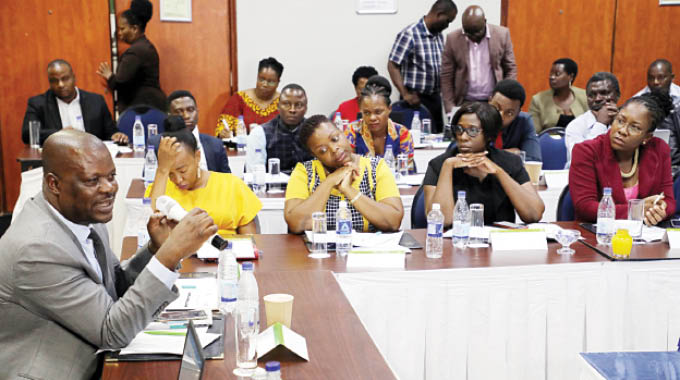
Oliver Kazunga, Senior Business Reporter
PLAYERS in the informal economy have called on authorities to facilitate provision of decent work spaces and ensure social protection as incentives to successful formalisation of the sector.
Although Government has approved the SMEs formalisation strategy, paving way for the reinforcement of the social contract and creation of sustainable decent jobs, the process is slow with players citing numerous challenges. Research indicates that about US$5,7 billion could be circulating in the informal market.
Speaking at a workshop organised by the International Labour Organisation in Bulawayo yesterday, Zimbabwe Chamber of Informal Economy Associations secretary-general, Mr Wisborn Malaya, said formalisation of the informal economy was also about the provision of a decent work environment and social protection.
“Here the Bulawayo City Council has made a deliberate move to designate certain areas where people are allowed to trade from the street.
“But such areas don’t have toilets, there is no water or shelter for people to trade from.
“This is a good move by the City Council to allow people to trade in the streets, but there is no decent operational environment,” he said.
“As part of a formalisation strategy, we want a decent operational environment in terms of putting up the sheds, toilets and water where people trade from.”
Mr Malaya noted that a majority of people working in Zimbabwe fall under the informal sector with the bulk of them being women.
“The issue of social protection is also critical. A majority of people working in Zimbabwe are in the informal economy and the bulk of these people are women,” he said.
“As they trade on the streets, most women are with children on the streets so this falls within the bracket of social protection where children in the streets should have space for them to go and play whilst their mothers are selling. So, from the informal sector point of view that level of recognition is what we call formalisation.”
Bulawayo Upcoming Traders Association secretary-general, Mr Dumisani Ncube, said implementation of strategies that promote a decent work environment and social protection was possible as this only takes willpower to do so. Bulawayo Chamber of SMEs organising secretary, Mr Divine Mhambi-Hove, also said there was a need for Government and other stakeholders to accord players in the SMEs and informal economy more attention.
“We still don’t understand that the future lies in the next generation of businesspeople. We are still concentrating on the old generation of businesspeople . . . this is why all the policies seem to say stand up for yourself and the assistance that SMEs are getting is really far below standards,” he said.
The drive to ensure SMEs and players in the informal sector formalise was born out of the need by Government to tap into the US$5,7 billion that was said to be circulating in the informal economy.
Against this background to encourage the formalisation process, Government came up with incentives such as export finance facility, microfinance revolving facility, gold support facility as well as the cross-border traders’ facility.
Last year, the number of businesses in the SMEs sector that formalised their operations increased to 18 500 from 13 000 in 2017. — @okazunga


 Online Reporter