Remember Deketeke and Lynnet Khaka
Small and Medium Enterprises (SMEs) should look beyond local markets and supply chains to serve major corporates across Africa under the African Continental Free Trade Area (AfCFTA), Women Affairs, Small and Medium Enterprises Development Minister Senator Monica Mutsvangwa has said.
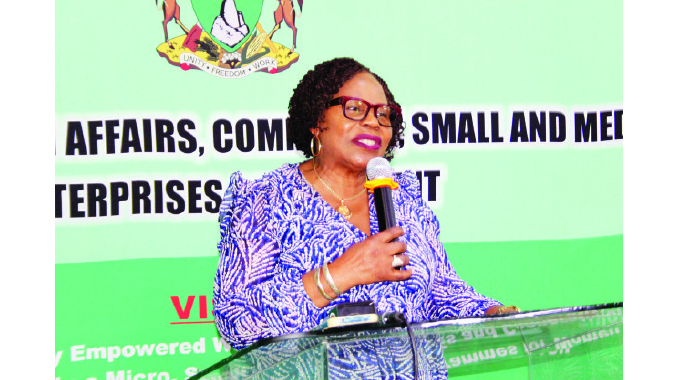
Speaking at the National Capacity Building Workshop on Unlocking Opportunities for SMEs under the AfCFTA in Harare on Monday, Senator Mutsvangwa said the Government is equipping entrepreneurs to take full advantage of continental trade opportunities.
“We want to know what they are doing. And with this workshop, we are capacitating them, telling them what the African Continental Free Trade Area is all about, and finding out their needs for trading across borders,” she said.
“We want our SMEs not only to feed corporate companies in Zimbabwe but also feed corporate companies in Africa.
“This workshop is more than just a gathering, it is a transformative platform to shape a new era of growth, prosperity and opportunity for every Zimbabwean.”
The two-day programme is designed to tackle key barriers affecting SMEs, including access to finance, logistics, non-tariff barriers and limited knowledge of trade rules.
It will also explore new opportunities in digital trade under recently adopted AfCFTA protocols.
Senator Mutsvangwa emphasised that the initiative was not a once-off event but part of a sustained effort to empower SMEs for long-term growth.
“Our intention is not just to do a once-off training. It’s to have this workshop, build their capacity, but then also follow up with other interventions. We also like to keep track of how they have benefited from a workshop like this,” she said.
The AfCFTA brings together 54 African countries into a single market of 1.3 billion people and aims to boost intra-African trade by reducing tariffs and tackling barriers to cross-border business.
United Nations Economic Commission for Africa (ECA) representative for Southern Africa, Ms Zodwa Mabuza, said the AfCFTA represented more than a trade agreement.
“It is a promise, a promise of shared prosperity transcending national borders. It offers solutions to African challenges. AfCFTA represents a collective commitment to boost intra-African trade, catalyse industrialisation and spur inclusive growth,” she said.
She said while large corporates had historically dominated preferential trade arrangements, the AfCFTA’s success hinged on the participation of SMEs, women, and youth.
“SMEs are the very engine that will power inclusive growth, job creation and resilience across the continent,” she said.
Ms Mabuza outlined the workshop’s objectives, including building SME knowledge of AfCFTA protocols such as rules of origin, enhancing market access, addressing non-tariff barriers and customs procedures and embracing digital trade.
She urged governments and regional blocs to invest in supportive infrastructure, one-stop border posts, and simplified customs processes, noting that tackling non-tariff barriers alone could increase intra-African trade by up to 50 percent.
“SMEs already contribute over 60 percent of employment and a significant share of Zimbabwe’s economic output. For this reason, SMEs are well-positioned to take advantage of cross-border trade opportunities,” she said.
For Zimbabwe, where SMEs form the backbone of employment and economic activity, integration into the continental market is seen as central to driving industrialisation, creating jobs, and opening wider markets for local enterprises.