Vusumuzi Dube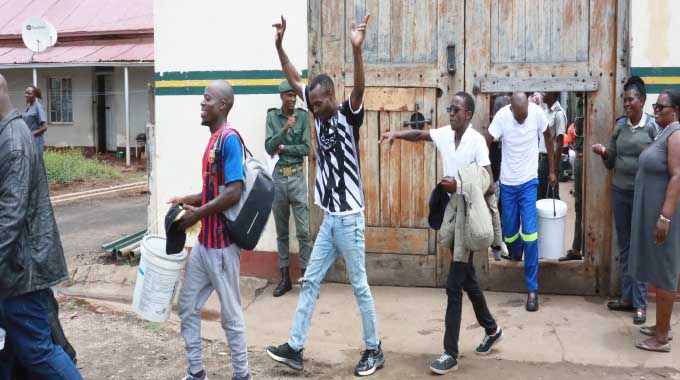
Zimpapers Reporters
A WAVE of emotion swept across correctional facilities in Bulawayo, Matabeleland North and Matabeleland South provinces on Tuesday as prison gates swung open under the 2026 Presidential Amnesty programme.
The prisoners — men and women who moments earlier stood behind high walls and razor wire — stepped into the golden light of freedom.
The air was thick with prayer, song, and unrestrained smiles that spoke of regret, gratitude, and the fragile hope of new beginnings. In Bulawayo, a total of 392 inmates benefitted from the Presidential clemency.
At Bulawayo Prison (formerly Grey Prison) and the Mlondolozi facility at Khami Prison, hardened walls bore witness to scenes of rare tenderness. As names were called and identities confirmed, each step beyond the gate felt symbolic — a crossing from shadow into sunlight. As they emerged through the gates to meet waiting relatives and loved ones, some chanted slogans praising President Mnangagwa, with shouts of “Umdala 2030” echoing through the air.
Some of the released prisoners paused, gazing at the sky as though reacquainting themselves with its vastness. Others lifted their hands heavenward in silent thanksgiving. For 23-year-old Miss Rutendo Fani, who was incarcerated at Mlondolozi Prison, the day was a “resurrection of purpose”.
Her voice, thick with emotion, told a story of nights spent reflecting on past mistakes and mornings shaped by quiet resolve.
“I leave here not as the woman who entered, but as one who has been humbled and rebuilt. Being incarcerated didn’t just rehabilitate me but gave me a chance to focus on my studies, and I managed to sit for two O-level subjects, which I passed,” she said.
“I learnt a very big lesson and I want to apologise for my transgressions. I have been rehabilitated and I know right from wrong now.”
At the same facility, a 26-year-old woman who was seven months pregnant when she was jailed on July 21, 2025, was overcome with emotions. Having later given birth behind bars, she found herself at a loss for words, her eyes welling with tears as she thanked President Mnangagwa for granting the amnesty.
“I was seven months pregnant when I was jailed on July 21, 2025, for theft. I eventually gave birth right here in prison. I was supposed to be released in August this year, but because of this Presidential pardon,
I am going home today (Tuesday).
“I am so grateful, I just want to thank President Mnangagwa for this chance,” she said, wiping away tears of joy.
For many, the amnesty was more than an act of clemency – it was a lifeline.
Speaking at Bulawayo Prison, Commissioner Mkhulunyelwa Ngwenya, the Officer Commanding the Zimbabwe Prisons and Correctional Services (ZPCS) in Bulawayo province, reminded the freed inmates that rehabilitation had been at the heart of their journey.
Skills in carpentry, agriculture, and tailoring are now tools not just of trade, but of transformation.
He said: “392 have been pardoned, but 305 are being released today. Among those are women at Khami and some men here at Bulawayo prisons.
“Our prisons are crowded and need to be decongested. Resources can now be properly channelled, and we hope that those released will channel their energies towards looking after their families and working towards uplifting our country.”
Bishop Professor Isaac Silumbu, President of Hospitals and Prisons Care International, lauded the President’s amnesty as a “wonderful gesture” of statesmanship and compassion.
He emphasised that the move allows vulnerable and sick inmates to access specialised care within their communities.
“We applaud His Excellency for this initiative and will continue to pray for his leadership as we move toward 2030,” Bishop Silumbu stated.
He noted that while his organisation provides spiritual counselling and “capacitates” inmates, a collective effort is needed for reintegration.
“We urge communities and churches to embrace these individuals. Currently, our country lacks dedicated transitional rehabilitation centres.
“We have taken up this mission and are calling on the Government to partner with us in establishing facilities where inmates can be prepared for a fresh start.
“Many leave prison with nothing, without a structured transition plan; they risk homelessness, which is simply unacceptable,” Bishop Silumbu added.
Among the beneficiaries was Lesley Nyoni of Makokoba, who was incarcerated at Bulawayo Prison in March 2024.
Originally facing murder charges that were later commuted to culpable homicide, Nyoni expressed deep remorse for the altercation with his uncle.
“I had been fighting with my uncle in Makokoba, and tragically, he passed away the following day. I am deeply sorry for what I did.
“During my time in prison, I learned a great deal, specifically, that fighting or physically assaulting others is never the answer.
“I now understand that if someone attacks me, the correct course of action is to report them to the police. I hope my family will welcome me back.
“I have benefited significantly from the various projects offered in prison, and I am a changed person,” he said.
In Matabeleland North, 284 inmates were released. The released inmates were drawn from Anju Farm Prison, Ntabazinduna, Binga, Hwange, Lupane, Nkayi, and Tsholotsho.
In Victoria Falls, where eight inmates were set free, beneficiaries expressed gratitude for the “second chance” to reintegrate.
In Matabeleland South, Commissioner Cleopas Mzila Moyo confirmed the release of 260 prisoners—256 men and four women.
“Beitbridge Prison has 84 pardoned inmates, Gwanda Prison, including its satellites—Filabusi, Esigodini, Kezi, and Gwanda Farm—has 132, while Plumtree Prison has 44.
Announcing the development on Monday, Justice, Legal and Parliamentary Affairs Minister, Cde Ziyambi Ziyambi, said the clemency showed the Government’s commitment to compassion and correctional reform.
The amnesty is merit-based, focusing on vulnerable groups and those who have served at least one-third of their sentences.
Qualifying categories include female inmates (excluding those for specified offences), juveniles under 18, those serving 48 months or less for non-specified offences, inmates aged 60 and above, and the terminally ill.
The clemency also covers visually impaired and physically challenged inmates, those in open prisons, and those who have served over 20 years.
However, offenders convicted of serious crimes such as murder, treason, rape, robbery, armed robbery, carjacking, and human trafficking remain excluded from the order.
Ends CKD PN


 Online Reporter