Online Reporter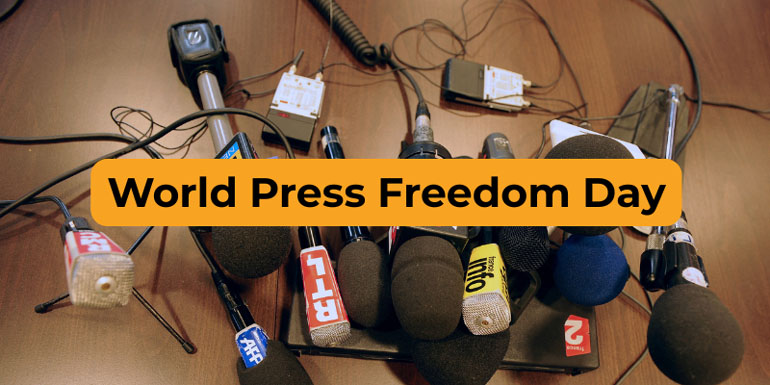
MAY 3 was World Press Freedom Day, which is always a moment of reflection, celebration, and sober assessment of the state of journalism worldwide.
It is a day that reminds us of the sacrifices made by journalists who risk their lives to inform society, and it underscores the importance of a free press as a cornerstone of democracy.
Yet, in recent years, the celebration has been tempered by growing concerns over the abuse of social media platforms, the erosion of privacy, and the blurring of lines between professional journalism and casual content creation. These challenges demand, not only recognition, but also decisive action if press freedom is to remain meaningful in the digital age.
Social media has undeniably revolutionised communication, giving ordinary citizens the power to share information instantly and widely. This democratisation of information has its merits, but it has also opened the floodgates to misinformation, sensationalism, and reckless behaviour.
One of the most disturbing trends is the casual filming and publishing of accident scenes, often accompanied by gory images that circulate unchecked on public platforms.
While some may argue that such content raises awareness, the reality is that it often violates the dignity of victims and their families, invades privacy, and desensitises society to human suffering.
The rush to capture and share shocking visuals reflects a lack of responsibility and empathy, qualities that should be central to any form of communication.
This is where regulation becomes critical.
Social media platforms cannot remain ungoverned spaces where anything goes. Just as traditional media is held to ethical standards, digital platforms must be subject to rules that guard against abuse.
Regulation should not be seen as censorship, but as a safeguard for truth, dignity, and accountability.
In Zimbabwe, the Zimbabwe Media Commission (ZMC) has a vital role to play in this regard. The Commission must, not only regulate traditional media, but also extend its oversight to the digital sphere, ensuring that content shared online adheres to basic ethical principles.
This includes discouraging the publication of graphic accident images and promoting responsible reporting that informs without exploiting tragedy.
Equally important is the need to distinguish between professional journalists and content creators.
The rise of social media influencers and citizen reporters has blurred the boundaries of journalism. While content creators may contribute to public discourse, they are not bound by the same ethical codes or professional standards as trained journalists.
This distinction matters because journalism is not merely about sharing information; it is about verifying facts, providing context, and serving the public interest.
If anyone with a smartphone and internet access is treated as a journalist, the credibility of the profession is undermined.
ZMC must therefore be strict in registering journalists, ensuring that only those who meet professional criteria are recognised as media practitioners. This will help preserve the integrity of journalism while allowing content creators to operate within their own space without misrepresenting themselves.
At the same time, journalists themselves must embrace responsibility in the digital age.
Press freedom is not a licence to publish without restraint; it is a privilege that comes with obligations.
Ethical journalism requires sensitivity to privacy, respect for human dignity, and a commitment to accuracy.
On World Press Freedom Day, it is worth reminding ourselves that freedom of expression is most powerful when exercised responsibly. The public’s trust in media depends, not only on the ability to report freely, but also on the assurance that reporting will be fair, respectful, and truthful.
The celebration of World Press Freedom Day in Zimbabwe and beyond should therefore be both joyous and reflective.
It is joyous because it affirms the vital role of a free press in safeguarding democracy and human rights.
It is reflective because it forces us to confront the challenges posed by social media abuse, privacy violations, and the dilution of journalistic standards. Regulators like ZMC must rise to the occasion, enforcing strict registration of journalists, drawing clear lines between media practitioners and content creators, and ensuring that ethical standards are upheld across all platforms. Citizens, too, must recognise their role in promoting responsible communication, resisting the urge to sensationalise tragedy, and valuing dignity over clicks.
Ultimately, press freedom is not just about the right to speak; it is about the responsibility to inform wisely.
In an era where information travels faster than ever, the need for ethical guardrails has never been greater.
World Press Freedom Day should inspire us to protect, not only the freedom of the press, but also the integrity of the information we consume and share. Only then can we ensure that the press remains a force for truth, justice, and humanity in a rapidly changing world.
Ends