Online Reporter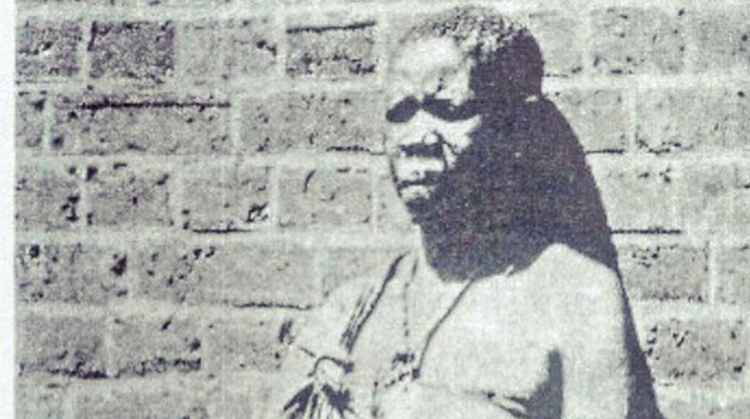
Zimbabwe has got Mbuya Nehanda Charwe Nyakasikana who did not just lead a revolution; she shattered the socialisation that suggested a woman could not hold supreme military and spiritual authority.
Alice Tagwira
The cradle of African womanhood is often a gilded cage where the bars are forged from the very language we speak.
Socialisation is not a benign transfer of culture; it is the strategic manufacturing of consent—a psychological bypass that replaces a woman’s innate sovereignty with a curated, subservient “identity” designed to sustain the patriarchal estate.
At the core of patriarchal socialisation lies the “Half-Human” narrative myth.
This is the pervasive sociological fiction that a woman is an ontological fragment—a “rib”—who only achieves completion or “full humanity” through her proximity to a male figure.
This narrative suggests that a woman’s intellectual and spiritual agency is “auxiliary.”
By socialising girls to believe they are secondary entities, patriarchy preemptively disables their sense of entitlement to public space, leadership, and self-actualisation.
As organisations like ZimRights and the Zimbabwe Gender Commission have argued, this “half-human” framing is the root of the “double burden,” where women are expected to perform the bulk of productive and reproductive labor while remaining invisible in decision-making hierarchies.
Internalised Misogyny:
Internalised misogyny is the most sophisticated “virus” in the patriarchal software.
It transforms the oppressed into the primary enforcers of their own subjugation.
Historically, the Vatete (paternal aunt) in Shona culture has often served as the Chief Custodian of Compliance.
While she holds immense spiritual power, she has frequently used that platform to socialise young girls into “domestic docility,” prioritising the preservation of a “virginity” that serves as a warranty for a transaction.
This creates a state of horizontal oppression, where women police each other’s clothing, tone, and ambitions.
When a woman is socialised to believe her value is tied to a price tag—the commodification of Roora (Lobola)—she stops viewing herself as a subject and begins viewing herself as a “product.”
The Federation of African Media Women Zimbabwe (FAMWZ) has noted that this self-policing extends to professional spheres, where women may undermine female colleagues to signal their own “virtuous” alignment with patriarchal norms.
I hope this answers the popular question of how women can’t vote for each other in elections.
The Economic and Political Chokehold
Socialisation acts as a silent gatekeeper to power. Economically, the “homemaker” socialisation restricts women to the Informal Economy, which lacks security and credit access.
Despite the Married Persons Property Act, socialized fear often prevents women from asserting their rights to land or inheritance, as doing so is labeled unnatural.
Politically, the “Docile Woman” archetype is weaponised during elections.
Women who run for office in Zimbabwe are often subjected to “Character Assassination Socialisation,” where their marital status or “purity” is scrutinised more than their policy.
Women-led organisations like Women’s Academy for Leadership and Political Excellence (WALPE) emphasize that this socialised stigma, combined with the exorbitant nomination fees that favour male-held capital, creates a “glass ceiling” made of cultural shame.
The Disruptors:
African history is punctuated by “Intellectual Outlaws” who refused the socialised script.
Zimbabwe has got Mbuya Nehanda Charwe Nyakasikana who did not just lead a revolution; she shattered the socialisation that suggested a woman could not hold supreme military and spiritual authority.
Her refusal to be silent was a direct assault on the “Docile Woman” myth.
Conversely, we must acknowledge those who enabled the system.
The Queen Mothers of certain West African states, while powerful, often managed harems that solidified the king’s patriarchal dominance.
In modern Zimbabwe, the “enablers” are often women in high positions who use their power to defend “tradition” at the expense of younger women’s rights.
However, the demystification continues.
Scholars like Dr Yvonne Vera used literature to “un-speak” the silence surrounding women’s bodies.
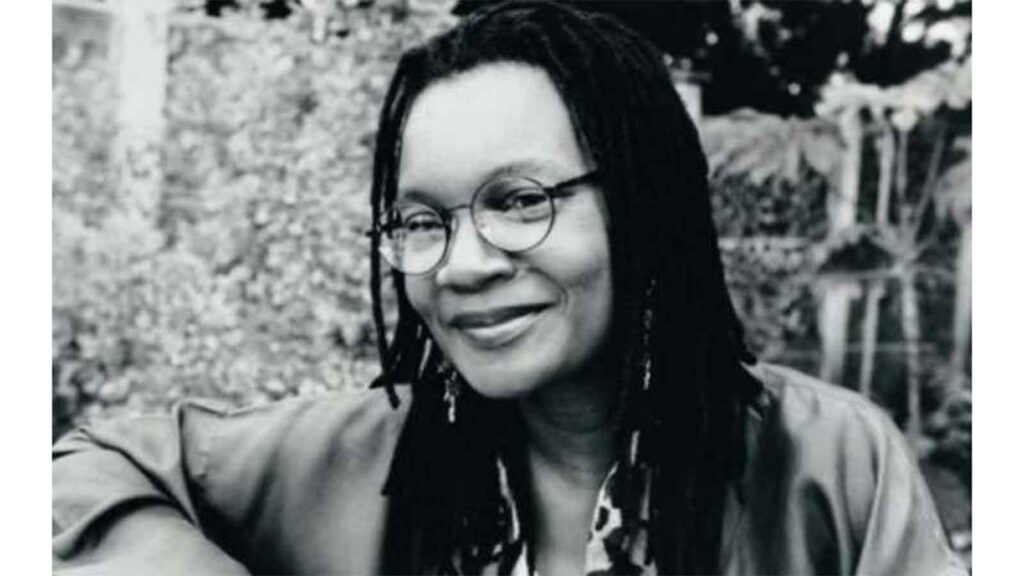
Dr Yvonne Vera
Organisations like Musasa Project and Wilde-Zim are now translating these intellectual critiques into grassroots action, teaching that Kushingirira (perseverance) should not mean enduring abuse, but rather the stubborn pursuit of equality.
Socialisation is the ultimate ghost in the machine: it makes the prisoner believe she is the architect of her own cell. To dismantle patriarchy is to perform a radical intellectual autopsy on every “tradition” that requires a woman to shrink so a man may expand
This critique asserts that “womanhood” in the African context is frequently a manufactured social artifact, forged at the intersection of colonial Victorian morality and distorted Chivanhu (tradition).
By deconstructing the “Half-Human” narrative, we expose a systemic ontological theft where socialisation serves as the primary mechanism for stripping women of economic, political, and bodily autonomy.
As championed by organisations like WLSA (Women and Law in Southern Africa) and WALPE, true liberation requires a radical “un-learning” of the internalised misogyny that transforms the oppressed into the deputy of the oppressor.
Ultimately, dismantling these patriarchal scripts is not an abandonment of African identity, but a reclamation of the egalitarian sovereignty that preceded both colonial and patriarchal distortions of the domestic sphere.