Online Reporter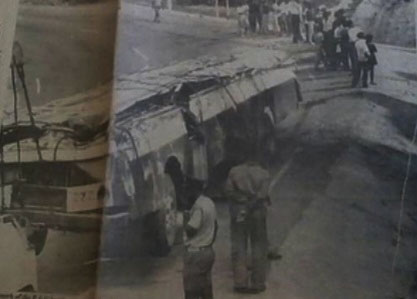
Liberty Dube
Entertainment Correspondent
SOME songs entertain, while others endure.
They outlive the moments that inspired them, carrying a people’s emotions long after the headlines have faded.
Veteran gospel artiste, Pastor Charles Charamba’s song, Sodom neGomorrah, is one of these rare songs.
Released in 2000 on the album, Vhuserere, the song has become one of Zimbabwe’s most enduring musical memorials – a composition born of unimaginable tragedy that continues to offer comfort, reflection and hope 35 years after the Nyanga Bus Disaster.
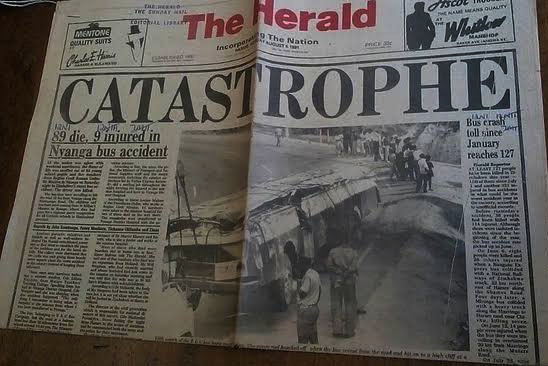
On August 3, 1991, Zimbabwe awoke to the devastating news from the steep and snaking curves of Nyanga.
A bus carrying learners and teachers from Regina Coeli School veered off the Nyanga-Ruwangwe Road, while returning from a sports day at St Killian’s Mission High School, on the outskirts of Rusape.
What had begun as a day of youthful competition and celebrations ended in heartbreak just 20 kilometres from home.
The crash claimed 89 lives – the bus driver, five staff members and 83 learners. Only three people survived. It remains the deadliest road traffic accident in the country’s history.
The tragedy devastated families, shattered communities, and left an indelible mark on the national consciousness.
Across the country, parents mourned their children, classrooms were left with empty desks, and communities searched for words to express such immense sorrow.
Sometimes, words are not enough. That is where music begins. Throughout history, artistes have helped societies make sense of tragedy. Their music preserves memory, giving future generations not only the facts of history, but also its emotional truth. For Pastor Charamba, the Nyanga Bus Disaster became one of those defining moments.
The gospel icon recalls composing what would become one of Zimbabwe’s most beloved songs just two weeks after the crash.
“On this day in 1991, the Nyanga Bus disaster happened. To console the remaining families, I composed a song about two weeks after the crash,” he recalled. The story behind the recording is almost as remarkable as the song itself. At the time, Pastor Charamba did not even have a band.
“I did not have a band, but just bumped into Farai Brothers rehearsing in Unit K, Seke, on my way to Chitungwiza Town Centre. I requested them to back me. We had an impromptu session that lasted for about 15 minutes. To cut the story, the song came to be entitled Sodom neGomorrah eight years later,” he wrote on a Facebook post.
It was a young musician carrying the weight of a grieving nation, aided by fellow artistes, who willingly lent their voices to a song whose purpose was never commercial success, but consolation. That humble beginning perhaps explains why Sodom neGomorrah continues to resonate decades later.
Even the title reveals Pastor Charamba’s artistic intent. In the Bible, Sodom and Gomorrah symbolise catastrophic destruction brought upon the entire community.
By invoking those cities, Pastor Charamba was not suggesting the Nyanga tragedy was an act of divine judgement. Rather, he borrowed one of scripture’s most recognisable images of overwhelming loss to express a grief that seemed beyond ordinary language.
It was metaphor listeners immediately understood, allowing the song to confront tragedy, while ultimately pointing towards faith and hope. The song was never written to dominate radio playlists, but to comfort broken hearts. Its arrangement reflects that purpose.
Rather than relying on dramatic crescendos or elaborate instrumentation, the composition unfolds patiently, allowing Pastor Charamba’s reflective delivery and understated accompaniment to carry the emotional weight.
The restrained tempo gives listeners room to absorb the lyrics, turning the song into a meditation rather than a performance.
It is that simplicity, as much as its message, that has helped it endure across generations.
Over time, it outgrew the tragedy that inspired it, becoming a timeless meditation on faith, loss and the resilience of the human spirit. In churches, family homes and public gatherings, it has accompanied Zimbabweans through bereavement, uncertainty and personal trials, offering quiet reassurance without pretending to erase pain.
Its enduring strength lies in its honesty. Rather than offering easy answers to suffering, it acknowledges grief before gently directing listeners towards hope. It understands that healing is not found in forgetting, but in remembering with faith. For many Zimbabweans, hearing the opening notes of Sodom neGomorrah immediately evokes memories, not only of the Nyanga Bus Disaster, but also of loved ones lost, difficult seasons endured, and the remarkable ability of music to speak when words fail.
It is another reminder that Zimbabwean music has long served, not only as entertainment, but also as a witness to history and a powerful voice for social reflection.
Yet among those artistic responses, Sodom neGomorrah occupies a place all its own – a song every generation can inherit.
Born from one tragedy, it found meaning in countless others.
Today, annual commemorations continue in Manicaland, where the victims are remembered as part of one of the province’s darkest chapters. Their names remain etched in stone, while road safety campaigns continue to invoke the disaster as a solemn reminder of the cost of recklessness.
Pastor Charamba’s tribute, however, found its monument elsewhere — not in granite or bronze, but in melody.
Veteran producer, Bothwell Nyamhondera, who produced the song, believes its enduring appeal lies in its profound spiritual message.
“The song is deep in meaning. I have always known Charles Charamba as someone who is exceptionally gifted. His songs are powerful. I remember Gramma Records were initially reluctant to record his music, but I took interest in his work and fell in love with his artistry. His music is spiritually deep, and I am not surprised that Sodom neGomorrah, together with many of his other songs, continues to touch people’s hearts. These songs are divine,” said Nyamhondera.
Perhaps that is the song’s greatest achievement. It transformed mourning into music without diminishing the pain that gave it birth. It proved that a song can become more than art – a sanctuary where a nation returns to remember, to grieve and, ultimately, to heal.
Every time the song is sung, Zimbabwe is reminded that while tragedy may claim lives, it cannot silence love.
Sometimes, the most enduring memorial is not built from stone, but carried in song!