Online Reporter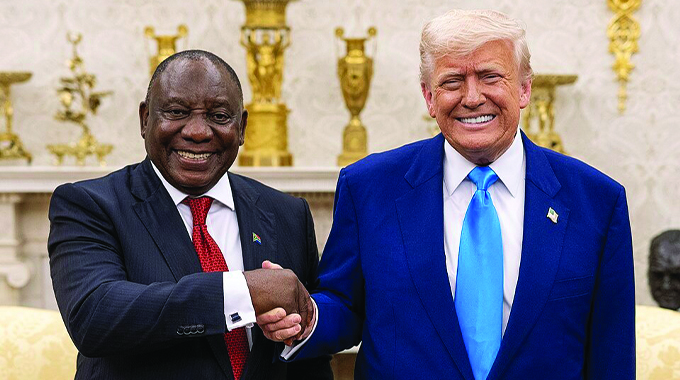
Professor George Tsibani
The matter regarding the United States-South Africa bilateral agreements and diplomacy, particularly in light of South Africa’s non-alignment policy, is deeply rooted in geopolitical analysis and global economic models.
Notably, South Africa’s success in taking Israel to the International Criminal Court (ICC) demonstrates the country’s commitment to upholding international law and human rights.
As we move forward, South Africa must prioritise its national interests, particularly regarding US-led NATO investments in the country and the African Continental Free Trade Area (AfCFTA) in supporting agribusinesses and farmers.
To this end, I propose organising a joint session with experts from the University of Johannesburg (UJ) and the University of the Witwatersrand (WITS) to highlight the significance of “soft power” in South Africa’s diplomatic approach to the US.
This concept, adopted by President Matamela Cyril Ramaphosa, emphasises the use of persuasion, attraction and cooperation to achieve South Africa’s national interests.
Soft power is particularly relevant in South Africa‘s bilateral agreements with the US, enabling the country to negotiate from a position of strength, while maintaining a collaborative and mutually beneficial relationship.
By leveraging unique cultural, economic and historical assets, South Africa can create a favourable environment for cooperation and investment.
In support of the USA-RSA bilateral agreement and AfCFTA, it is essential that South Africa aligns its programmes with G20 priorities, including:
- Global Economic Governance
- Financial Inclusion
- Infrastructure Development
- Climate Change and Energy Transition
- Sustainable Development Goals (SDGs)
The African Growth and Opportunity Act (AGOA) programme should be leveraged to add value to both emerging and commercial farmers.
By focusing on USA-RSA AGOA, South Africa can create opportunities for farmers to access new markets and increase their competitiveness.
AGOA has been a significant trade preference programme between the US and South Africa, offering duty-free and quota-free access to the US market for over 6 800 tariff lines.
As of 2024, South Africa contributed 49% (R273.2 billion or approximately USD 18.7 billion) to total AGOA exports to the USA
Benefits to South African farmers:
- Increased Export Earnings: South Africa’s agricultural exports to the US have grown steadily, with a 104% increase between 2018 and 2024, reaching R9.8 billion (approximately US$670 million).
- Market Access: AGOA provides South African farmers with preferential access to the US market, enabling them to compete with other exporters.
- Diversified Export Base: AGOA helps South African farmers diversify their export base, reducing dependence on traditional markets.
Financial Risks and Costs:
- Loss of Preferential Access: If South Africa loses AGOA benefits, it will face higher tariffs, increasing costs for exporters and potentially reducing competitiveness.
- Tariff Costs: The imposition of Most Favoured Nation (MFN) tariffs by the US could result in significant tariff costs for South African exporters, estimated at US$20.8 million in welfare losses and US$61.8 million in trade balance reduction.
- Decline in Export Earnings: Exclusion from AGOA benefits could lead to a decline in South Africa’s agricultural export earnings, affecting farmers’ livelihoods and the broader economy.
To mitigate these risks, South Africa should focus on diversifying its export markets, investing in infrastructure, and enhancing sectoral competitiveness through value addition and use G20 presence for more integrated rural and urban infrastructure investment programmes.
As South Africa prepares to host the G20, it must develop a comprehensive strategy for the handover of the G20 report to the US by the end of this year. This strategy should be aligned with the G20 priorities and highlight South Africa’s unique strengths and contributions to the global economy.
I believe that by working together and leveraging on collective expertise, South Africans can successfully navigate the complexities of US-South Africa bilateral agreements and diplomacy, while advancing national interests and promoting a more equitable and sustainable global order.
Notably, the Minister of Police, Mr Edward Senzo Mchunu kaMacingwana, has presented empirical statistics that debunk the myth of farm genocide.
Under the leadership of the President, South Africans have effectively addressed this narrative and are now focused on pressing economic matters.
Professor George Tsibani is from the UJ Nuclear Research Centre, University of Johannesburg