Online Reporter
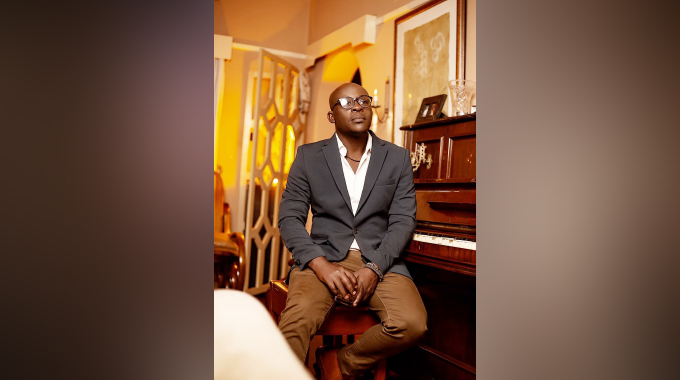
Justin Mahlahla
THE armed struggle for Zimbabwe’s liberation has long been chronicled through its military engagements and political negotiations, yet the true foundation of our revolution lay in something far more profound — the human skills that transformed ordinary citizens into an unstoppable force for freedom.
Behind every battlefield victory stood an intricate web of communication networks, problem-solving genius, emotional intelligence and visionary leadership that collectively turned the dream of independence into reality.
These soft skills, often overlooked in conventional histories, were the invisible arsenal that empowered our people to achieve what many thought impossible.
The revolution’s spiritual and moral backbone came from traditional leaders and spirit mediums like Mbuya Nehanda and Sekuru Kaguvi.
Their leadership was rooted in deep cultural wisdom, spiritual guidance and an unwavering commitment to justice.
Mbuya Nehanda’s prophetic vision and ability to inspire resistance through ancestral authority demonstrated the power of faith and cultural identity in mobilising people.
Her famous statement of defiance, “My bones shall rise again”, was not just a threat to colonial oppressors, but a rallying cry that embedded the struggle in Zimbabwe’s collective consciousness.
Sekuru Kaguvi, like Mbuya Nehanda, wielded spiritual influence to unify people across regions.
His leadership exemplified conflict resolution through traditional systems, ensuring that the revolutionary agenda remained aligned with the people’s cultural values.
These spirit mediums provided more than just moral guidance; they were master communicators who translated complex political struggles into a language that resonated with ordinary villagers. Their ability to connect the physical fight with spiritual conviction gave the movement an unshakeable sense of purpose.
Traditional values and
national aspirations
No discussion of Zimbabwe’s liberation struggle would be complete without acknowledging the pivotal role of Chief Rekayi Tangwena, whose courageous leadership in the Tangwena people’s resistance became a symbol of defiance against colonial land dispossession.
When the Rhodesian government attempted to forcibly remove his community from their ancestral lands in the 1960s, Chief Tangwena employed extraordinary conflict resolution skills and strategic non-compliance to mobilise his people.
His deep emotional intelligence allowed him to unite different generations — from elders to the youth — in peaceful resistance, while his communication skills brought international attention to the injustice. Rather than resorting to violence, he used his traditional authority to organise a sophisticated network of support, sheltering guerrillas while maintaining his people’s dignity.
Chief Tangwena’s problem-solving abilities were legendary.
He developed an early warning system using traditional methods to evade the police, and his adaptability in the face of repeated arrests inspired the broader liberation movement.
His leadership demonstrated how traditional authority, when combined with political consciousness, could become a powerful force against oppression, paving the way for the land reform principles that would later become central to independent Zimbabwe.
The Tangwena resistance proved that the fight for freedom was as much about protecting cultural identity and ancestral land as it was about political independence, creating a crucial link between traditional values and nationalist aspirations.
Intellectual discipline
As the resistance against oppression grew, Cde Robert Mugabe emerged as a pivotal figure in Zimbabwe’s liberation struggle, his leadership deeply rooted in an unwavering passion for education and continuous self-improvement.
A teacher by training, Cde Mugabe brought intellectual discipline and meticulous organisational skills to the revolutionary movement, qualities that transformed potential discord into unified action.
His sharp political mind and ability to clearly articulate the struggle’s objectives inspired fierce loyalty among comrades, demonstrating how conceptual clarity could be as powerful as military might in driving a revolution forward.
This intellectual leadership complemented Cde Joshua Nkomo’s exceptional talent for mass mobilisation and conflict resolution.
Cde Nkomo’s emotional intelligence and ability to bridge differences united various factions behind the liberation cause, while his pragmatic problem-solving skills converted numerous crises into strategic advantages.
Perhaps most remarkably, Cde Nkomo’s capacity for reconciliation after enduring imprisonment and persecution established a foundation for national unity that would prove crucial in the post-independence era.
Together, these contrasting but complementary leadership styles — Cde Mugabe’s disciplined intellect and Cde Nkomo’s unifying emotional intelligence — created a powerful synergy that propelled the struggle forward.
Their combined strengths addressed both the strategic and human dimensions of revolution, proving that successful liberation movements require both clear vision and the ability to unite people behind that vision.
In intelligence, heroes like Cde Zenzo Ntuliki, who joined the struggle at just 15, demonstrated remarkable analytical skills and courage during dangerous missions after specialised training in Bulgaria. Likewise, Colonel Kenny Ridzai Mabuya, the architect of ZANLA’s security apparatus, used his strategic mind to foil assassination attempts, proving intelligence could be as decisive as firepower.
Equally pivotal was Cde Nash Dzimiri, whose intelligence mastery created sophisticated networks that outmanoeuvred colonial forces repeatedly.
Alongside military strategist Brigadier-General Shadreck Vezha, they proved how information warfare and tactical innovation could defeat better-equipped enemies.
The revolution also thrived on masterful communication systems and skills that would rival any modern network.
Unsung heroes
While Cde Webster Shamu’s powerful broadcasts as the “Voice of Zimbabwe” from Radio Mozambique sustained morale across scattered fronts, the unsung heroes were ordinary citizens who developed ingenious methods to outmanoeuvre colonial surveillance.
Market women perfected the art of hiding messages in produce baskets, bus conductors memorised complex troop movements and villagers created elaborate coded warning systems using everyday activities.
This web of communication, built on trust, creativity and precision timing, allowed coordinated operations across vast distances without modern technology, proving that information can be more powerful than ammunition.
Teamwork manifested in what became the revolution’s guiding principle: “The masses are the water, the guerrillas were the fish”.
This profound truth came alive through thousands of quiet collaborations — teachers who secretly incorporated political education into their lessons, nurses who treated guerrillas while maintaining cover stories and farmers who transformed grain silos into arms caches.
Musicians like Cde Chinx, the Kasongo Band and Simon Chimbetu weaponised their creativity, turning music into a mobilisation tool that transcended ethnic divisions.
Women like Joana “Mama” Mafuyana and Julia Zvobgo demonstrated extraordinary loyalty and sacrifice, their commitment often requiring them to balance combat roles with maintaining family and community structures under extreme duress.
The 1977 recruitment of over 400 learners at Manama High School by three ZIPRA cadres stands as one of the most striking examples of mass mobilisation in Zimbabwe’s liberation struggle.
In a single night of impassioned dialogue, these young revolutionaries demonstrated how powerful communication and emotional appeal could awaken political consciousness.
Their approach blended strategic messaging with deep cultural understanding, framing the struggle not as distant warfare but as a personal responsibility for every Zimbabwean youth.
Rather than coercion, they employed persuasive storytelling that connected classroom realities to national oppression, transforming academic frustration into revolutionary energy.
This operation showcased exceptional interpersonal skills, the cadres’ ability to read their audience, adjust their message and build instant trust turned a school into a recruitment hub.
The Manama mobilisation proved that liberation movements grow not through force alone, but through the soft power of compelling narratives that help people see themselves as agents of change.
These 400 learners became multipliers of the message, carrying the liberation ethos into communities across Matabeleland, into Botswana and further into Zambia and many other places where they trained and later served, demonstrating how one night of effective communication could ripple through an entire region’s participation in the struggle.
In Matabeleland North, Cde Andrew Sikajaya Mutanga’s unparalleled mobilisation skills became a formidable weapon in Zimbabwe’s liberation struggle, demonstrating how strategic community engagement could achieve what brute force alone could not.
Despite facing intense colonial opposition, he persistently organised the Tonga people to resist white settler rule, showing remarkable courage and organisational brilliance.
The Smith regime’s decision to ban him from Binga spoke volumes about his growing influence; they feared his ability to awaken political consciousness among the Tonga people more than they feared weapons.
His tremendous influence made him a force to reckon with, capable of turning entire communities into revolutionary strongholds and through his exceptional mobilisation techniques, successive political campaigns in Binga achieved resounding success, transforming the region into a vital hub of resistance. Cde Mutanga played a pivotal role in convincing the Tonga people to support and join ZAPU’s armed struggle, understanding that Binga’s strategic location made its politicisation essential for the war effort.
His methodology was both sophisticated and effective, establishing clandestine underground cell units that operated beneath the radar of colonial authorities.
These covert networks allowed him to execute party assignments, but as his successes multiplied, the enemy intensified surveillance, ultimately leading to his ban from Binga, arrest in Hwange and detention at Whawha Prison in 1972. But even in captivity, the systems Cde Mutanga created continued functioning, proving the durability of his grassroots mobilisation model. His approach combined cultural sensitivity with revolutionary fervour, showing that the most powerful resistance grows from authentic connection with communities.
Facing severe shortages in human and material resources, our fighters became masters of adaptive problem-solving.
Commanders like General Josiah Tungamirai displayed remarkable ingenuity in repurposing captured weapons, while medical personnel like Cdes Chenjerai Hunzvi and Christopher Ushewokunze blended traditional knowledge with scavenged supplies to treat wounds and disease.
Moreover, the pungwe night meetings evolved into sophisticated think tanks where fighters and villagers collaboratively devised solutions for moving undetected, storing supplies and communicating under surveillance.
When conventional supply lines were cut, they developed alternative routes through swamps and mountains.
When radios were unavailable, they created relay systems using market women and herd boys.
Each obstacle became an opportunity to outthink rather than simply outfight the enemy.
Gen Josiah Tongogara emerged as the embodiment of visionary leadership and emotional intelligence.
His insistence on unity between ZANLA and ZIPRA at Lancaster House reflected a profound philosophy of national cohesion.
In discussions with comrades, Gen Tongogara consistently emphasised three liberation pillars: disciplined governance, economic empowerment and social justice.
His ability to distinguish between the oppressive regime and white civilians, while maintaining revolutionary fervour, demonstrated extraordinary political sophistication.
Gen Tongogara’s vision extended beyond military victory to a Zimbabwe where liberation dividends would be shared equitably, where colonial wounds would heal through inclusive development.
Problem-solving ingenuity
The same boundless creativity that fuelled our liberation struggle — from musicians embedding coded messages in revolutionary anthems to medics improvising life-saving techniques in cave hospitals, from bicycle couriers memorising and swallowing secret communications to artists smuggling maps in their paintings — now powers our march towards Vision 2030 under President Mnangagwa’s leadership.
Just as ordinary Zimbabweans demonstrated extraordinary innovation under pressure during the struggle, today we channel that same problem-solving ingenuity to overcome development challenges, building our nation brick upon brick.
The communication networks that once coordinated military operations now facilitate economic planning, the teamwork that sustained guerrillas drives productivity across sectors and the adaptive thinking that outmanoeuvred colonial forces tackles infrastructure development.
President Mnangagwa’s administration has embraced this legacy, transforming our liberators’ vision of inclusive development into concrete action by recognising that every skill counts and no Zimbabwean shall be left behind.
From the liberation struggle’s makeshift solutions to today’s innovation hubs, our nation continues to prove that creativity thrives when harnessed for national progress, with all citizens, like the war-time musicians who were as vital as combatants, playing their part in achieving an empowered, prosperous upper middle-income economy by 2030.
The revolution proved that sustainable liberation is built not just on military might but on human capabilities, the skills to communicate clearly, collaborate effectively, think critically, adapt quickly and lead with vision and empathy. These are not historical artifacts but living tools for our future.
As we pursue economic independence, we would do well to remember that the same soft skills that won our political freedom can secure our prosperity.
The lesson is clear: Nations are built not just with weapons and wealth, but with the collective intelligence, creativity and unity of their people. This truth, written in the blood and sweat of our liberation struggle, remains our guiding light as we work to complete the revolution our heroes began.
Justin Mahlahla is the Deputy Director of Communication and Advocacy in the Ministry of Skills Audit and Development. He writes in his personal capacity.