


 Andrew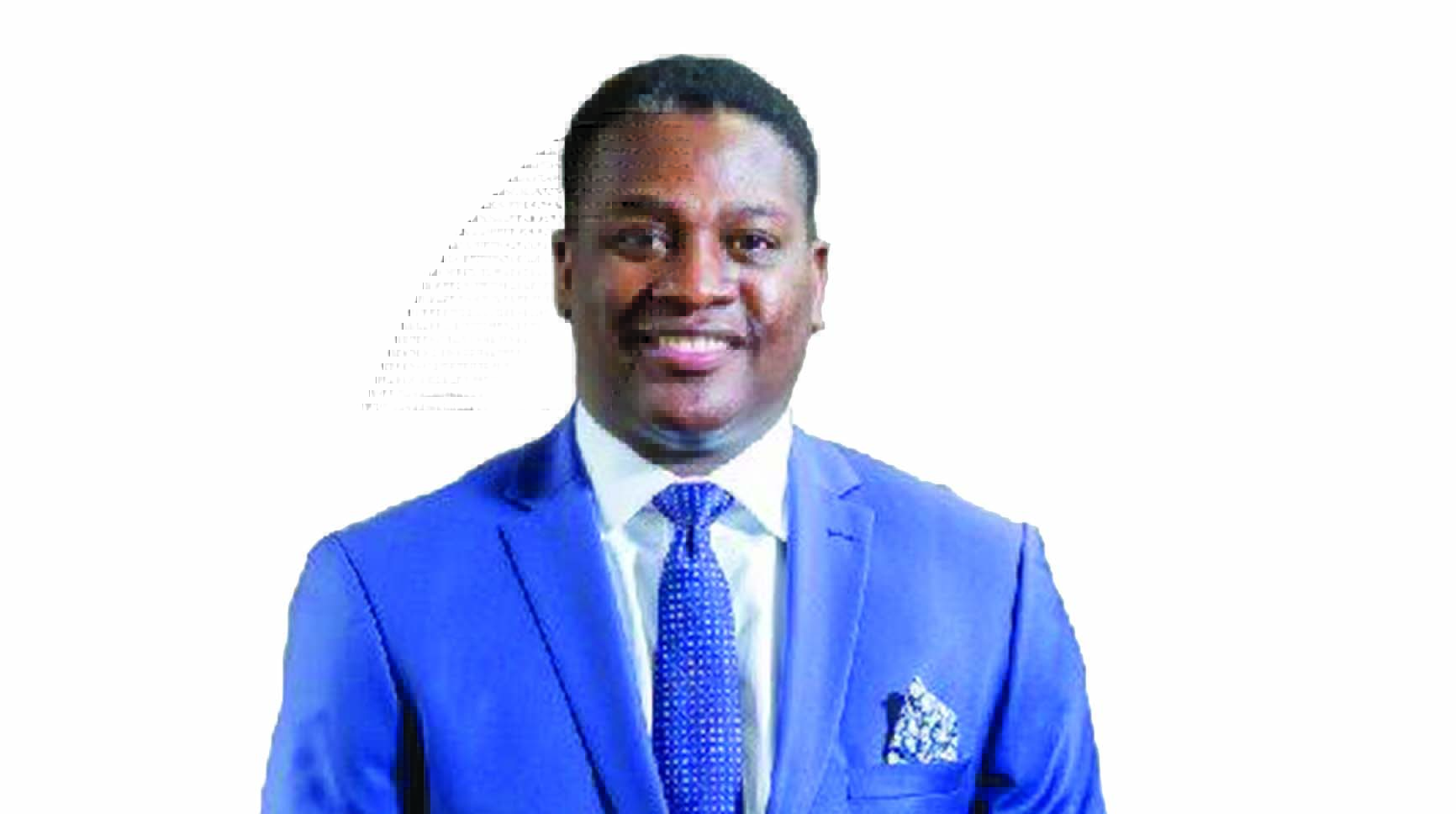
As a way to manage power challenges that have affected businesses and members of the public in general, solar energy has been viewed as the best sustainable option. Our reporter Jennifer Mufamba (JM) talked to Solgas Energy, chief executive officer, Kingston Gamuchirai Leon Kamba (KK) who company offers solar energy solutions and the following are excerpts of the interview.
JM: What exactly is Solgas Energy’s mandate in Zimbabwe?
KK: Solgas Energy Private Limited was established in May 2015 by young entrepreneurs who saw an opportunity to invest in renewable energy in a bid to alleviate the power shortages that had bedevilled our country. As part of the team, I can mention Petros Kazungu and Tafadzwa Mundicha who are co-founders executive directors. We have currently employed 21 full-time staff, with up to 350 people working on our flagship solar plant during its development. The goal for us was to identify locally developed solutions that could power the country, an idea that would also provide jobs for our specialists and local communities.
We are a Pan African developer with a specialised focus on Sustainable Development Goals 7 and 13 under the United Nations Sustainable Development Goals charter, our mandate is to increase affordable and renewable energy; improve energy efficiency, embrace new technology and advocate for climate change awareness. The Zimbabwe Energy Regulatory Authority (ZERA) granted us a license to build, own and operate a 5MW power plant in 2016.
At this point, we are focused on building grid-connected large scale solar power plants to help alleviate power shortages as well as support government efforts to resuscitate the local industries. Energy is a key enabler of economic development and so we are presenting ourselves as a strategic partner in the fulfilment of government policies but not limited to the Renewable Energy policy and National Development Strategy1 (NDS1).
JM: What challenges are you facing in building a renewable energy company as entrepreneurs?
KK: I think it is usually rare to talk about entrepreneurship and not talk about financial challenges. Entrepreneurs need support in terms of financial muscle and government intervention. Government policies have become more accommodating in this sector but access to funding is still a challenge. I mentioned that we obtained a license in 2016 to offer you a real-life illustration of how financial capacity is a major barrier.
However, we only managed to secure funding and begin construction in 2019 after years of knocking on doors without so much luck. Looking back at the events, we realized that one of the great challenges creating barriers to accessing funding is the mindset of the people making investment decisions toward young innovators and entrepreneurs. There are a lot of potential investors who are holding on to their money due to the lack of more diverse investment vehicles in our current economy, however, young people have been bringing ideas and innovations that prove to be lucrative investments but have been continuously dismissed due to unspoken biases.
JM: How much capital did you use to start this company?
KK: The initial funding, we required to get the operations running in preparation for the construction of the 5MW plant was about US$150 thousand. We did manage to raise a significant portion of it from our personal funds but the rest we had to rely on strategic partnerships from other start-up entrepreneurs to whom we sold the vision and they believed. I would say that partnerships were the greatest capital injection into the establishment of Solgas Energy. There is a quote which says that “If you want to go fast go alone, but if you want to go far go together”, I can testify that it stands true.
We leveraged ideas and negotiated payment deferments with some of the service providers. There are some non-negotiables like license fees, engineering designs, computer simulations, soil samples, environmental assessments, statutory requirements, office running, and travel costs amongst others for which upfront payments had to be made. As a start-up, we had to also be mindful of risk and so we shared part of the risk through strategic alliances with some of the willing investors who have keen interests in attaining equity in the renewable energy sector.
JM: After successfully constructing, completing, and commissioning a 5MW solar power plant, what key lesson(s) can you share with other Independent Power Producers in the country?
KK: Learning was also a key objective for us as we took on the construction of our flagship project. We put our best foot forward in the best way we knew how, we hired the best contractors and engineers, and we formed symbiotic relationships with key stakeholders and authorities in the energy sector, creating partnerships at every level. All these moves were essential in creating a team with one vision and purpose and I would say that we accomplished that.
It is also diligent for me to talk about the critical element of ensuring that the research on the accuracy of the grid infrastructure is on point, this can never be overemphasized. Other lessons that IPPs can take advantage of are related to project management and financial management. Investor funds must be used appropriately which is why there is a need for prudent accounting and keeping an eye on budgets.
During the construction of our Cross Mabale plant, we had to deal with the unanticipated delays caused by the COVID-19 pandemic and this affected our timelines and budgets. We contained the situation very well as a team to manage financial repercussions because project timelines have a direct impact on the budget, so that is a lesson worth noting. There is a lot to unpack on quality control, acceptance tests to avoid dumping from suppliers and the need for an independent engineer to audit the contractor’s work. My team and I are available to help other IPPs on such issues, so our doors are always open.
JM: Renewable energy is quite topical in this era due to climate change and its visible effects which are contributing significantly to the social, environmental and economic challenges we are facing on our planet. From your experience, has the local investment climate adjusted accordingly to help meet the renewable energy needs?
KK: There is a visible shift in a lot of Companies now considering ESG. Investors now have deliberate policies to address ESG issues. Unfortunately, Africa is more affected by climate change despite its minimal contributions to the total global emissions. However, the emission reduction efforts require a global pull in a holistic strategy that approaches energy transition as a sustainable solution. That said, the transition process requires funding so there is still a lot of work to be done by both developed and developing nations. The pledges by the developing nations will go a long way but the concept of sustainability requires that local public and private entities participate in crafting solutions for their environments, and this includes local financiers. In this regard as an active contributor in the renewable energy sector, we understand the concerns that surround investment portfolios and therefore recommend that investors test the waters by channeling funds into the industry through companies that have shown that they can deliver value.
In a recent communication, as Solgas Energy we reiterated that we are open to working with other IPPs who are yet to have a portfolio to talk about. We are also using this strategy in our country-wide expansion drive whereby we are working on a project pipeline of 50MW of solar technology in collaboration with other Independent Power Producers across six different provinces. We reckon that in the last year over US$200million was directed towards importing electricity and as a local power producer, are confident that if these funds are directed into local power production, we can save greatly on forex expenditure in the long run. Granted, the transition process is gradual and so it will take a long time which makes it a long-term investment. It must be a responsible transition to avoid disturbing the urgent and immediate social and economic needs of our communities.
JM: What returns can investors expect from this industry? Is it a worthwhile investment?
KK: Yes! It is a very worthwhile investment that is hedged by government policies. I think our government has done well in supporting this industry to ensure a lucrative return for economic development. I can mention that there are no costs on duty when importing the required resources and income tax breaks have also been prescribed for a certain period to try and guarantee a return on investments.
These projects are of national interest and have very strong national status buffers through the Ministry of Finance and Economic Development, IPEC and the Ministry of Energy and Power Generation. Recent guarantees of foreign investors getting returns in foreign currency open the international funding corridors while the rate of return of over 14percent justifies that perceived investment risk in wealth management terms.
I think it is also significant to mention that the ZESA power purchase agreements are structured with a validity period of 25 years which guarantees revenue over a 25-year period of offtake from the national power utility.
JM: How liberal is the playing field for IPPs in Zimbabwe with reference to ZETDC, ZERA and ZESA as key authorities in the energy sector?
KK: There is alignment between IPPs and the regulators as owners of infrastructure. Of course, they hold the national mandate to ensure power generation so the collaboration efforts from IPPs help in increasing output. Infrastructure, transition, and distribution are key elements to which different stakeholders contribute for the benefit of the country, so we are not competitors. IPPs have agility which allows for the infrastructure owners to take advantage of the new school innovations and technologies brought in by different players with ease from an operational perspective. The tariffs being offered to IPPs are quite competitive and can be seen as a show of good faith that we all need each other.
JM: The Cross Mabale Solgas Solar power plant was funded by Old Mutual Zimbabwe. Are there other ongoing projects from this partnership?
KK: Yes, indeed! Old Mutual Zimbabwe (OM) is committed to supporting the development of the renewable energy sector and we are grateful for their dedication. Cross Mabale is a Solgas Energy flagship project which has helped with proof of concept and is already performing over and above expectation. That said, we are going into phase two which is an expansion drive to increase output from 5MW to 15MW so our partner is still invested. Of course, we are open to new investors also coming on board, it will make the work easier. We would also like OM and other investors to also be involved in the 50MW solar technology project pipeline that I previously mentioned. It is a remarkable project set to greatly impact many communities in six provinces.
JM: What can Zimbabwe expect from Solgas Energy’s contribution to the energy sector in the next 10 years?
KK: Our vision is to build a solar power plant in every province to support the government’s devolution agenda and meet National Development Strategy1 and Vision 2030 goals. We will depend greatly on the trusted support of the government which will allow us to simultaneously build these projects faster. We are confident that if we receive the same support as we did for the Hwange Cross Mabale plant we will be commissioning these projects regularly, thus, propelling the country towards energy sufficiency, tackling energy poverty, and significantly saving the country on forex expenditure.
We look forward to creating employment as these projects take off because they require a great human capital investment. Our Hwange solar plant allowed 350 people to secure employment at the peak of construction. We are very passionate about the people which is why power provision for rural communities and participating in rural development are also at the top of our agenda. Zimbabwe can expect us to be a key partner in the resuscitation of industry and a strong pillar in building a green economy.
JM: Any projects outside of solar power?
KK: Solar is our priority at the moment. There is an appetite to diversify but we need have taken a deliberate decision to focus on growth while we perfect our craft in large-scale solar power production. In that regard, we have plans to also be a leader within the African region, therefore, a regional expansion drive is in the works with key interests in Malawi, Botswana, Rwanda and Mozambique.


 Online Reporter