

 Online Reporter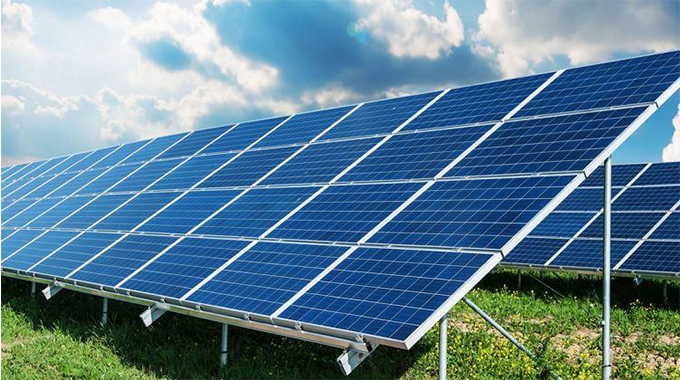
Rutendo Nyeve
Victoria Falls Bureau
SOLAR-POWERED households and businesses have contributed more than 60 megawatts to Zimbabwe’s national grid through net metering, becoming a key factor in the country’s pursuit of energy stability.
Experts say this 65MW could power around 50 000 medium-sized households. This development comes as the power utility, ZESA, aims to ramp up net metering contributions to 100MW by 2025 and another 100MW by 2026.
Achieving this would provide enough electricity to power an additional 150 000 homes annually, significantly closing the supply-demand gap.
ZESA Holdings revealed this latest milestone to Zimpapers, describing it as a significant step in addressing the country’s electricity situation.
Net metering is a billing mechanism that allows consumers who generate their own electricity, typically through solar panels, to feed excess power back into the national grid. In 2019, the Zimbabwe Electricity Transmission and Distribution Company (ZETDC), a unit of State power utility ZESA Holdings, introduced the net metering programme. This scheme allows households and businesses generating solar energy to feed excess power into the ZETDC network through grid-tied inverters.
In exchange, they receive credits that offset their future electricity bills. For instance, a household with rooftop solar panels might produce more energy during sunny hours than it consumes. Instead of wasting this surplus, net metering enables it to ‘sell’ the power to ZESA, effectively turning homes and businesses into mini power stations.
Instead of direct monetary compensation, domestic customers receive 0.8kWh bill credit for each kWh fed into the grid, while industrial customers receive 0.85kWh. The programme aims to boost renewable energy adoption, enhance energy security, and reduce reliance on power imports.
Responding to questions from Zimpapers, ZESA, through its stakeholder relations unit, revealed that so far 65MW have been injected into the national grid.
“About 65MW of net-metered solar power are now feeding into the grid. In 2025 we are targeting 100MW, and another 100MW in 2026,” said ZESA stakeholder relations.
This decentralised energy boost comes at a critical time when the nation has faced load-shedding, with ageing infrastructure at the Hwange Thermal Power Station and reduced output from the Kariba Hydroelectric Plant due to climate-induced water shortages.
While residential users dominate in numbers with thousands of households adopting solar, commercial entities contribute the lion’s share of power.
Businesses, equipped with larger rooftops and greater financial capacity, are installing high-capacity solar systems.
A single factory or shopping complex can generate multiple megawatts, dwarfing the output of individual homes.
“Commercial customers have contributed most in terms of the amount of power, while domestic customers have contributed more in terms of the number of connections done.
“Net metering is expected to inject more power into the grid to help alleviate the power challenges,” said ZESA stakeholder relations.



