admin
admin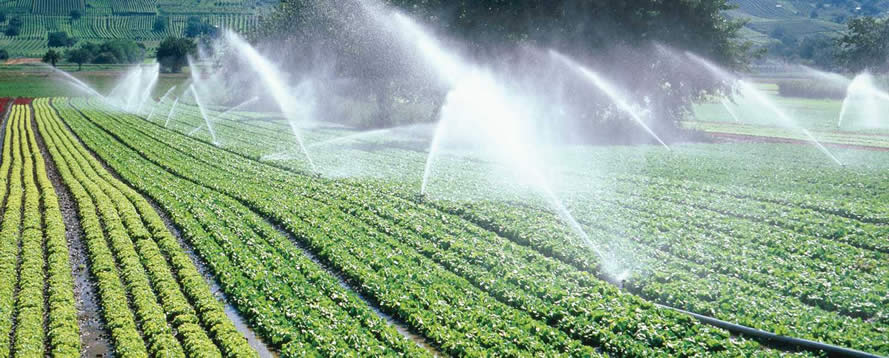
Vincent Gono recently in Gwanda
GWANDA district in Matabeleland South Province is one of the most drought prone areas in the country where cases of malnutrition abound and where less has always been expected in terms of crop production.
Irrigation therefore, becomes the only answer to food security concerns in such districts as Gwanda but in most cases it requires constant supply of electricity. But with the shortages of grid electricity that the region is experiencing, it then becomes a challenge to the already poverty stricken communities to ensure they are secure in terms of adequate food provision.
As a result communities of Gwanda are usually left to rely on Government and Non-Governmental Organisations (NGOs) for food hand-outs. The district falls in the hot and arid natural ecological Region Five that is characterised by low rainfall patterns and is generally an area where small livestock thrive. This year’s El Nino induced drought has made the situation worse. The district has not been spared but is rather one of the most affected in the country as it is in dire need of food aid.
But the lifelessness and extremely hot conditions in Gwanda does not mean there is no life. There is plenty of life and an enormous yet untapped solar energy potential that if tapped can supply the whole province but most of the households are vulnerable to the unfavourably hot and agriculturally unproductive conditions.
There are no big dams to talk of especially in the northern part of Gwanda and the only big river is Tuli that is perennially dry although the communities now know that they can access underground water through sand abstraction. The water, however, will usually not last a day because the domestic animals also drink from the same shallow wells dug on the river bed.
And what it means therefore is that villagers have to dig more wells to sustain their agricultural work and get something out of the land as most of them are communal farmers who derive their livelihood from working the land.
And as in many rural African societies, the duty to ensure the family has enough food and water is left to the women who then have to travel long distances to the water points as most boreholes are either dysfunctional or have dried up.
However, in the midst of the gloom that the people of Gwanda have been living in, life has been made a little easier especially to the women and children, thanks to the small-scale solar powered irrigation programme that is meant to enhance food security in the vulnerable communities that is funded by Practical Action and supported by the Jersey Overseas Aid Commission (Joac).
In the programme, Practical Action has implemented a solar powered drip irrigation scheme in Gwanda North constituency that is going a long way in alleviating the communities’ suffering by providing them with water for domestic use and for irrigation and has set up community gardens.
Practical Action project officer Mr John Siambare told Sunday News during a tour of some of the community gardens in the district that the idea to establish solar powered irrigation schemes and community gardens was a result of the realisation that the climatic conditions of the district were such that solar power can be used to do irrigation and help the communities alleviate food shortages.
“Gwanda is sometimes unbearably hot. There is plenty of sunshine and people were not making use of it, in fact due to the hot conditions the communities have not been harvesting much and it’s even worse this year with the El Nino induced drought.
“We therefore decided to implement this project where we have set up solar panels to make use of the plenty of sunshine to power the irrigation schemes in the district’s wards and in the process transforming a lot of lives.
“We are targeting about 250 communal farmers in the areas that we are working on in Gwanda North. We are not using dam water as you can see, but we use sand water abstraction and submersible pumps that are solar powered,” explained Mr Siambare.
The size of the solar panels is dependent on the size of the project although most of the projects are close to a hectare.
“We want to make it easy for communal farmers to access water without being asked to pay by Zimbabwe National Water Authority (Zinwa), so we are keeping the amount of land under irrigation a bit minimal because we know they have no capacity to pay,” he added.
Beneficiaries of the project at the community gardens that were toured — Mahalangudza, Siva, Vulindlela and Matshokodo expressed joy and gratitude with the solar powered irrigation projects saying they have transformed their lives in a big way.
“As you can see, we are in a very hot place, the soils are good but we have a problem of water. But the coming in of Practical Action has transformed our lives in a big way. We have no way of thanking these people. Before, we used to live on food hand-outs from Government and NGOs but now we can sustain ourselves and need a little help.
“We used to buy vegetables from town because we have no water to water our gardens and being in the rural areas, where do you get the money to buy vegetables every other day when most of us depend on farming for income,” said Mr Masotsha Leslie Tshalibe who is the chairman of Matshokodo Community Garden which is in Ward 8.
Practical Action is not only into crop production but is also into small livestock promotion where it is encouraging villagers to keep goats and indigenous chickens where they are targeting 600 goats and 1 000 chickens.
The programme is bearing fruits and the communities are benefiting as they have managed to send children to school off the proceeds of the goat and chicken projects.
Although they are yet to establish proper markets for the small livestock at least according to Mr Aram Burayayi who is with the Division of Livestock Production and Development, they are working on the modalities as they still want to grow their numbers.
“We so far have about 106 goats. We are working on growing our numbers before we look for proper markets. Our target is that of 600 goats and we are sure we will reach there. The goats are not imported from anywhere, they are our indigenous goats that are used to our conditions and they are doing well. We also have chickens, so what we are doing is that those that are not into community gardens are either keeping goats or chickens and it has changed the lives of many in the communities,” said Mr Burayayi.
He said the solar powered irrigation projects are helping them too in watering their livestock and in providing clean water for domestic use.
Mr Collen Mutasa a climate change expert with Environment Africa which is a supporting partner of Practical Action said the solar powered irrigation community gardens were a step in the right direction in eradicating the carbon emissions that were a result of generator powered irrigation energy.
He added that the small livestock production scheme was an adaptation measure that communities should brace for as climate projections were that there was a likely decrease in rainfall in future if no measures were put in place to mitigate the effects of climate change.
“The solar powered irrigation community gardens are healthy to the environment as there is no carbon emission to talk about compared to generator power. No fossil fuel is used. So it is in line with the drive towards the low carbon emission thrust that the country is pursuing.
“Apart from aiding in the villagers’ nutrition, the livestock production is a direct means of adaptation to climate change as they are more resistant to drought,” he said.
Gwanda district Agritex Officer Mr Ben Matshologwane commended Practical Action and its partners for the projects saying they have managed to turn around the fortunes of the villagers in the district where the elderly and the vulnerable were also romped in.
He said all the projects were done in consultation with Agritex and expressed their commitment to working with the communities to further the hectarage under irrigation and ensure food self-sufficiency in the district.
The solar-powered irrigation schemes are part of a three-year project funded by Trocaire which is an Ireland-based organisation that is promoting sustainable livelihoods in vulnerable communities.



 Online Reporter