Rutendo Nyeve, [email protected]
VICTORIA Falls is fast cementing its status as Zimbabwe’s premier green tourism destination with more tour operators, lodges and hotels pumping massive resources to drive a massive solar revolution across the resort town.
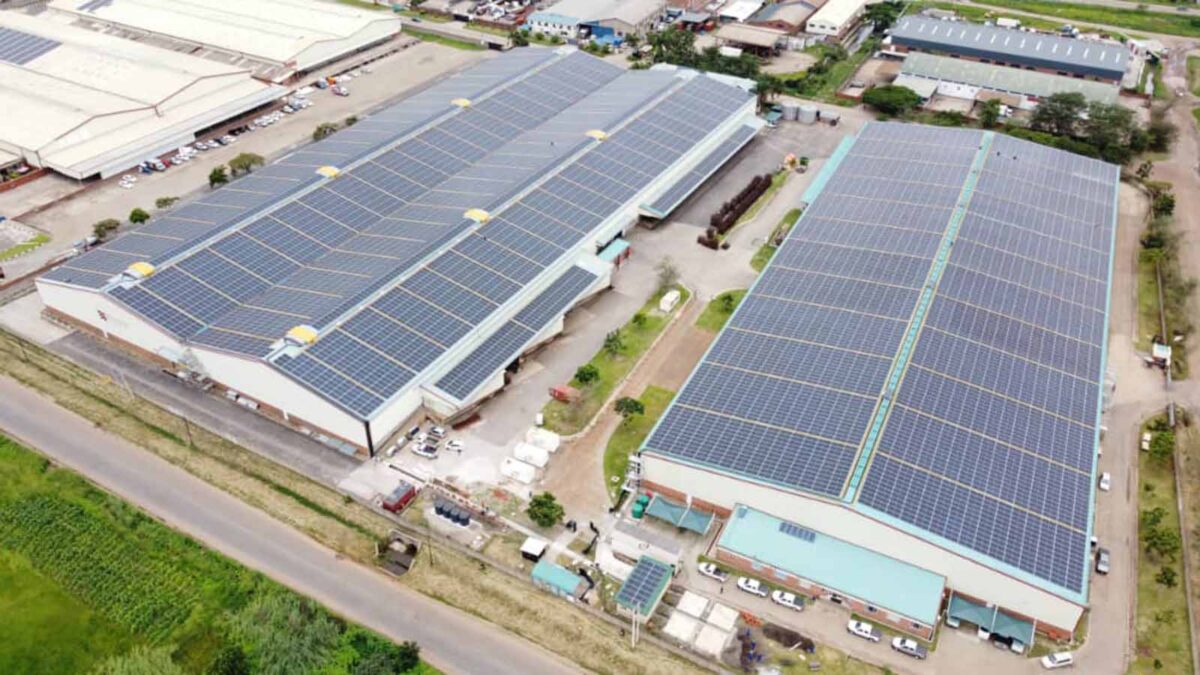
Africa Albida-owned Victoria Falls Safari Collection’s US$1 million investment in a 1 Megawatt (MW) solar plant is the latest milestone for Victoria Falls’ adoption of renewable energy, allowing the destination to solidify its reputation as a premier green destination while meeting stringent global Environmental, Social and Governance (ESG) standards.
The investment comes at a time when international travellers are increasingly demanding sustainable and eco-friendly accommodation.
For the Victoria Falls Safari Collection, which houses the Victoria Falls Safari Lodge, Lokuthula Lodges and the Boma Dinner and Drum Show, the shift to solar is not merely an operational upgrade but a strategic necessity.
Wild Horizons, the area’s largest eco-tourism outfit, has also rolled out solar-powered, plastic-free sustainability credentials across its properties, including The Wallow Lodge and Old Drift Lodge. The Palm Hospitality Group, which operates Ilala Lodge Hotel and the Palm River Hotel, has applied to construct a 240kW solar photovoltaic plant for on-site consumption.
Pure Africa, a Victoria Falls-based tour operator, became the first non-accommodation tourism business in Zimbabwe to receive Green Tourism Silver certification, partly on the strength of its solar-powered vessels and waterfront facilities.
These investments align with broader plans for a 500MW solar plant near Victoria Falls International Airport, reinforcing the town’s ambition to become a smart, green destination.
Guests paying top-tier rates at these world-class facilities expect uninterrupted services, including continuous air conditioning, hot water and Wi-Fi.
Historically, diesel generators were the default backup. However, the shift to solar not only eliminates the loud noise and air pollution of these generators, which often ruin the serene wilderness experience but also enhances the facilities’ global eco-tourism sustainability metrics.
The Victoria Falls Safari Collection confirmed the successful commissioning of the plant.
“We’ve marked a big milestone at Victoria Falls Safari Collection: we’re running 100 percent on solar. The new power plant was commissioned at 8:35pm on 9 September 2026 and testing and bedding down continued late into the night,” the company said.
The technical scale of the project is immense. The plant features a 1 Megawatt solar power unit with a forecast annual production of 1,6 GigaWatts. Up to 800kWp is generated each day from the 1 300 solar panels.
These panels push 62 000 volts into the charge controllers and then into the inverter, providing the power needed to drive the entire estate.
Africa Albida managing director, Mr Nigel Frost, who was in attendance as the changeover happened, expressed his excitement.
He was the first person to see the hotel and all restaurants lit up using batteries only.
“Not only will this save us considerable amounts of money each month but it also fits directly into our Green Steps initiatives where we aim to eventually go off grid,” said Mr Frost.
“We are hoping it will be enough to run the entire resort during the day and the 1.7 megawatt-hour battery power bank will hopefully take us into the off-peak charge time zone at 10 pm each night. In addition, we will be wanting to reverse-feed back into the grid, further reducing our costs.”
Mr Frost also extended his gratitude to the teams involved in the complex installation.
“A huge thank you to the Solar Energy Projects (SEP) team — Seb and Josh Smyth, Max and Max, Roy and Tawanda — as well as our very own AAT team, Ovious and King, for their great assistance.
“Not forgetting the ZESA technical team, who stayed with us through the changeover until 11 PM to help watch over the process. It’s a significant step in how we power our operations, and one we’re looking forward to building on as we continue investing in more responsible ways of operating,” he said.
The contractor, Solar Energy Projects (SEP), provided technical insight into the robustness of the system.
“We’re here at Victoria Falls Safari Lodge, where we’re currently commissioning a 1.7 megawatt-hour, 800 kilowatt peak solar farm,” said a representative from SEP.
“This system here will power the Vic Falls Safari Lodge, Lokuthula Lodges, as well as the Boma Drum and Dinner Show. So, we are looking at about an average load of four to 500 kilowatts.”
The contractor said the system is designed for efficiency and safety.
“The key aspects are: it’s going to be battery arbitrage, where we discharge the 1.7 megawatt-hour battery during the peak tariff windows to further reduce the running costs of the lodge. We’re also looking to net metering during the day so that excess energy can be fed back to the grid.
“This system is fully containerised, housing all the batteries as well as the inverter. Because of the heat here in Vic Falls, it’s got an inbuilt fire suppression system, as well as inbuilt air con and ventilations. We have also built a substation for this yard because we are drawing at 11 and outputting to an 11 kV feeder,” he said.
The investment comes as the Government has introduced robust fiscal incentives that make the business case for solar highly attractive.
By embracing this technology, the Victoria Falls Safari Collection is not only future-proofing its operations against power grid volatility but is also positioning Zimbabwe as a competitive, sustainable destination for the modern global traveller.