malvernmugadzikwa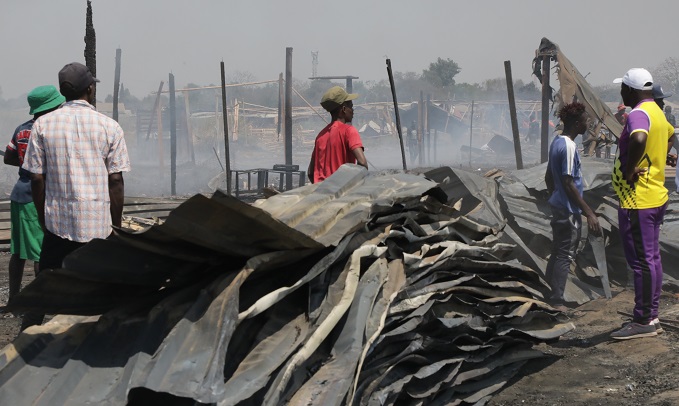
Society Reporter
THE Glen View 8 furniture complex in Harare is an agglomeration of small and medium enterprises that churns out various types of household items for the local market.
It is arguably the country’s biggest home industry and furniture market.
Housing more than 500 predominantly informal enterprises that specialise in producing and selling furniture, the massive complex supplies fittings to clients that are dotted across the country.
According to the management committee that runs the affairs of the complex, close to 2 000 people are either directly or indirectly employed there.

Apart from carpenters, vendors and canteen owners, those who provide vehicle hiring, among other services, also directly benefit from the businesses.
But over the years, the facility has been infamous for episodic disastrous fires.
In the past eight years, unexplained infernos have razed the complex at least seven times.
A survey by the Vendors Initiative for Social and Economic Transformation in 2022 revealed that one such fire destroyed property worth over US$1,5 million.
Mystery
The cause of the fires has largely remained a mystery.
According to those who operate from the complex, the fires break out mostly around September and October.
“To be honest, we do not know what causes the fires. The complex is usually gutted during the night, when everyone is at home,” said Friday Makausi, one of the many carpenters at the centre.
Some of the people who were interviewed by The Sunday Mail Society attributed the fires to supernatural forces, while others ascribed them to accidents.
There are, however, those who believe the fires are caused by thieves intent on destroying evidence.
“Until recently, this place was not fenced, and people would pass through at any given time. Some thieves would steal and then start fires as a way of covering up the crime,” suggested Nyasha Chomudzimu.
Others said the phenomenon could be caused by the bristling rivalry among manufacturers at the complex.
“We have wicked people here who sometimes deliberately start fires so as to fix their rivals. Unfortunately, innocent people are caught in the crossfire,” said a vendor, who requested to remain anonymous for fear of retribution.
The fact that the fires always start at night, and that they spread fast, made others conclude that they are related to juju.
Myths debunked
Tawanda Utete, the chairperson of the management committee that controls the affairs of the complex, said the fires are mostly due to human error.
“Kindly note that we work with highly flammable material such as thinners, paint, varnish and timber. We also have wood shavings and cotton, which easily catch fires,” said Utete.
“Cigarette stubs, for example, can light a fire if they are dropped under wood shavings and cotton wool. It takes a long time before the stub ignites a fire, which might help explain why the fires break out during the evening. There is nothing mythical about the fires starting at night,” he said.
Utete said measures to combat the hazard are being put in place.
“We are widening the roads within the complex so that they act as fireguards. Secondly, plans have been set in motion to train fire monitors, who will be in attendance day and night.”
The committee has also reportedly engaged the Harare City Council to try and agree on a refuse collection deal.
Under the agreement, the council is expected to provide refuse collection vehicles while the committee supplies them with fuel.
However, Nyasha Chakandinakira, a town planning expert, says fireguards and employing fire monitors will not stop the disasters.
“The whole complex must be revamped and new buildings, which are fireproof, erected. Wooden and plastic sheds should be demolished,” said Chakandinakira.
Banks, building societies and property developers, he added, can revamp the compound and rent it out to current operators.
But the committee would need to closely work with various stakeholders, including the Ministry of Women Affairs, Community, Small and Medium Enterprise Development; the City of Harare and the local leadership.
Insurance
According to Utete, the Insurance Council of Zimbabwe (ICZ) recently inspected the premises for a possible insurance plan.
“The fires bring with them misery and suffering. Some of the people who lost everything in the fires ended up developing mental health problems. With that in mind, we engaged insurance companies for assistance,” he said.
Gasper Mazuru, an official with the ICZ, confirmed they are working on a fire forensic report for the Glen View Area 8 complex.
“We visited the complex and did our investigations. A forensic report on the findings will soon be released. As ICZ, we are working towards finding ways of insuring businesses at the complex,” said Mazuru.
Everisto Murombedzi is hopeful that sanity will soon prevail.
“I nearly fainted when I discovered that a fire had consumed my entire stock last year. I do not want that to happen again this year and I am praying that the relevant authorities are working towards safeguarding our interests,” he said.
The furniture manufacturing complex was established by the Government in 2005 after Operation Murambatsvina.
Apart from the complex, some illegal home industries are sprouting behind the High Glen Shopping Centre and near the Tichagarika Shopping Centre, close to the current furniture complex. The Harare City Council spokesperson, Mr Stanley Gama, said a number of measures are being taken to prevent fire outbreaks at the complex.
“As council, we are trying as much as we can to make sure that no fire breaks out this year. Apart from the many preventive measures such as the creation of fireguards, we are also in the process of linking the complex to an international donor,” said Mr Gama.
The donor, according to Mr Gama, will provide financial assistance that will help bring order to the place.



 Online Reporter