Mbulelo Mpofu, [email protected]
WHEN the microphone is passed around at the 5th World Poetry Slam Championship this week, a familiar voice from Bulawayo will be among those heard in Durban.
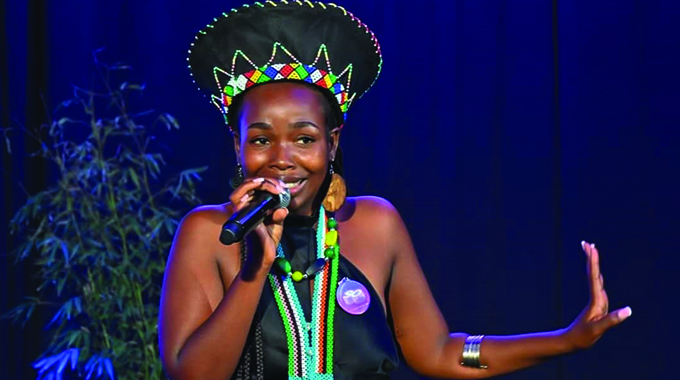
Local poet Lyndah Sibanda, known on stage as Sonkomose, is in KwaZulu-Natal as a Zimbabwean delegate to the 5th World Poetry Slam Championship and Poetry Africa Festival Convention, running from 5 to 10 October 2026.
Hosted by the Centre for Creative Arts at the University of KwaZulu-Natal’s School of Arts, Poetry Africa is in its 29th year, making it one of the longest-running contemporary poetry festivals on the continent.
This year’s edition also hosts the World Poetry Slam Championship, which features 40 slam poets from four continents. It comes as South Africa marks the 50th anniversary of the 1976 Soweto Uprising, one of the defining moments in the country’s struggle against apartheid.
For Sonkomose, who has performed at Poetry Africa before, returning to the festival is about more than poetry. She is joined by fellow Zimbabwean poets SoxThePoet and Starlight, who are also taking part in the celebration of poetry, performance and artistic exchange. Asked what it means to take Zimbabwean spoken word to the world stage alongside her compatriots, Sonkomose said that it was an honour she cherished.
“To be here with SoxThePoet and Starlight after 29 years of Poetry Africa means our Zimbabwean street is finally on the world map. We are no longer hidden and we are here to shine and make Zimbabwe known,” she said.
For years, Zimbabwean poets have struggled for greater visibility beyond the country’s borders, often relying on small festivals and self-funded tours to showcase their work.
This week in Durban, Zimbabwean voices are part of the official programme at a world championship. The timing of this year’s event also gives Sonkomose’s participation added significance. The festival is marking the 50th anniversary of the 1976 Soweto Uprising, when young people stood up against apartheid and the use of Afrikaans as a medium of instruction in schools.
Sonkomose said that history resonates with her as a young woman using poetry to make her voice heard.
“I am a young woman with a mic – that is a Soweto inheritance. They had placards, we have poems. The job is still the same: to refuse a language that erases us,” she said. “And at this point we are pushing the theme…every word a street every voice a city…which is very powerful.”
The theme, “Every word a street, every voice a city”, has become a rallying call for delegates taking part in championships, networking sessions, workshops and discussions during the festival.
However, Sonkomose did not travel to Durban simply to perform, as she is also pushing for better contracts and rights for poets, sustainable festivals in Zimbabwe and stronger artistic exchanges between Zimbabwe and South Africa.
“I want contracts and rights for poets, sustainability for our festivals, and a real SA-Zimbabwe exchange so next time we don’t send 3 poets, we send a movement next time. Imagine having Intwasa Arts Festival koBulawayo poets, Loziba and more and also collaborate with other poets,” she said.
For Sonkomose, international exposure should go beyond invitations to perform. She believes Zimbabwean artistes should also learn how established festivals operate and use that knowledge to strengthen platforms back home.
During her time at the convention, she is therefore paying attention to the business behind the art — how festivals are funded, how poets are contracted, how their rights are protected and how an event such as Poetry Africa has managed to survive for nearly three decades. — Follow on X: @MbuleloMpofu