Chronicle Editor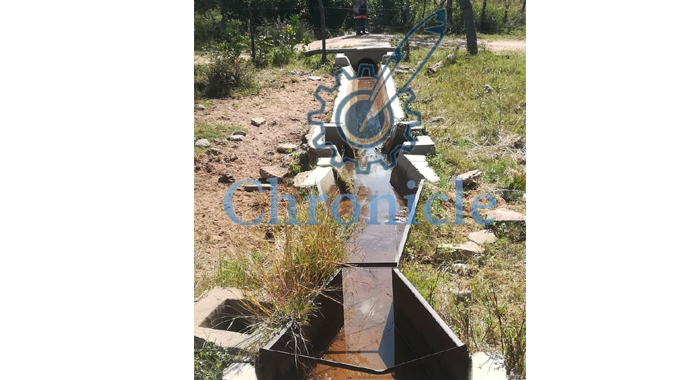
Yoliswa Dube-Moyo, Matabeleland South Bureau Chief
In an effort to mitigate the effects of climate change and build resilience for vulnerable households in the province, Government in partnership with the Food and Agriculture Organisation (FAO) and Unicef are set to modernise Somnene Irrigation Scheme in Bulilima District.
The project, which is being implemented under the Enhanced Resilience for Vulnerable Households in Zimbabwe (ERVHIZ) programme, is set to benefit more than 30 farmers at the irrigation scheme.
Somnene Irrigation Scheme was established some 36 years ago and has over the years faced collapse due to severe water challenges.
Rehabilitation and modernisation of the irrigation infrastructure will include installation of more efficient infield systems such as centre pivot and localised irrigation systems as well as the utilisation of solar energy for pumping, increasing system reliability among other things.
This is expected to improve agriculture practice, access to markets and access to clean domestic water supply.
In a report, FAO noted that a combination of underlying socio-economic constraints, as well as the impact of external factors such as climate change and the Covid-19 pandemic are stretching the livelihood resilience of Zimbabwean communities. “FAO and Unicef are implementing an integrated project focusing on adopting principles of agro-ecology, access to local markets and community water, sanitation and hygiene (WASH) and nutrition interventions. This is envisaged to alleviate a ‘long term’ crisis of chronic malnutrition (stunting), currently at a national average of 26,8 percent, the short-term problem of wasting currently at 3,6 percent (2019 Zimvac), inadequate or unimproved basic WASH services for rural households as well as building households resilience to climate change and economic shocks,” read the report.
The report also highlighted that the performance of irrigation can be viewed with regards to the efficiency of the management process within the organisation in charge of providing irrigation and drainage services and the allocative and productive efficiency of resources employed in irrigated agriculture.
“Innovation and modernisation will be very important to meet the ever increasing demand by irrigated systems for flexibility and reliability. However, a hardware technologically driven approach is likely to fall short of the attempted aims if it is not accompanied by a fundamental shift in prevailing approach to management of irrigation and drainage systems. Hence, it is critical to create an environment that encourages technology innovation both at farm level and by the managing organisation,” it added.
Deputy FAO Representative in Zimbabwe, Mr Louis Muhigirwa said his organisation is committed to partnering with the Government and other UN Agencies such as Unicef to build community resilience around multi-purpose water systems for use in agriculture production as well as human consumption.
“In line with Sustainable Development Goals 2,6,13 and 17 through funding from the European Union, Somnene Irrigation Scheme is one of the schemes that will benefit and demonstrate this multi-sector collaboration towards achieving climate change adaptation in rural communities of Matabeleland South Province,” said Mr Muhigirwa.
Matabeleland South acting Provincial Agricultural Director (rural development services) Mr Mkhunjulelwa Ndlovu said irrigation schemes are critical for food security.
“In terms of irrigation schemes, we have two in Bulilima, Gwanda has nine, Umzingwane has three and we have four in Matobo. Most of these are above 60 percent in terms of utilisation. This is critical for food security,” said Mr Ndlovu.
He said there was a need to revive the remaining irrigation schemes that are not functioning.
“Irrigation schemes are fast developing in the province following intervention from Government and various partners. At the pace that we are moving in terms of establishment of new irrigation schemes and rehabilitation of old schemes, the province will soon become a major food producer and supplier even to neighbouring provinces,” said Mr Ndlovu. – @Yolisswa.



 Online Reporter