Online Reporter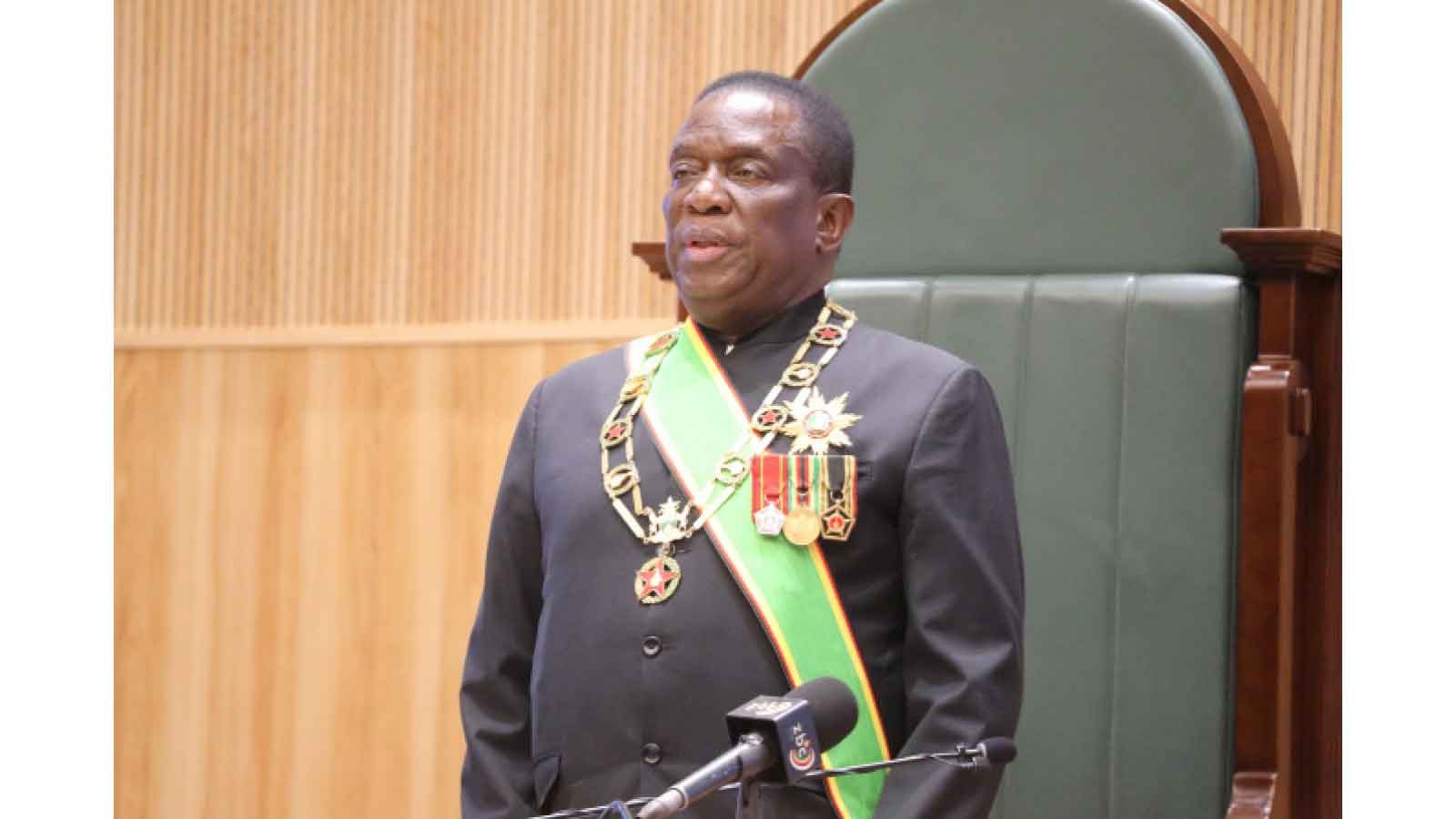
Gibson Mhaka-Zimpapers Politics Hub
PRESIDENT Mnangagwa’s State of the Nation Address has placed economic growth, industrialisation, investment, empowerment and regional integration at the centre of the Government’s agenda, providing a clear policy bridge between the forthcoming 23rd ZANU PF Annual National People’s Conference and Zimbabwe’s assumption of the COMESA Chairmanship.
Opening the Fourth Session of the 10th Parliament at the New Parliament Building in Harare on Tuesday, President Mnangagwa said the country had made tremendous progress in improving the lives and livelihoods of communities, reiterating the Second Republic’s commitment to “leaving no one and no place behind.”
The emphasis on translating policies into tangible outcomes comes as ZANU PF prepares for its 23rd National People’s Conference under the theme, “From Resolutions to Results: Consolidating Economic Development and Deepening Economic Empowerment towards Vision 2030.”
At the same time, Zimbabwe is preparing to host the 25th COMESA Heads of State and Government Summit, where it will assume the Chairmanship of the regional bloc, under the theme, “One Market, One Future: Advancing Inclusive Industrialisation, Investment and Regional Integration in COMESA.”
Taken together, the two themes point to a common economic thread, moving from policy formulation and resolutions to implementation, production, investment, empowerment and measurable development.
The SONA provided a snapshot of Government programmes already under implementation while outlining additional measures expected during the Fourth Session of Parliament.
President Mnangagwa declared that “Zimbabwe is open for business”, pointing to sustained macro-economic stability, single-digit inflation since January 2026 and strong foreign currency inflows which reached US$10,7 billion during the first half of the year and are projected to reach about US$20 billion by year-end.
“Zimbabwe is open for business. The country has achieved sustained macro-economic stability over a considerable period of time,” he said.
For the ZANU PF conference, the economic message is significant because the party’s theme places emphasis on moving from resolutions to results.
The SONA indicates that the Government intends to consolidate economic gains while accelerating production across key sectors.
Agriculture, for instance, recorded 27,9 percent growth and contributed 2,2 percentage points to the country’s 8,3 percent GDP growth.
However, President Mnangagwa warned of potentially unfavourable weather conditions in the 2026/27 season and outlined a Six Pillar Plan for resilience, incorporating an enhanced strategic grain reserve, climate-smart production, integrated financing, livestock drought mitigation, early warning systems and capacity building.
This is precisely where the “results” component of the ZANU PF conference theme becomes important.
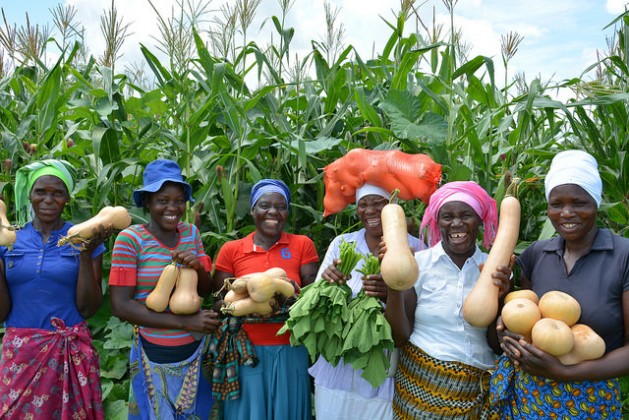
The emphasis is not simply on agricultural policy, but on resilience, food security and the ability of farmers and communities to withstand climate shocks.
Mining provides another important link between the domestic development agenda and the COMESA theme.
President Mnangagwa described mining as a key anchor of Zimbabwe’s economic development, saying the Government was capacitating the Mining Promotion Corporation and the Zimbabwe Geological Society to undertake systematic exploration and develop bankable projects for investment.
More importantly, he highlighted progress in mineral beneficiation and value addition, including the production of Zimbabwe’s first locally produced lithium sulphate, while investments in iron and steel were creating downstream and supply-chain opportunities in Zimbabwe and the wider SADC region.
This speaks directly to the COMESA theme of advancing inclusive industrialisation and investment.
The regional opportunity lies not merely in extracting minerals and exporting raw materials, but in developing value chains, manufacturing capacity and industries capable of supplying regional markets.
The same approach is evident in manufacturing.
President Mnangagwa said the sector was registering growth driven by value-chain development, increased capacity utilisation and improved productivity in areas including iron and steel, cement, clinker and pharmaceuticals.
Government has also reviewed licences, permits, levies, fees and other regulatory requirements in 13 sectors as part of efforts to improve the ease of doing business and enhance the competitiveness of local industry.
That policy direction gives substance to Zimbabwe’s “Open for Business” message as the country prepares to welcome regional leaders and investors to the COMESA Summit.
The regional integration agenda will require countries to make it easier for businesses to produce, invest, move goods and participate in cross-border value chains.
Zimbabwe’s infrastructure programme is another important component.
Road rehabilitation and construction projects targeted during the Fourth Session include sections of the Harare-Beitbridge, Harare-Kanyemba, Harare-Nyamapanda, Bulawayo-Victoria Falls, Harare-Chirundu and Kwekwe-Nkayi-Lupane roads.
Government is also pursuing airport, railway and interchange projects, while a 311-kilometre railway link between Kafue and Lion’s Den is being developed with Zambia.
The rehabilitation of the 614-kilometre Chicualacuala-Plumtree railway line is also underway under a tripartite agreement involving Zimbabwe, Mozambique and Botswana.
Such projects have significance beyond Zimbabwe’s borders.
Efficient transport corridors are essential to regional trade, reducing the cost and time involved in moving goods between production centres and markets.
This is the practical infrastructure required if “One Market, One Future” is to move from a regional aspiration to a functioning economic reality.
Energy is similarly central to industrialisation.
The President said frequent load-shedding had become a thing of the past, with supplies from Kariba and Hwange being augmented through independent power producers, captive power plants, net-metering and rooftop solar.
The acceleration of rural electrification through grid extension and mini-grids is also intended to expand access to electricity, including for public institutions.
For the ZANU PF Conference, energy security represents one of the practical foundations upon which economic empowerment and industrialisation can be built.
For COMESA, it speaks to the broader question of productive capacity and regional competitiveness.
The SONA also places significant emphasis on small and medium enterprises, with the drafting of the Small and Medium Enterprises Amendment Bill expected to strengthen MSME development, accelerate formalisation and broaden access to finance and markets.
This is particularly relevant to the economic empowerment component of the ZANU PF Conference theme.
Economic development cannot be measured only through GDP figures or major investments.
It must also be reflected in the ability of small businesses, young people, women, farmers and other economic players to participate meaningfully in production and access markets.
The President also linked investment promotion directly to Zimbabwe’s international engagement.
The proposed Foreign Affairs and International Trade Bill will seek to codify trade and investment promotion into the statutory mandate of Zimbabwe’s diplomatic missions abroad and strengthen the coordinated projection of “Brand Zimbabwe.”
This could become an important instrument as Zimbabwe assumes the COMESA chairmanship.
Diplomatic missions can increasingly function as platforms for identifying investment opportunities, opening markets for Zimbabwean products and building partnerships with foreign businesses.
The SONA therefore, provides a useful policy framework for the COMESA agenda.
President Mnangagwa confirmed that Zimbabwe will host the 25th COMESA Heads of State and Government Summit on October 21, when the country will assume the chairmanship.
He linked the development to Zimbabwe’s growing international responsibilities, including its incoming United Nations Security Council non-permanent seat for 2027-2028.
But perhaps the strongest connection between the SONA and the two forthcoming events lies in the President’s closing message.
With less than four years remaining to 2030, he acknowledged that while significant milestones had been achieved, “much work lies ahead”, calling for the scaling up of transformational results across all sectors and levels of society.
He said Government policies had unlocked investment, accelerated economic growth and created jobs, while empowerment opportunities, particularly for women and young people, were being broadened.
That is essentially the challenge encapsulated in the ZANU PF Conference theme: converting resolutions into results.
And it is also the economic proposition Zimbabwe can take to COMESA: that regional integration must ultimately translate into increased production, investment, industrialisation, trade, jobs and opportunities for citizens.
The forthcoming ZANU PF Conference will, therefore, provide a domestic platform for assessing implementation of the Government’s development agenda, while the COMESA Summit provides a regional platform for projecting that agenda into a wider market.
The common denominator is delivery.
From agriculture to mining, manufacturing to energy, infrastructure to MSMEs, the policy direction outlined in the SONA points towards a Zimbabwe seeking to move from planning to production and from potential to measurable economic outcomes.
As the President put it, the Government’s commitment is to create an environment that is “responsive to current realities, yet predictable and transparent”, while ensuring that the country’s wealth delivers sustainable prosperity and development that leaves no one and no place behind.
For the 23rd ZANU PF National People’s Conference and the 25th COMESA Summit, that message provides a common bridge: results at home, stronger economic partnerships abroad, and a development agenda anchored on production, empowerment and regional integration.