Online Reporter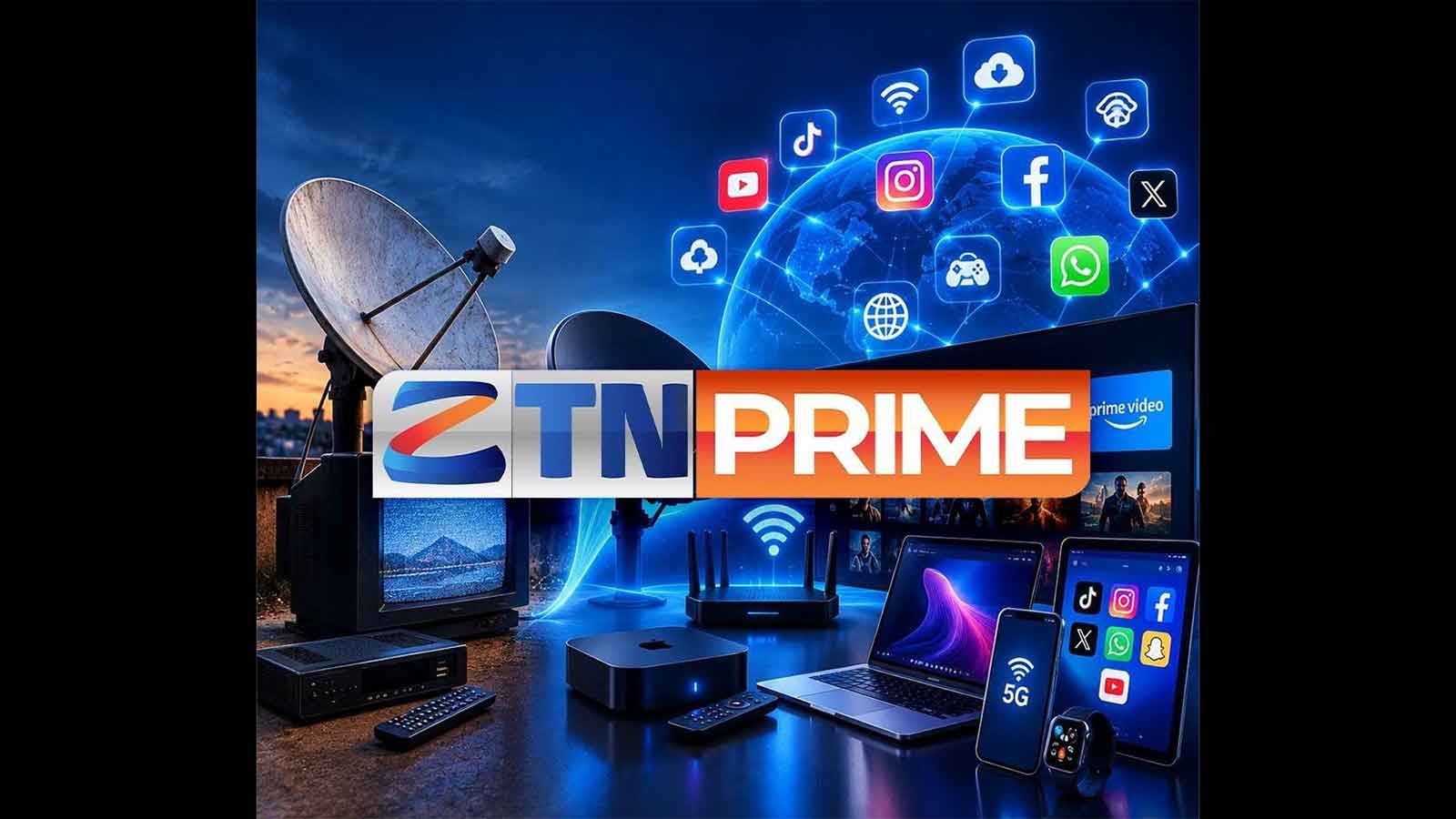
Elias Mambo-Group Digital Services Executive
ON October 1, 2026, Zimpapers television network migrated from the traditional linear television model towards an Over-the-top platform. This does not mean that television is disappearing. It simply means television is being redefined.
For decades, the television channel was the organising principle of broadcasting. Audiences tuned in at a particular time, to a particular frequency, to watch whatever a broadcaster had scheduled. The broadcaster controlled the clock, the programme grid and, to a large extent, the relationship with the viewer.
That model is now being challenged by a different proposition: content should be available when the audience wants it, where the audience wants it and on the device the audience chooses.
This is the strategic context in which ZTN is moving from a traditional linear television model towards an Over-the-Top (OTT) platform. The migration is part of a broader restructuring driven by technological developments and changing media consumption patterns. The Newspapers Division is simultaneously being reorganised around a digital- and mobile-first model.
This is not simply a technological change. It represents a fundamental rethink of what television is, how audiences consume video and, ultimately, how a media company creates value.
The television audience has changed
The traditional television model assumes that audiences organise their lives around the broadcaster’s schedule.
The digital audience increasingly expects the broadcaster to organise its service around the audience. That distinction is fundamental.
A viewer may watch a live football match on a television, catch a news bulletin on a smartphone, watch a documentary on YouTube, return later to a video-on-demand programme and consume a short clip through social media — all within the same day.
Deloitte describes today’s media environment as increasingly cross-platform: audiences move between social feeds, paid streaming services, free ad-supported platforms, podcasts, games and linear television depending on the content and occasion.
The television set itself is therefore, not necessarily disappearing. The channel is becoming less important than the platform.
This distinction is particularly important for African media companies.
The question is no longer simply: How many people are watching our television channel?
It is increasingly: How many people are consuming our video content, on which platform, for how long, how frequently and with what commercial value?
That is a very different media proposition.
From appointment television to on-demand television
Linear television is fundamentally based on appointment viewing. A programme starts at 7pm. The audience must be there at 7pm. OTT reverses that relationship. The programme can be watched at 7pm, 9pm, the following morning or several days later.
This is the power of Video on Demand (VOD). VOD changes television from a schedule into a library.
Instead of broadcasting a programme once and allowing most of its commercial value to disappear after transmission, the organisation can continue monetising the content through multiple windows. A single production can therefore, become many products. This is the beginning of the content economy.
The global evidence is becoming difficult to ignore
The shift is no longer theoretical.
In the United States, Nielsen reported that streaming accounted for 47,5 percent of television viewing in December 2025, its highest monthly share recorded at that point. Streaming even exceeded 50 percent of daily television usage on two days during that month.
The United Kingdom provides another illustration.
Ofcom reported in July 2026 that 26 percent of viewers said Netflix was their first choice when looking for something to watch, compared with 25 percent for the BBC. At the same time, viewing on broadcaster-owned on-demand services such as BBC iPlayer and ITVX increased 9 percent year on year. Ofcom nevertheless noted that this growth had not offset the continuing decline in traditional linear television viewing.
The Reuters Institute’s 2026 research adds an important dimension: audiences are not necessarily abandoning television screens. Instead, they are increasingly using smart TVs to access apps and on-demand video, while younger audiences in particular are strongly connected to social video, YouTube and other digital platforms.
This means that the future of television may not be TV versus digital.
It may be: TV as a screen + OTT as the operating model.
The linear television business model is under pressure
The implications extend beyond audience behaviour.
Linear television requires substantial fixed infrastructure, scheduled programming, transmission arrangements, studio operations and a continuous supply of content.
But declining linear audiences can put pressure on advertising revenues while the costs of maintaining the traditional structure remain.
PwC describes this as a structural challenge for legacy television and pay-TV businesses, pointing to declining traditional television subscriptions, changing sports-rights economics and the migration of premium content towards OTT platforms.
The response from media companies is increasingly to rationalise linear channels while investing in streaming and digital products.
Warner Bros. Discovery announced plans to separate its streaming-and-studios operations from its global networks business, illustrating the extent to which streaming has become strategically distinct from traditional television networks.
India offers another important emerging-market example. In September 2026, The Economic Times reported that 114 television channel licences had been surrendered between 2022 and 2026, amid weaker advertising, declining pay-TV homes and audience migration towards OTT, connected TV and short-form video.
The African market is experiencing similar pressures.
MultiChoice has been rationalising its DStv channel portfolio, while its Showmax streaming service provides audiences with an alternative route to content. In 2025, DStv announced the closure of 1Max, with popular programming being moved to Mzansi Magic and made available through Showmax. MultiChoice explicitly cited audience consumption research in explaining the change.
By 2026, DStv had removed or announced the removal of additional channels, including channels affected by the restructuring of international linear television operations
The lesson is important:
Media companies are not necessarily abandoning content. They are abandoning inefficient ways of distributing content.
What Zimpapers’ OTT migration really means
Zimpapers’ decision to move ZTN towards OTT should therefore, be understood within this wider global transformation. The opportunity is not merely to put existing television programmes on the internet. That would be digital distribution, not digital transformation. The bigger opportunity is to rethink the entire ZTN proposition.
Instead of: Studio → Linear Channel → Audience
the model becomes:
Content → Platform → Audience → Data → Engagement → Monetisation
This creates a fundamentally different relationship between Zimpapers and its audience. That data can inform editorial decisions, programming, advertising and product development.
The Zimpapers advantage: content scale
Zimpapers is not building an OTT platform from scratch as if it were a new television company. It already possesses something arguably more valuable, namely content, brands, journalists, archives, audiences and institutional relationships. The company’s newspaper brands generate news continuously. Its journalists are already producing stories. Its archives contain decades of Zimbabwean history. Its brands have established public recognition.
The opportunity is therefore, to convert this existing intellectual and editorial capital into a multi-platform content ecosystem.
Imagine a ZTN platform where a user can move from:
Breaking News → Live News → Documentary → Business → Sport → Entertainment → Podcast → Archive → VOD
without leaving the ecosystem.
That is much more powerful than simply reproducing a linear television channel online.
The smartphone changes the game
OTT does not mean people need expensive smart televisions.
The smartphone is the most important bridge between traditional media and digital audiences in many African markets. This is particularly significant for younger audiences.
Reuters Institute research shows that younger audiences are increasingly comfortable with online video and social video, while longer-form video also has a place on platforms such as YouTube.
For Zimpapers, this creates an opportunity to reach audiences beyond the geographical limitations of terrestrial broadcasting.
A Zimbabwean living in Johannesburg, London, Dubai, Sydney or New York does not need a Zimbabwean television transmitter. They need an internet connection.
OTT turns diaspora audiences into a potentially addressable global market. Zimpapers is not leaving television. It is redefining television for a digital audience.
And in the emerging media economy, the winners may not necessarily be those with the biggest number of channels.
They may be those that understand their audiences best, produce the most relevant content, distribute it most intelligently and turn attention into sustainable value.
Elias Mambo is Zimpapers Group Digital Services Executive