admin
admin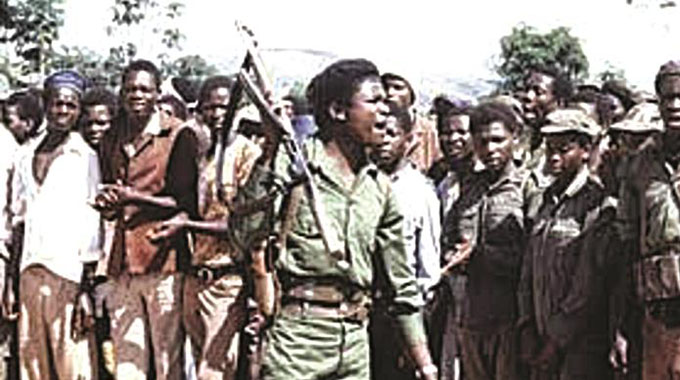
Elliot Ziwira Senior Writer
Like most Rhodies, Ian Smith had an illusion, the illusion of Rhodesia.
He expressed this delusion when he vowed that never would there be majority rule in his lifetime, that of his children and grandchildren (never in a thousand years, he believed).
This illusion was created by Cecil John Rhodes, who gave them the name Rhodesia, and his so-called Pioneer Column.
As Doris Lessing writes in “African Laughter: Four Visits to Zimbabwe” (1992), Rhodesians believed that “Salisbury, a white town, British in feel, flavour and habit,” was theirs for keeps because “the conquered were inferior, that white tutelage was to their advantage, that they were bound to be the grateful recipients of superior civilisation”.
What a reverie!
For close to a century, Rhodies lived the dream that Rhodesia was their country, a European nation begotten on conquest of a “barbaric” people, devoid of a history, culture and customs.
Illusions are stubborn; it is in their nature to take over reality.
Ian Smith and his band of Rhodesians soon realised that it was possible to reduce a thousand years to a mere 14. Fancying themselves invincible and superior, Rhodesians closed out the indigenous owners of the land from the milk and honey enclosure of their ancestral heritage. Settlers had the cheek to compose songs to celebrate their invincibility. And to counter that, blacks in their wisdom composed their own songs to give impetus to the struggle for the Motherland.
Rhodesians would rather take care of the land and its wildlife than consider livelihoods of Africans — the true owners of the land. Rhodesia was theirs, it was their land. They would rather protect animals and allow them to roam freely in massive swathes of arable land than allow black people to use the same. Africans were packed in reserves, in what they (whites) derogatorily called “kraals”.
Whereas whites were for the preservation of an illusion, blacks were struggling for the reclamation of what was rightfully theirs. Africans were fighting for equality, against repressive laws that were at the centre of their suffering, as they robbed them of their humanity.
White Rhodesians saw it as a bush war, whereas to the people of colour it was a struggle for freedom; an inevitable struggle for their humanity, where violence was the only way out.
Fanon (1967) points out that, “Colonialism is not a thinking machine nor is it a body endowed with reasoning faculties. It is violence in its natural and absolute state and it will only yield when confronted with greater violence.”
He maintains: “National liberation, national renaissance, the restoration of nationhood to the people, commonwealth: whatever may be the headings used or the new formulas introduced, decolonisation is always a violent phenomenon.”
All else having failed, the subjugated people of colour saw the elixir in violence. The need to fight to the bitter end reprised itself in collective struggle.
With oppressive machinery in their favour, Rhodesians had an upper hand.
They controlled the media, which allowed them to stifle the oppressed people’s sources of information, therefore, they determined what they wanted them to hear.
The need arose on the part of revolutionary movements (ZANU and its military wing ZANLA, and ZAPU and ZIPRA, its military wing) to devise means of getting to the people. Hence, they resorted to song. There had to be a way of circumventing censorship and Rhodesian spy networks.
United by their quest for liberation, their cultural norms and values as enshrined in their land; the land of their forefathers, black people envisioned a new nation, the nation of Zimbabwe.
They knew it existed somewhere in the not so distant horizon of their dreams; what they only required was to be shown the way to that nation.
ZANU Publicity and Information Department deputy secretary Eddison Zvobgo, cited in Julie Frederikse’s “None But Ourselves”, (1990) revealed: “One of the methods we used very efficiently was the night meeting. We called it pungwe. Pungwe, in Shona means something that keeps going all through the night.”
ZIPRA political commissar Colin Matutu had this to say: “In ZIPRA we did not call it pungwe; we used the Sindebele word for a discussion, ukwejisa, sometimes.
“The term was different, but we had that exercise of gathering people. We didn’t only talk political theory, for people did not understand all that political jargon. What we had to do, in fact, was to tell them of the hard realities of life.” (ibid).
Comrade Zeppelin, ZANLA political commissar, weighed in: “In fact, overall, the land question was our major political weapon . . .We used to sing songs at pungwes because it helped to boost morale. Traditionally, our people always liked singing, but this singing had some political content to it. Often people would get more from this singing than they did from all the talking. We called them Chimurenga songs.” (cited in Frederikse, 1990).
Chimurenga music played a vital role in uniting the oppressed people behind the struggle. Song enunciated the nature of collective struggle than did the spoken word. The masses had to be located in the fight for their land, enlightened on the causes of their suffering, and briefed on the need to distant themselves from the oppressive colonial nation of Rhodesia, which alienated them.
Songs like “Mukoma Nhongo Bereka Sabhu Tiende”, “Nyika Yedu yeZimbabwe”, “Ruzhinji Rwatsidza”, ‘Sendekera Mukoma Chakanyuka” and “Emoyeni Kuyatshisa” captivated and inspired the masses. Other songs were “Maruza Imi” (You have Lost) that was popularised by Cde Chinx, Thomas Mapfumo’s “Tumira Vana Kuhondo” (We are sending our children to war), among other Chimurenga songs like “Ndiro Gidi” (Only the Gun), “Muka! Muka! (Arise! Arise!), “Haisi Mhosva yaVaChinamano” (It is not the fault of Chinamano) and “Kugarira Nyika Yavo” (Defending their Land).
“Maruza Imi”, speaks to the empire’s exploitative inclinations by retracing the colonial route, which divested black people of their land. A morale booster, the song prophesied victory for the real owners of the land.
Thomas Mapfumo’s “Tumira Vana Kuhondo” responded to Clem Tholet and Andy Dillon’s “Rhodesians Never Die” in a direct way, as translated by Frederikse (1990):
We are sending our children to join the struggle; Children to war, children to war.
Fathers, mothers, send your children to war, We are all sending our children to war. We may be eliminated, But our children are fighting; This year we shall send our children to war. Look, the enemy will be destroyed; To the war, children! Children, to the battlefield! We shall continue to send children to war.
The Chimurenga tune, “Kugarira Nyika Yavo” also demystifies the concept of Rhodesia, as both a country and a nation, and in its stead maps a new nation of Zimbabwe, born of struggle, collective suffering and resilience. The following lines are apt:
Hark! It thunders!
Smith! Our brothers and sisters
Are living in the forests, Because they are protecting our land, Smith! Our brothers and sisters; Are living in the forests, Because they are fighting for our country.
They would have wanted; To sleep under a roof; They would have wanted; To rest,They would have wanted; To till their lands, But for the love of our land,
But for the love of our land, But for the love of our land.
They also want; To have children , They also want; To build homes, They also want; To work, But for the love of our land, But for the love of our land,
But for the love of our land.
As we celebrate 40 years of Independence, therefore, we should remain mindful that it was for the love of our land, that we had to engage in the liberation struggle. It was for the love of our nation that we had to resort to song; and it was, indeed, for the love of our ancestral heritage — the land, that many sons and daughters of the soil perished.


 Online Reporter