Online Reporter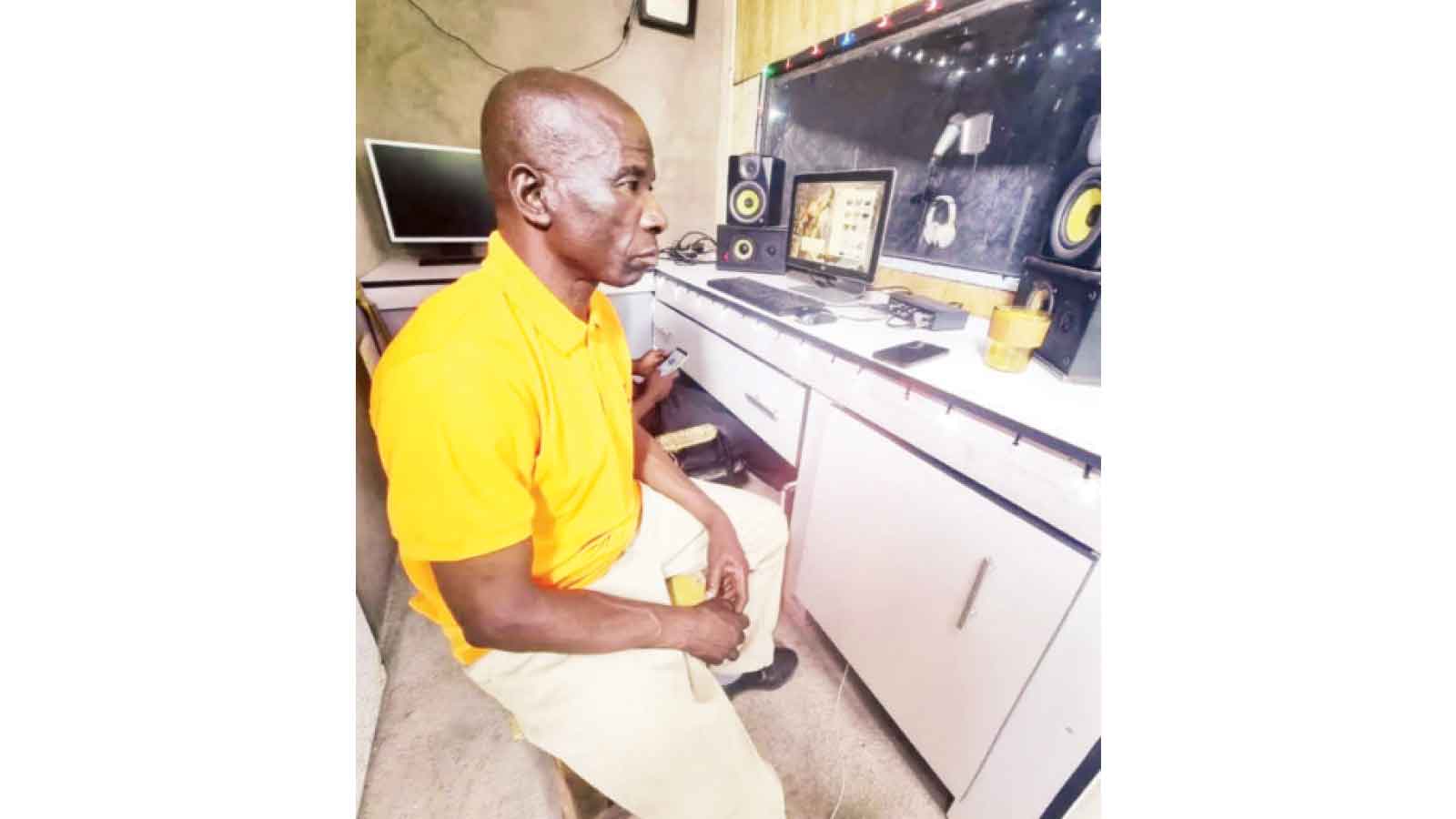
Prince Meke-Entertainment Correspondent
THERE are songs that belong to a moment.
And then there are songs that outlive the moment that created them.
They span decades, survive shifting tastes, and travel from generation to generation, unlocking memories that people thought they had forgotten when they are sung again.
Lucky Chikuwa knows something about those songs.
For more than half a century, his voice has been an integral part of the musical memory of the Zion Christian Church (ZCC) — a voice from an era when gospel music was not packaged for algorithms, promoted through social media, or measured by streams.
It was carried by people.
It was remembered by people.
And at Defe in Gokwe, that memory came alive again.
When Chikuwa and The Mbungo Stars took to the stage during the ZCC Golden Jubilee commemorations, the veteran musician did not merely perform old songs.
He opened an old door.
Out came Nyika Ino Ichatongwa, Kusaziva Kufa, and Zvainge Zvakaoma — songs from another chapter of ZCC history, but songs the crowd still knew by heart.
Thousands sang along.
For the older generation, it was a return to childhood, youth and the formative years of their faith.
For younger congregants, it was something equally important: an encounter with a musical heritage they had inherited without necessarily experiencing its origins.
The distinction between performer and audience seemed to disappear.
Chikuwa sang, and the crowd answered.
And suddenly, the distance between yesterday and today was gone.
“These songs carried us through difficult times,” Chikuwa told Zimpapers Arts after his performance.
“The Jubilee was not just a celebration, but a reminder of where we came from as ZCC.”
That sentence perhaps best explains why his performance mattered.
This was not simply nostalgia for nostalgia’s sake. It was cultural memory.
Chikuwa belongs to a generation of musicians who helped give ZCC a distinctive musical identity.
Alongside the late Elder Mudhara Bhosvo, remembered for the enduring Ndashaiwa Paumire, he helped shape a traditional gospel sound rooted in Shona language, spirituality and melodies that could move effortlessly between the pulpit, the congregation and the wider community. The songs were simple enough to remember but powerful enough to endure.
They did not need elaborate staging to command attention.
Their strength was in the message.
Their currency was memory.
And their greatest archive was the human voice.
Long before smartphones placed music libraries in the pockets of millions, people themselves were the distribution network.
A song heard at church could be carried home.
A child could learn it from a parent.
A congregation could teach it to another congregation.
And eventually, a song could become part of the collective vocabulary of a generation.
That is how music becomes history.
He was standing inside the history he helped create.
His new song, ZCC at 50 Pa Defe, provided an intriguing contemporary chapter to that story — an artiste from the old school recording new music for a new generation while looking back at the institution that shaped his career.
The irony was beautiful.
The man was singing about 50 years of history while becoming part of that history himself. Yet ZCC music is no longer frozen in the sound of Chikuwa’s generation.
Prince Chigwida, Obert Chari, Diiboi, Nicky Mutendi, Mr Forbes, Daddy Rwatiringa, and Elder Mupinga are among the newer voices carrying the music forward.
They performed alongside other musicians during the Golden Jubilee commemorations, representing a changing musical landscape.
Their generation has studios, streaming platforms, social media and instant global audiences.
The pioneers had something different.
They had patience.
They had congregations.
And they had songs.
The contrast says much about the evolution of gospel music itself.
Technology may have changed how music is produced and consumed, but it has not changed the fundamental reason people remember certain songs.
They remember how those songs made them feel.
Chikuwa’s own journey has also carried its share of complexity.
He left the church for a period before later being re-admitted by ZCC leader Bishop Nehemiah Mutendi.
“The door of the church is always open for those who return with a repentant heart,” Bishop Mutendi said in an earlier address, without naming individuals.
Chikuwa nevertheless returned to music and has continued recording.
For younger worshippers, the experience offered something that no archive or history book could quite reproduce.
They saw a living piece of their church’s past.
They heard songs created before many of them were born.
And they sang them.
That may be the greatest testament to Chikuwa’s legacy.
A song survives not because it was recorded, but because somebody remembers it.
And somebody teaches it to somebody else.
At Defe, the past did not arrive quietly.
It arrived singing.
One congregant captured the moment with striking simplicity:
“Music is how we pass on our history. When Lucky and The Mbungo Stars sing, you feel the Defe of 50 years ago.”
Perhaps that is why the performance lingered long after the final note.
Because for those few minutes, the Golden Jubilee was not about counting years.
It was about hearing them.
Fifty years were compressed into melodies.
A generation found its youth again.
Another discovered its inheritance.
And Lucky Chikuwa — one of the custodians of that remarkable musical memory — stood at the centre of it all.
The world has changed since those first songs were sung.
The technology has changed.
The platforms have changed.
The artistes have changed.
But the songs remain.
And perhaps that is the true measure of a musical legacy: When the singer grows older, but the song endures.