Online Reporter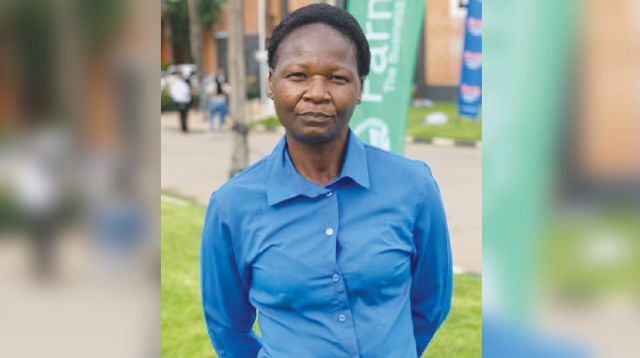
Peter Matika, [email protected]
WHEN Ms Olivia Mukondwa walks through the endless rows of sorghum stretching across her fields, she moves with the quiet confidence of someone who has seen her life’s work come full circle.
The sun beats down on the tobacco, maize and paprika farming region; the stalks rustle in the dry wind, and every so often she pauses, touching a panicle here, inspecting a grain cluster there, her sharp eyes scanning for the tiniest expression of genetic excellence.
Based at Matopos Research Institute in Matabeleland South, Mukondwa is one of Zimbabwe’s rising female sorghum breeders — a scientist whose ground-breaking varieties are transforming farming communities, especially in drought-prone regions.
Yet her journey, like the rugged landscape, has been anything but smooth. She spoke to the Chronicle while in Bulawayo about her life’s path.
She grew up surrounded by fields of traditional crops that fed families in her home in Wedza District, Mashonaland East, long before hybrid maize came to dominate Zimbabwe’s agricultural narrative.
“I grew up with the knowledge that these grains were the backbone of rural survival. But back then, as a girl, I never imagined I would one day be responsible for shaping the very grains we grew,” said Mukondwa.
Her earliest fascination came from watching her grandmother sift through harvested sorghum heads, separating seeds for the next planting season. When she earned a chance to study crop science, the world seemed to crack open. There, she discovered the field of plant genetics — and everything changed.
She said sorghum breeding in Zimbabwe, and across Africa, has long been dominated by men.
“Field research is gruelling — the sun, the dust, long hours standing, bending and walking — and for years women were subtly discouraged from pursuing the discipline. When I first arrived at the research station as an intern, I overheard someone say: ‘She won’t last two months.’ That became my motivation,” said Mukondwa.
Pushing herself relentlessly, often being the first to arrive at the fields and the last to leave, Mukondwa mastered the technicalities of crossing sorghum lines, identifying promising genotypes and evaluating yield performance under stress environments.
Her breakthrough came about 10 years ago, after years of research. She said what made the variety revolutionary was not just its drought tolerance.
Mthwakazi Red matured earlier than most local varieties, resisted birds better due to its semi-bold grains, and had superior milling quality. Food processors loved its deep colour, which produced highly nutritious flour, while farmers marvelled at how it withstood harsh mid-season dry spells.
“I wanted something that spoke to our region’s identity — a grain that could feed families, withstand climate stress and still fetch a good market price,” said Mukondwa.
She said within a few planting seasons, the variety had spread across the southern region, marking a turning point for thousands of smallholder farmers.
“You can publish a paper, yes, but nothing compares to seeing a grandmother smiling beside a granary full of sorghum you bred. That is the real reward,” said Mukondwa.
Despite her achievements, Mukondwa remains deeply aware of the challenges women face in agricultural research.
“In many rural households, girls still grow up thinking science is not for them. But agriculture needs women. We understand the household; we understand food security emotionally and practically,” she said.
To push this belief forward, Mukondwa found herself under the flagship of the Zimbabwe Plant Breeders Association. Through field training, laboratory internships and career guidance, Mukondwa said she hopes to build a generation of women unafraid to claim space in plant breeding.
She draws inspiration from indigenous knowledge — seed selection practices, culinary traditions and communal grain preservation methods.
“Sorghum is not just a crop. It is part of our identity. You cannot breed effectively if you ignore the culture around the crop,” said Mukondwa.
She said this approach led her to collaborate with traditional leaders and women’s groups, learning what grain qualities mattered most to communities.
Mukondwa said her varieties now reflect this balance — high-tech breeding informed by centuries-old knowledge. But beyond the fields and laboratories, Mukondwa carries a softer dream: one that will see rural children, especially girls, grow up believing that science belongs to them.
“I want them to look at sorghum growing in their fields and know that someone who looked like them, who came from a village like theirs, helped create it,” she said.
In a country searching for resilient agricultural solutions, Mukondwa stands as proof that innovation does not always come from boardrooms or global institutions.
“Sometimes, it rises from the dusty rural fields, nurtured by determination, cultural pride and the unyielding spirit of a woman who dared to reimagine the future of one of Zimbabwe’s oldest crops,” said Mukondwa.