Online Reporter
JOHANNESBURG — South Africa on Wednesday criticised new U.S. visa restrictions, saying the measures were driven by fringe groups that falsely claim to represent the country’s white minority.
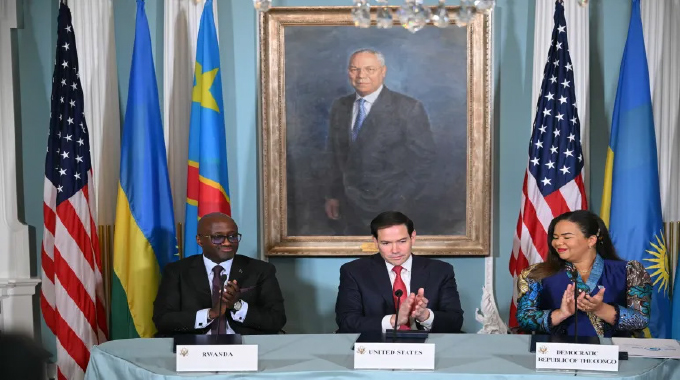
The restrictions, announced by U.S. Secretary of State Marco Rubio on Tuesday, renewed tensions between Washington and Pretoria after several months of relative calm.
Relations have been strained since last year by U.S. President Donald Trump’s repeated claims that white South Africans face systemic persecution.
White South Africans are, on average, much wealthier and more likely to be employed than Black South Africans. The policies criticised by Trump are intended to address inequalities that are a legacy of apartheid.
“The announcement once again, aligns with the mischaracterisation of South Africa’s domestic policies,” South Africa’s foreign ministry said in a statement.
“It is our sovereign right to put in place laws that address the nation’s concern over centuries of racial injustice,” it said, calling for continued engagement through diplomatic channels.
U.S. AMBASSADOR SAYS MORE MEASURES TO COME
It was not clear who would be impacted by the new visa restrictions. The U.S. said the measures would target foreign nationals responsible for, or complicit in, laws and policies that enable race-based discrimination, but did not identify any individuals.
South Africa’s Foreign Minister Ronald Lamola was en route to the U.S. on Wednesday to attend the U.N. General Assembly in New York, a ministry official said.
The U.S. Ambassador to South Africa said in a post on X earlier on Wednesday that the visa restrictions were “only the first step in a series of escalatory measures”.
“As has been made absolutely clear, the time for endless ‘dialogue’ has run its course,” the post said. “As a result, the consequences . . . are necessarily going to be severe.”
The Trump administration has already barred South Africa from attending the G20 summit in Miami in December, despite South Africa being a founding member of the bloc.— Reuters