

 Online Reporter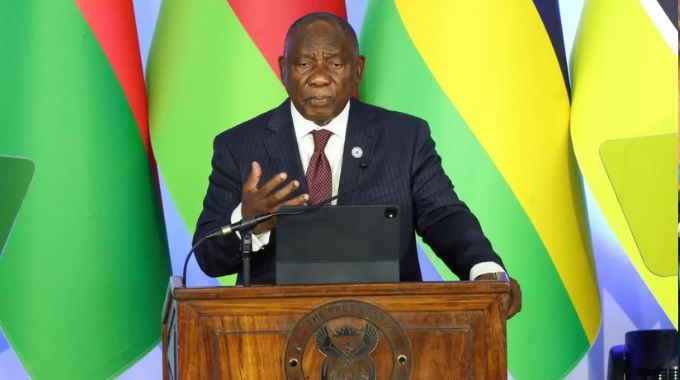
Kudakwashe Mugari in DURBAN,Kwazulu Natal
SOUTH African President Cyril Ramaphosa has condemned attacks on foreign nationals in his country, telling regional leaders that South Africa is “deeply concerned and ashamed” by discrimination and violence which forced some people from neighbouring SADC countries to flee.
Speaking during the SADC Public Lecture at the University of KwaZulu-Natal, Westville Campus, yesterday, Ramaphosa said the incidents were a betrayal of the values upon which the Southern African Development Community was founded.
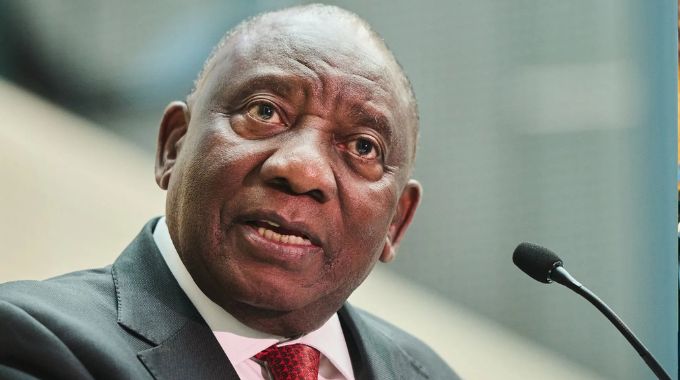
“As South Africans, we are deeply concerned and ashamed that nationals from other countries have in recent months been subjected to discrimination and ill-treatment,.
“I repeat, as South Africans, we are deeply concerned and ashamed that people from other nations, some whose leaders are here, were treated badly and were even forced to leave the country under threat of violence. The criminal actions of a few within our communities are a repudiation of the solidarity upon which this Southern African community is built.
“We cannot preach integration at summits and practise exclusion in the streets of our countries. I say this as a South African, to South Africans first of all, but this is a broader challenge to which we must apply ourselves as a community ” Ramaphosa said.
Ramaphosa said migration had defined Southern Africa for centuries and remained central to the region’s identity and growth.
“Southern Africa has borne witness to the movement of people over millennia. Our people are the products of migration. Migration accounts for much of the diversity as well as the vibrancy and richness of this region.
“You only have to travel across our various countries in Southern Africa and you will find people speaking almost similar languages to those spoken in each of our nations. This shows that we are one people.”
Citing Zimbabwe as an example, the President said: “It has been a joy for me to go to Zimbabwe and find people who speak the same language that I speak — Venda-speaking people. And I have been amazed. How did you get here? And they ask, how did you get to where you come from? That is the beauty of the richness of our region.”
He called on SADC to work towards Vision 2050 by enabling free movement under agreed laws and protocols, and by tackling the root causes of migration.
“As we work towards Vision 2050, we should seek a region in which people are able to move freely according to established principles, protocols, and laws. This means that we must work together to address the conditions that drive migration. We need to work together to address conflict, instability, governance failure, poverty and social discord,” Ramaphosa said.
Zimbabwe’s Minister of Foreign Affairs and International Trade, Professor Amon Murwira, said the public lecture set the tone for the 46th SADC Summit of Heads of State and Government.
“H.E. President Cyril Ramaphosa today delivered the SADC Public Lecture at the University of KwaZulu-Natal, Westville Campus, in Durban, as part of the programme leading to the 46th SADC Summit of Heads of State and Government,” Prof Murwira said.
“The engagement provides an important platform for reflection on the region’s shared future and the need to translate SADC’s long-term vision into practical action,” he added.
Prof Murwira noted that the Summit would be held under the theme: “Resilient, Sustainable and Inclusive Industrialisation through Infrastructure Development, Agricultural and Critical Minerals Transformation in Pursuit of a Just World.”
“The Public Lecture underscored that regional integration must go beyond commitments, towards tangible programmes that strengthen infrastructure, transform agriculture, unlock the value of critical minerals, promote industrialisation and create opportunities for the people of Southern Africa,” the Minister said.
The 46th SADC Summit is expected to deliberate on regional infrastructure projects, agricultural transformation and the beneficiation of critical minerals as drivers of inclusive growth.



Ramaphosa is still avoiding to “rock the boat” in his country lest he loses potential for his party, the ANC, in the coming November local government elections. On one hand he acknowledges that migration is as old as creation and for our region it has existed for millennia and it will be there for a lifetime to come. And in the same vein he is asking his fellow leaders to find and address its cause as if it is now a bane of social unrest in the region. Instead of emphatically stating that black South Africans (and BLACK must be stressed here), are completely offside by attacking fellow BLACK migrant Africans, he wants to hide behind trying to find the causes of migration in the region as if it is a new thing and bad for our people now.